


“Jurors don’t decide cases on the facts… They decide the case based the emotional content and whether they can connect with our client’s story.” – John Sloan
Welcome to Winning The TBI Case hosted by trial lawyer Tom Crosley. Listen each week as Tom provides practical, powerful guidance for litigating traumatic brain injury cases. This podcast is meant for litigation attorneys who are ready to explore the essentials of TBI cases to confidently represent clients who have suffered traumatic brain injuries.
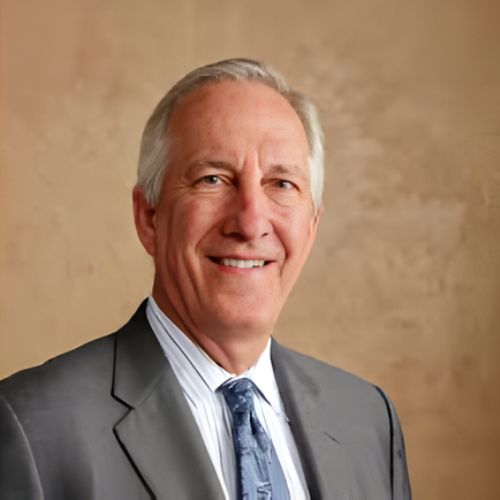
Uncovering the Core of a Client’s Story
In this episode, Tom is joined by veteran trial lawyer, John Sloan, a nationally respected litigator with more than 150 jury trials under his belt. John brings four decades of insight to a deep and candid discussion about what truly moves juries in traumatic brain injury cases. Together they explore how to get beyond surface-level facts, uncover the emotional core of a client’s story, and present before-and-after witnesses in a way that makes the jurors feel the loss that TB clients live with every day. John also shares his experience with the Trial Lawyers College and how it has shaped his approach to storytelling and client connection, and why getting to know clients in their everyday environment is non-negotiable.
Key Takeaways
- The critical importance of visiting clients in their homes to understand the real impacts of their injury
- Why medical documentation can make or break your case
- Why mild TBI clients often deny their own symptoms and how to handle that effectively
- How a lay witness can be more powerful than even the best neuroimaging
- The reason why specialized trial education can help litigators to better hear the hidden meaning behind what clients are saying.
Trial lawyers will walk away from this episode with actionable strategies to strengthen their next TBI case and elevate their courtroom storytelling.
Winning the TBI Case — Finding the Emotional Truth of TBI Cases with John Sloan
Crosley Law | Runtime: 32:28 | Speakers: Narrator, Tom Crosley, John Sloan
[0:01] Narrator: TBI cases can feel like navigating uncharted territory. Your client’s injury is real, but proving it? That’s where the real challenge begins. If you’ve ever felt like you’re missing crucial pieces of the puzzle, you’re in the right place. Welcome to Winning the TBI Case, where Tom Crosley shares the insights he’s gained from over 60 injury trials. Not just the victories, but the lessons learned along the way that make all the difference. This is practical wisdom from someone who’s been in your shoes and found a path forward. Winning the TBI Case: Strategy, Science, and Storytelling. In this episode, Tom welcomes veteran trial lawyer John Sloan for an insightful discussion on the art and the heart of trying traumatic brain injury cases. Over four decades of courtroom experience and more than 150 trials to his name, John shares what he’s learned about connecting with juries, uncovering the emotional truth behind every case, and the power of truly listening to clients.
[1:11] Tom Crosley: Welcome back to Winning the TBI Case. I’m your host, Tom Crosley. Today, we are joined by trial lawyer John Sloan. John, how are you? Doing well. Thanks for having me, Tom. Now I’m excited to have John on the program today. John is a lawyer’s lawyer. He’s been a trial lawyer for decades. He was involved with the faculty of the Trial Lawyers College. We’re going to talk a little bit about that. His firm is the Sloan Firm with 15 lawyers and three different offices. And John, what I’d like to start with is, tell us about your law practice, what it’s been like, and in particular, your focus on TBI cases.
[1:56] John Sloan: So I graduated from law school in February of 1980. One of the first cases that I worked on was a case that my boss had been hired to handle, and we were defending a guy for a charge of murder. So my first trial, been sworn in for five weeks, was a murder case. Yeah, and so you can imagine how nerve-wracking that was. And so the first three years of my practice was in Henderson, Texas, and I tried everything from boundary line disputes to divorces to murder cases over that period of time. I got to try one trucking case and absolutely didn’t know what I was doing. But my client had a brain injury and that kind of got me interested in doing that kind of work. I ended up representing a lawyer several years after that who also had a brain injury, and actually tried my first brain injury case in 1993, in Scurry County, Texas.
[3:16] John Sloan: So I’ve been trying those cases ever since, of course, along with a bunch of other different kinds of injury cases, and particularly interested in TBI cases. I see them, as most lawyers should see them, in a lot of the car wreck and truck wreck cases that we have at our firm. I’ve tried over 150 cases in my career, I haven’t had a trial yet this year, but I’ve got two set in December that I hope will get tried, so.
[3:53] Tom Crosley: Well, I hope at least one of those two goes for you, John. And for your sake, I hope they don’t both go to trial at the same time. It’s, you know, when it rains, it pours, and sometimes that’s true. Yeah.
[4:04] John Sloan: Back-to-back trial settings are not a good thing.
[4:08] Tom Crosley: Hey John, tell us about your role with the Trial Lawyers College, what you’ve done as faculty in that organization, how you teach lawyers to be better trial lawyers.
[4:18] John Sloan: Okay. I was a student at the Trial Lawyers College in 1998. And then four years after that, I was fortunate enough to be asked to be on the teaching staff. And then in 2008, I was asked to be on the board of directors. And in 2014, I became president of the organization of the alumni, what we call the Trial Lawyers College, and then ended my term on the board June of this year. So it’s been a long journey. The Trial Lawyers College has a unique way of teaching. We don’t have, we don’t hand out a seminar book when people show up for one of our courses. It’s a lot of show me rather than tell me we should do and involves getting people up on their feet, getting them to work on the various trial skills that we all know about. Fundamentally involves the lawyers getting to know themselves. Some have described it as an archaeological dig into who each of us are. The Trial Lawyers College, instead of trying one case 150 times,
[5:39] John Sloan: you try 150 cases 150 times. Because each story is unique, each client is unique. And we’ve got to find the emotional truth of our cases, in order to relate that to a jury. You know, jurors don’t decide cases on the facts. They don’t decide cases on what are the 10 most important facts in our case. They decide the case based on the emotional content and whether they connect with our client, with our client’s story. The aim of the Trial Lawyers College is to find that common ground. Find that area where the juror connects with our clients, and with our story. And it also involves being our authentic selves.
[6:28] Tom Crosley: Let’s dive into that and how that philosophy would lead over into your handling of a TBI case. Help us layer that a little bit more with you said that the jury doesn’t decide the case based on the facts.
[6:46] John Sloan: TBI case, as you know, and as I’ve heard you say on your podcast before and your guests say, I think the most important witnesses are those who know your client and have known your client forever. Because they’re the only ones that really can relate to the jury the differences in that person from before and after the incident that caused the traumatic brain injury. Yeah, experts can be important, and certainly in today’s world of trying a TBI case, three Tesla MRIs and the other diagnostic tests certainly are important. But the first one that I ever tried I had a neuropsychologist, which was a absolutely brand new expert to me at the time. And I had the guy’s wife, and his uncle and a co-worker that came and testified. And that made all the difference. So in a TBI case, using the training that I’ve had at the Trial Lawyers College, it’s very important to get to know the client, obviously. Mm-hmm, to use that to find out the emotional truths of that person’s story.
[8:07] John Sloan: As you know, many TBI clients have no self-awareness whatsoever. You know, I’ve had people in my office with their family, and I’ll ask the guy or woman, you know, do you ever feel like you’re foggy upstairs? Do you have short-term memory loss? Are you irritable? All the signs and symptoms of a traumatic brain injury. Person who’s actually injured is going to sit there and say, No, I don’t have any of those things. And the family will be in the background going, Yes he does. Yes he does. So and you know too often we get so wrapped up in everything that we have to do that we don’t do the work that we need to do to really know our clients. I think every plaintiff’s lawyer oughta be visiting in their client’s home. See if they’ll let you enjoy a meal with them, or go there on a Saturday morning or a Sunday afternoon after they’ve been to church and just sit around and talk to the family. I just think that makes all the difference in our ability to present the case.
[9:21] Tom Crosley: I agree. I agree completely with that. I mean, I tell lawyers all the time that before you go try the case, go visit the client at home. Sometimes you’ll see something on the mantel or on the wall that you end up talking to them about, that is something you bring up in the trial. Absolutely. And they behave differently, I think, sitting in their living room than they do sitting in your conference room. Yeah, I agree. Okay, so let’s focus in on how many TBI cases do you think you’ve tried, say, in the last what I call the modern era of neuroscience. So in the 2008 and beyond. Oh, I would say probably seven. Okay. That’s quite a few, right? And a lot of lawyers that handle these cases don’t get that many opportunities to try them. And when they are trying them, there’s some big liability fight or it’s the worst of the worst mild TBI type case. So let’s talk about what advice would you give to lawyers on trying these cases, what stories from your trials can you share with us that might be good learning experiences or just interesting?
[10:56] John Sloan: Well, with our before and after witnesses, our lay witnesses, we want to be able to try to find actual stories rather than just having the person sit up on the witness stand and say, Oh, yeah, he seems to be forgetful or yeah he’s always losing his keys or you know, you need to talk about something that they’ve actually witnessed and experienced that demonstrates the deficits that they have.
I had a case that I tried.
[10:58] John Sloan: And it probably has been I don’t know, 12 years ago. It was a really bright woman, who had studied to become a home inspector. And she had actually done her first home as a home inspector. But after the crash, she in an effort just to make some money, she couldn’t go back to being a home inspector. She was helping her aunt in a little retail store that they had, and the aunt observed her trying to count out change for a customer and she couldn’t do it. That story was very powerful to that jury.
[11:45] Narrator: If you’re finding value in today’s episode, here’s how you can take your TBI practice to the next level. Subscribe to our newsletter at crosleylaw.com/podcast for exclusive case studies, resources, and trial strategies you won’t hear anywhere else. That’s crosleylaw.com/podcast or click the link in the show notes below. Don’t just listen to the strategies. Implement them.
[12:16] Tom Crosley: I want to talk a little bit about jury selection in the mild TBI case. Because I think it’s different in the mild TBI case versus the severe TBI case. I also think it’s different in the mild TBI case versus the neck or back injury case. I know you to be very good at jury selection. What special advice do you have for lawyers who may be trying their first mild TBI case when it comes to jury selection?
[12:42] John Sloan: Well you certainly have to own up to the fact that your client looks normal. Your client acts normal. Your client, if you met them for the first time on the street, probably would communicate with you in a normal way. You know, can you listen to folks that have known this person before and after, and let them tell you the differences. I don’t bring them to court because, as you know, that conditions a jury. I mean they’re looking at everything in the courtroom and they’re certainly looking at your clients saying, Well, you know are they drooling? I mean is there you know, do they act crazy? Do they do something that indicates to me that they have a brain injury, and obviously our mild traumatic brain injured clients don’t do that. They don’t drool. They don’t stutter. They can talk. They can do things that you and I can do. I’ve heard Stephen Smith, you probably know him from Virginia. I do, yeah. Refer to a TBI case as a wrongful death case. Because, I mean, our client that we go to trial with is not the same person that they were a day before, the whatever the incident was that caused their brain injury.
[14:06] John Sloan: I think that’s a really good analogy.
[14:13] Tom Crosley: Yeah, the way I use that in the cases I try is, let’s say my plaintiff’s name is John. I refer to them, and I have witnesses refer to them as Old John and New John. Old John, the pre-injury John. Yeah. And New John. This is John we’re left with now. So I do think there’s a lot of similarities between how you might try a wrongful death case and how you might try a TBI case, because you’re really looking at two different people.
[14:36] John Sloan: I like that. I like that a lot, also like to have my before and after witnesses endorse characteristics that are characteristics of a traumatic brain injury. And I’ll even write down on a list: you know, how’s her sleep? You know, do they not sleep as well as they used to? Do they have trouble falling asleep? The short-term memory difficulties, the foggy brain, problems with finding words. And then if I call a neuropsychologist, have them endorse those characteristics as all being signs and symptoms of a brain injury.
[15:22] Tom Crosley: You tried a case in Florida not too long ago that was a mild TBI case, is that right? Yes. Tell us about that one and what are the lessons we can take away from that case?
[15:33] John Sloan: My client was an employee at Disney World. And he absolutely loved the fact that he got to work in the little store that’s right inside the gate at Disney World, and he got to sell those passes that enable you to go to the front of the line on all of the rides. He’s driving on a freeway in Florida. He’s just to the west of Orlando and it’s got traffic on both sides. And he says he sees a tire in front of him. And so he hits his brakes. And he’s slammed into from behind by a truck. The impact was so severe it drove his head up. And he hit the junction of the sunroof and the rest of the roof. Caused a really nasty cut, but within 24 hours of his hospitalization, there’s records of him talking about when can I go back to work? When can I go back to work? And he indeed did go back to work about three or four weeks after the crash. The defendants had surveillance video of him.
[16:50] John Sloan: They hired a I called it spy versus spy. They had a guy with an iPhone on his belt and he filmed him selling his fast passes and doing all that stuff. Could not get his family doctor to endorse a brain injury. She didn’t kick me out of her office, but she said, in no uncertain terms, no, I’m not going to talk about that. I had a really good neuropsychologist. I had him there for voir dire. And as I was talking about what is the situation, the client is in the room and he starts weeping loudly. And of course, you know, I’m scared to death this is going to turn the jury off or they’re going to feel like he’s not being sincere or whatever. They’re like, I mean this guy’s a grown man and he’s in here crying in front of all of us and you know, must be sincere, etcetera. A lot of times when we have a great result,
[18:06] John Sloan: I believe it’s as a result of dumbassery on the other side. This guy that defended this case had no idea what a traumatic brain injury case was. I mean, he called a neurologist that had never seen my client who said it was all fake and didn’t treat TBI regularly, sent his patients to neuropsychologists, you know, endorsed what they find and believe, and treated my client like he was a faker, treated me like I was a shyster ambulance chaser. And best offer going to trial was about 20,000 bucks, which was actually less than well it’s about equal to his medical bills, but I didn’t offer his medical bills into the evidence. And we got a verdict for three million dollars. Very nice.
[19:07] Tom Crosley: And did you put on a future life care plan or cost lifetime cost of medical expense?
[19:19] John Sloan: I did. Yeah, I did. And I was lucky in that I had a juror who had an elderly father I didn’t know this in jury selection, obviously, but an elderly father that was that had dementia. That had suffered a brain injury earlier in life and they she was convinced and the rest of the jurors were convinced that that was the fate that client had.
[19:50] Tom Crosley: So I’m assuming your client had some positive neuroimaging at some point then.
[19:56] John Sloan: No, he did not. I mean, as you know, when you get to be a certain age and he was in his early 60s. It’s really tough to do a three Tesla MRI and find a neuroradiologist that will say that’s as a result of the TBI. But I tell you what, I had a great witness. And that was a guy who was a security officer. Yeah. Universal Studios where my client worked. And he was very close to him, and talked at length about how different he was after. But how he just loved his job and there was just, you’d have to wrestle him outside the gate to keep him from reporting to work. They also, speaking of dumbass, showed a surveillance video of my client. Walking his wife, who had a terminal illness and had actually died before trial, walking her into their apartment. Why they did that, I have no idea, but they did. And that didn’t go over well with the jury as well.
[21:14] Tom Crosley: I have a few questions. So you mentioned that you had this one lady on the jury whose father had dementia and had a brain injury when he was younger. And so she kind of thought and maybe persuaded the other jurors that your client would end up with early onset dementia due to this head injury. That’s right. Did you have any medical expert testimony to support that theory? I had a neurologist that testified that that was a possibility. He could not say that medical probability said that’s what would happen, but he did say that was a possibility. I’ve done a lot of investigation and study into what does it take to clear the hurdle of reasonable medical probability to show early onset dementia? So it almost sounds like you had jurors who felt a deep connection to your client.
[22:08] John Sloan: They did. Yeah, they definitely did. And he was the one that he I did call him to testify. I felt like in that case at least it was very important. But it was about a five minute direct and the defense lawyer didn’t ask him anything. I know. It was that was surprising. They loved him.
[22:34] Tom Crosley: Well congratulations on obtaining such an outstanding result for that in what sounded like a difficult case. Let’s see you’ve got a bunch of lawyers in your firm. When y’all do intake or case handling or early case development on a TBI case. Maybe you’re not directly involved yet. What kind of systems do you put in place to make sure these cases are getting handled right because, in my view, we can lose these cases if they never get off the ground properly in the first place. There’s certain things we have to do early in the life of the case for the case to have a good outcome at a trial that might happen two or three years later. I’d like to hear your thoughts on that subject.
[23:18] John Sloan: Well, I’d like to hear yours as well. We are really lucky in that we have a lawyer of my vintage that’s in charge of our new client department. And he’s actually the father of one of my partners, Carson Runge. His name’s John Runge. In the Dallas-Fort Worth area for most of his career, and then we were lucky enough to hire him several years ago to head up that department. So he’s very sensitive about a TBI in a case, especially one that involves a heavy truck, box truck or 18-wheeler or whatever. But also he’s instructed and our team is instructed, ask some of the questions that we need to know at least initially, try and figure out whether or not it could be a traumatic brain injury case. That’s the main thing. Then also, of course, we want to make sure that anything that’s recommended for the client by a life care planner or whatever, that they follow up on it. Because as you know, when you get the life care plan and it adds up to be five million dollars and there’s five things on there that are recommended or expected as future treatment, and the client hasn’t done any of them.
[24:46] John Sloan: Saying they don’t have the funds to do that only goes so far. So we try to identify that and make sure that that follow-up care is something that they at least initiate.
[24:58] Tom Crosley: Yeah, I think I mean we could devote an entire episode or two just to this subject of how do you intake them, how do you then set them up for success? What are the things that you have to do early in a case? What are the things that if you didn’t do them early, you’re really behind the eight ball later? And two of the ones are what you’ve already mentioned. And a third one is that as long as the client’s symptomatic, there’s got to be a way to document those symptoms in the medical records on a recurring basis, even if it’s a type of injury for which they are not going to likely recover. I still want somebody to follow them at least every 90 days to document the ongoing symptoms. I do not want to go to trial two years later with a two-year gap in the medical records, not discussing, you know, their word finding difficulties, their headaches, their you know, mental fatigue, brain fog, photosensitivity, whatever the issues are. Yeah.
[25:56] John Sloan: You know, another thing, Tom. Clients are always asked, did you lose consciousness in this wreck? And most of the time they have no idea whether they lost consciousness or not. But a lot of times they do know I was out of my head. You know, I felt like I was in a fog. I felt like I was having an out-of-body experience, or words to that effect that they can relate to their treating doctors to show, yes, in fact, maybe they didn’t have a loss of consciousness or they don’t know one way or the other. They did have an altered state of consciousness. Which, as you know, the CDC definition, that’s all it requires. So having that in the medical records early on has proven to be helpful.
[26:56] Tom Crosley: Yeah, the other good thing for medical records for us and why I like the symptoms to be documented is medical records create a fail-safe cross-examination of defense experts who invariably are coming in saying that this isn’t TBI, these are not TBI symptoms. At the very least, even if you can’t get the best of them on other subjects, you can force them to acknowledge all the places in the medical records where your client has symptoms that are consistent with TBI. Yeah. I like that. And sometimes it’s difficult to teach a jury the content of the medical records. And so in cross-examination, it’s a higher energy point in a trial than, say, a long direct exam. And so sometimes just it allows you to highlight what’s in the medical records in a way that’s a little bit adversarial, where the defense is just kind of forced to acknowledge: yep, that’s in there. Yes, that’s what’s reported. Yes, he’s still reporting that two years later. And I can remember the old days when people tried cases with just a neuropsych on each side. It’s evolved quite a bit since then.
[28:06] John Sloan: There’s another one, Tom. My guy, he had a good neuropsych report. I mean good for his case, not good for him. He was one of those that was not self-aware. So he goes back to work and he works as a dispatcher for an oilfield company up in Oklahoma. And his boss called his wife by noon that day and said, Oh my God he cannot do this. I’m gonna have to send him home. Or would you come get him? Because he said he walked into his office and he had sticky notes all over his office trying to remind himself of what it was that he needed to do. So I think that’s a good really good example of the inability of some people to recognize that there’s a problem, recognize that they need the help.
[29:08] Tom Crosley: I had a case. I didn’t try this, but it was one of the cases I handled, and it was a doctor’s wife, maybe 40 years old, and she’s rear-ended in her SUV. And there’s not a whole lot of property damage on her Land Cruiser, heavy duty SUV. But it hit her in a way that she her head whipped back into the headrest and she was concussed. And I knew this person. This was a friend of my wife’s. So I knew what she was like before. I knew that she was probably not normally a lawsuit type person. She described trying to pack her kids’ suitcases for some kind of that they were taking to Toronto, Canada. And laying everything out and not being able to pack suitcases. It took her three days to pack suitcases because she just couldn’t. I don’t know what I mean. To me, it was visual and it was something completely different and out of character for this person. Yeah. I ended up getting her evaluated by a neuroscientist who ran a battery of tests and wrote a report, ultimately got that case settled because there was only, I think, $100,000 of insurance on the other side. But I had only, what, three thousand or less in medical bills. Yeah. And so that’s a challenge in a lot of these mild TBI cases,
[30:26] Tom Crosley: is how to work them up within the budget that your case presents you. Because sometimes the case limits are $100,000, sometimes they’re $1 million, sometimes they’re $10 million or more. And it’s just a completely different way that we might work them up in each of those ways. What are the traits that you think make a lawyer particularly well suited to being a TBI lawyer?
[30:48] John Sloan: Well, I think it’s very helpful to have been a student at the Trial Lawyers College. It’s also vital, person be a lifetime learner like we’ve discussed. You got to know more than just what the rules of civil procedure are. And you know, the evidence rules. I mean, you got to understand the brain, you got to understand the workings of the brain. You got to be able to spend the time just to be with your client and be with your client’s family, and learn about their situation.
[31:26] Tom Crosley: Thank you for your time today and spending with us on this podcast. If our listeners would like to get in touch with you, what is the best way for them to do that? Just look up John Sloan, Longview, Texas. You’ll find me. Or Santa Fe, New Mexico also have an office there that I inhabit as often as I can. Yes, especially in the summer months of Texas, I bet. That’s right. All right. Thank you very much, John. This has been Winning the TBI Case, with Tom Crosley.
[31:59] Narrator: If today’s episode helped you see your current case in a new light, share it with a colleague who’s facing the same challenges in a case. Subscribe wherever you get your podcasts, and join our community of trial lawyers who refuse to settle for average results. This has been Winning the TBI Case: Strategy, Science, and Storytelling with Tom Crosley.
Subscribe and Stay Connected
Connect directly with John Sloan by visiting: https://sloanfirm.com
Are you ready to take your TBI practice to the next level? Subscribe to our Winning The TBI Case newsletter at www.crosleylaw.com/podcast for exclusive case studies, resources, and trial strategies you won’t hear anywhere else.
Join our community of trial lawyers who refuse to settle for average results. Subscribe to Winning The TBI Case on Apple Podcasts, Spotify, YouTube or wherever you get your podcasts. And remember, don’t just listen to the strategies, implement them!