


The defense tried to blame our client. We took them to court instead.
At Crosley Law, we believe every person deserves a voice, even when the facts are messy and the defense says there’s no case.
That was the situation for one of our recent clients: a wife riding in the sleeper berth of a semi-truck, who was seriously injured when a front-end loader crashed into their vehicle at a Texas Disposal Systems (TDS) facility. The company said it wasn’t their fault. Their top offer was less than $15,000.
We saw things differently, and so did the jury. After a trial in Bexar County District Court, our client received more than $452,000 in compensation, plus interest and court costs.
What happened: A crash that raised difficult questions
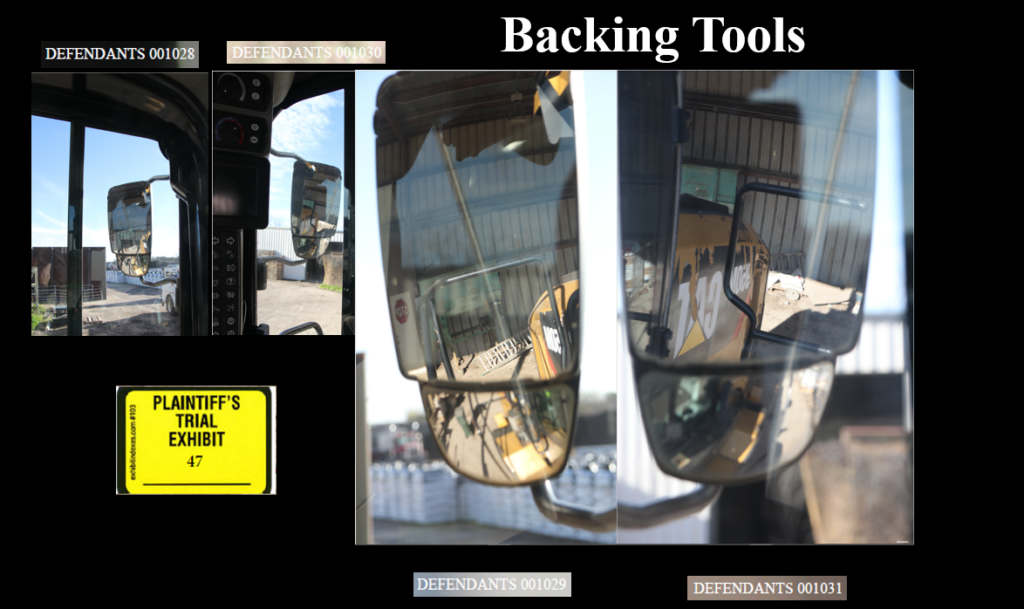
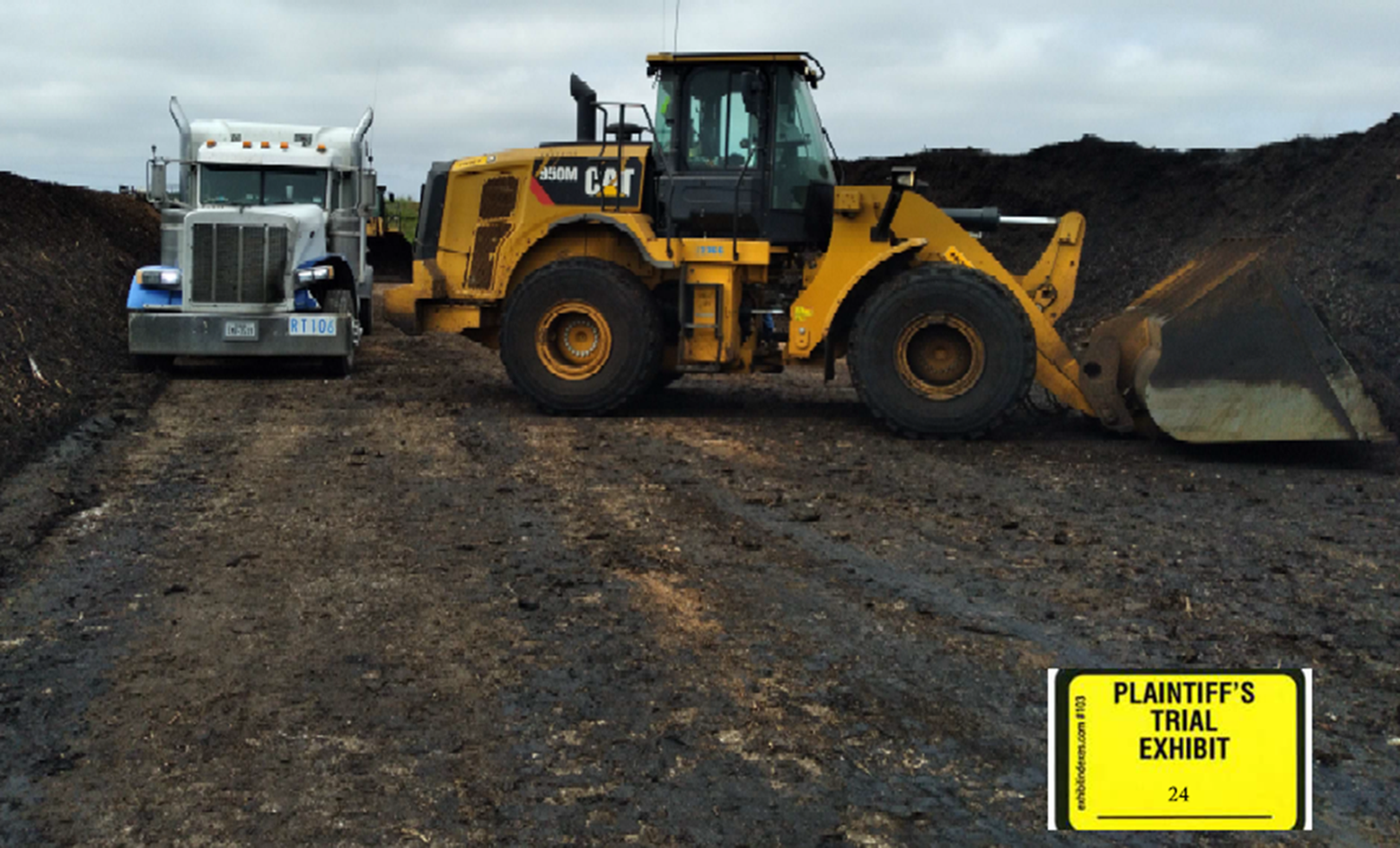
Our clients, a husband-and-wife team, were at a Texas Disposal Systems (TDS) facility. He was driving their semi-truck, and she was resting in the sleeper berth, when a TDS employee operating a Caterpillar front-end loader backed into their truck.
The couple’s dashcam captured the moment of impact. But instead of offering clarity, the video raised new questions: Did our client creep forward into the loader’s path? Were both sides at fault?
Police responded and mentioned “driver inattention” from both parties, but that report was never admitted into evidence. The defense attorneys jumped on the dashcam footage and doubled down. Their message was clear:
This was your driver’s fault. We won’t pay a dime.
Digging deeper: What we uncovered changed everything
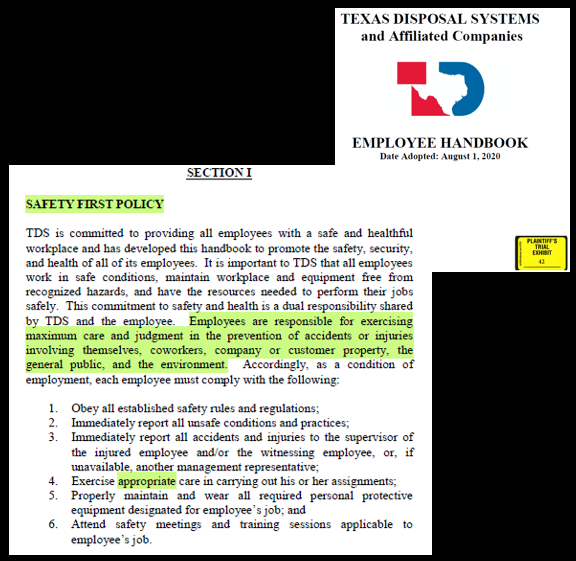
When the surface-level facts didn’t tell the full story, we dug deeper, and what we found shifted the case.
TDS had conducted an internal “root-cause” investigation. Their own records blamed the crash on their employee: “backing into customer.” We got that document into evidence.
And it didn’t stop there. We discovered the TDS driver had been involved in three more backing incidents after this crash and had been fired because of these incidents. We made sure that termination record made it into court, too.
In the end, the jury had a fuller picture: this wasn’t a one-time mistake. It was part of a pattern of unsafe behavior and negligence.
Shooting down the defense’s claims with reason
The defense attempted to downplay the physical effects of the impact by hiring a biomechanical expert to testify for them. The expert claimed that coughing, sneezing, shaking one’s head, or getting into or out of a car would place more pressure on a person’s spine than what our clients experienced in the crash.
Remember that the crash was between two massive pieces of equipment and was able to push the front end of an 84,000-pound tractor trailer about four feet in a split second. Have you ever made a car skid by getting into it? We did not let the defense get away with such statements without exposing how absurd they were.
Our clients’ injuries: A long road to recovery
Both the husband and wife were hurt in the crash, but the wife faced the most difficult path. She already lived with chronic back pain from an old injury in the 1990s. Just one day before this crash, she had finally been recommended for surgery. Then came the crash.
After being evaluated by a specialist, her medical team recommended significant treatment and ongoing care. We asked the jury for fair compensation, based not just on bills and diagnoses, but on the pain, disruption, and hardship she’d endured and would continue to live with.
The jury awarded her:
- $36,000 for past medical care
- $305,000 for future medical costs
- $291,000 for pain and hardship she already experienced
- $291,000 for the challenges she’ll face going forward
That totaled $923,000, a reflection of the life-changing nature of her injuries.
But what about the husband?
Because the dashcam footage raised doubts, the jury assigned 51% of the blame to the husband. Under Texas’ comparative negligence laws, he couldn’t recover damages even though he was also hurt and needed treatment.
Still, his wife was an innocent passenger. And we fought to make sure she got justice.
RELATED:How does Texas personal injury law deal with contributory negligence?
Behind the scenes: A strategy built for the long haul
This wasn’t a slam-dunk case. We faced aggressive defense attorneys, a dashcam video that could be interpreted in more than one way, and even a surprise move when the defense pulled a key witness at the last moment.
But our trial team stayed nimble. We exposed the flaws in the defense’s expert testimony and adapted our strategy in real time. Most importantly, we centered the jury’s attention on what mattered: a person’s life was upended and she deserved to be heard.
RELATED:How lawyers prove fault in car and truck accidents
A hard-fought win, and a message to others
After a years-long legal battle, the final result was clear: a $923,000 jury award. Due to how Texas law deals with fault, this amount was reduced to a still-impressive $452,000, plus court costs and interest.
It’s a reminder that when you’ve been hurt—even when the facts are complicated—you still have rights. You still deserve answers. And with the right legal team, you can win.
Injured in a crash where fault is disputed? Don’t give up.
We know how isolating it can feel to be told your case isn’t worth pursuing. At Crosley Law, we look past the assumptions. We find the truth. And we fight for people like you.
Call our San Antonio offices at (210) 625-8380 or fill out our online contact form to schedule a free consultation with our personal injury lawyers. We’re ready to hear your case and help you decide how to move forward.
The content provided here is for informational purposes only and should not be construed as legal advice on any subject.