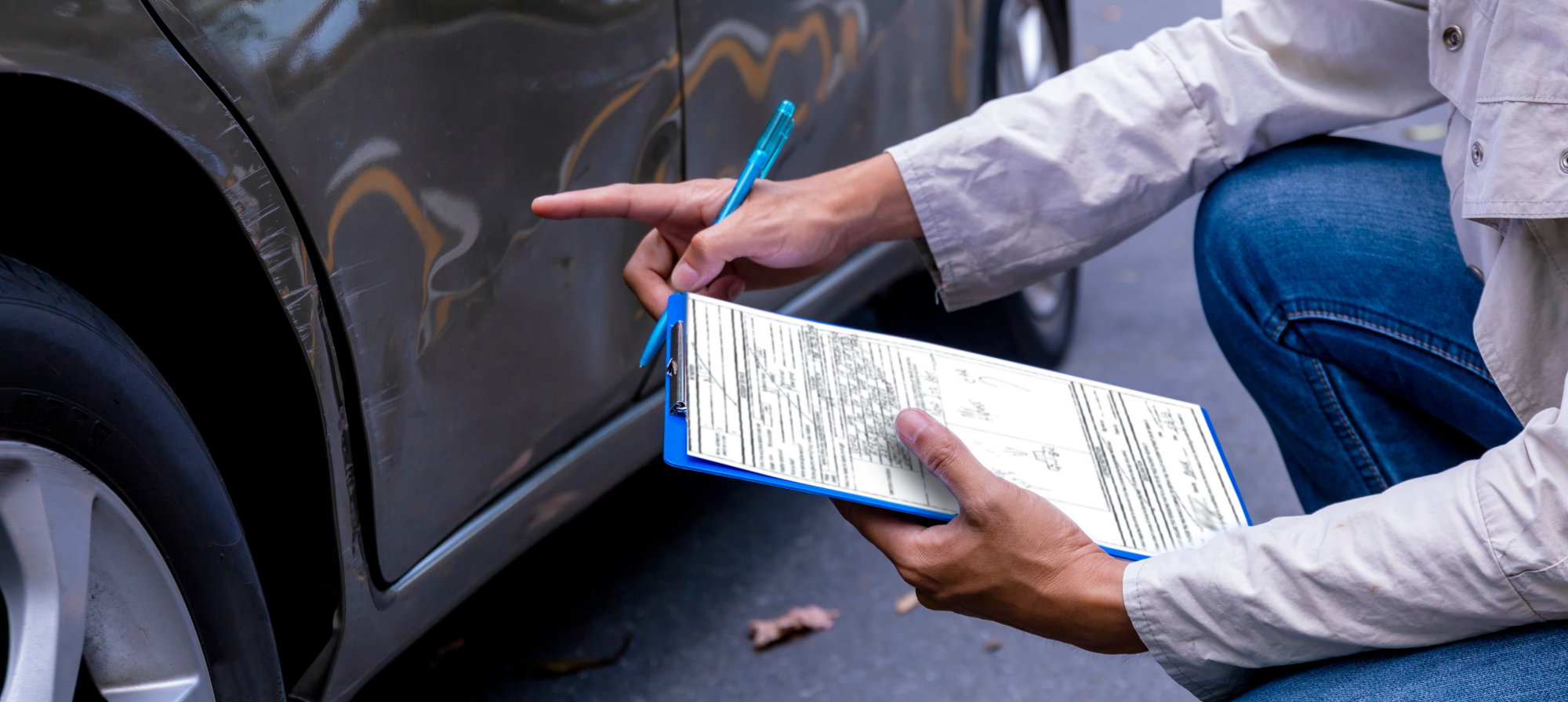



After you’ve notified the insurance company about your auto accident, they’ll quickly assign an insurance adjuster to your case. Sooner or later, you can expect the adjuster to call and ask you for a recorded statement.
When that happens, you might be asking yourself questions like, “Do I have to talk to this person?” and “Should I talk to this person?”
Friendly reminder: the insurance adjuster is not your friend, no matter what they say or how much they seem to be “on your side.”
While you should be polite, it’s almost never in your best interest to share much information with the at-fault driver’s insurance company. Yes, it’s their job to investigate the crash, evaluate your damage and injury claim, and potentially offer a settlement. But they are working on behalf of the insurance company, whose goal is to keep the amount of money they must pay in compensation to an absolute minimum.
Read on to learn more about insurance adjusters, their employers, and how to deal with them after a car crash.
7 Tips for talking with an insurance claims adjuster after a car crash

Contact an experienced personal injury lawyer as soon as possible. The best way to deal with insurance adjusters is to let your personal injury attorney handle as much of the communication as possible. A good lawyer can represent you in discussions and negotiations with the insurance company. They can also ensure that you’re fully prepared any time you do have to speak with an adjuster, opposing attorney, or anyone else involved in your case on the side of the defense.
Remain calm. Emotions are high after an auto accident and speaking with an insurance adjuster is usually frustrating. They may ask uncomfortable questions, be evasive, or say things you disagree with. But getting upset will not help your case. Be firm but polite.
Stick to the facts. Don’t speculate or make assumptions about what happened or who was at fault. Don’t guess. Just describe the simple facts of what happened as objectively as possible. If you aren’t 100% sure about something, say “I’m not sure” or “I don’t remember.” If you guess—and that guess turns out to be wrong—the insurance company won’t hesitate to attack your credibility in settlement negotiations or a trial.
Don’t admit fault. Avoid even casual statements like “I’m sorry” or “I should have seen it.” Good people often say things like this to be polite or when they’re feeling flustered. The problem is that insurance claims adjusters will take casual statements like this as “proof” of you admitting at least partially fault. They can then use that to deny your insurance claim (or at least reduce their offer).
Don’t give a recorded statement. Insurance adjusters almost always ask for one, but they can never help you. The purpose of a recorded statement, from the insurance company’s perspective, is to look for inconsistencies or mistakes in what you tell them. A recorded statement is not required to file a claim and giving one can almost never help your case.
Don’t sign a blanket medical release. Insurance adjusters often ask for permission to access your medical history to evaluate your claim. While you will need to share relevant medical history and records with the insurer, you do not have to (and should not) give them full access to your entire medical history without speaking with an experienced attorney first. If you do, the adjuster will likely dig through your medical record to look for any excuse to blame your symptoms on a pre-existing condition. For example, if you saw a doctor 10 years ago for unrelated back or neck pain, the insurance company could try to use it against you.
Take notes and ask questions. The insurance adjuster is trying to get information from you—but it works the other way, too. If you don’t understand something, ask for clarity. If they say you were at fault or that a particular offer is “fair,” ask them how they made that decision and what evidence they’re basing it on. Open-ended questions that force the adjuster to explain their rationale can provide important information that can help you with your car accident case.
How insurance adjusters use victims’ recorded statements to deny car accident claims

While many auto accident victims try to handle their insurance claims on their own, doing so typically isn’t in their best interest.
The insurance adjuster might seem pleasant, but again: they are not your friend. Their job is to protect the interests of its for-profit employer. If you give the insurance adjuster any grounds to question the validity of your claim, they will take advantage.
During the statement, the adjuster will ask questions about your accident, your injuries, and other issues. But if you forget anything or later make statements that contradict your recorded statement—even in minor ways that seem insignificant—the insurance company can try and discredit you. For example, if you forget to mention one of your symptoms, they might try to get out of paying for medical bills related to that specific injury. Or, if you say something that turns out to be incorrect, they can portray you as dishonest.
Unfortunately, it’s surprisingly easy to make inconsistent statements after traumatic car accidents. You might be in severe pain and on large doses of medications that affect your ability to think clearly. Talking with an adjuster adds its own stress and anxiety. As time passes, your memory of the accident might fade or the adjuster might encourage you to speculate about the accident, the extent of your injuries, or other issues. If you fall for the insurance adjuster’s tactics, you might seriously weaken your case.
This is why insurance adjusters love recorded statements from injured victims, especially when the victim is alone and unrepresented by a good car accident attorney. These statements simply serve as extra ammunition the insurance company can use as they try to deny the victim’s claim.
When you work with an experienced car accident lawyer at Crosley Law, the insurance company can no longer contact you directly. Instead, we’ll oversee every aspect of your claim: responding to insurance company questions, handling paperwork and filing deadlines, and demanding fair compensation for your injuries.
What about the insurance adjuster from your own auto insurance company?
Injury victims often must file claims with multiple insurance companies, including their own. For example, say that the at-fault driver isn’t carrying enough liability insurance to cover your current and future medical bills, lost wages, and other damages. To get additional compensation, you’d need to file a claim with your own insurance company under an uninsured/underinsured motorist (UI/UIM) policy, if you have one.
You might think that an insurance adjuster from your own auto insurer would be more likely to offer you a fair settlement. Unfortunately, this is not the case. You might be a long-time customer who faithfully pays premiums on time, but as soon as you file an insurance claim, they take the role of adversary.
RELATED POST: How Insurance Can Cover Your Medical Bills After a Car Accident | Crosley Law
Car Crash? Call Crosley
There is no rule requiring you to talk to a representative from the other party’s insurance company. If you have an injury claim, you can and should refuse to speak with an adjuster from the other side until you consult an auto accident lawyer.
Crosley Law Firm represents victims who have been hurt in serious crashes involving cars, buses, trucks, and other vehicles. If you or a loved one has questions about your car accident claim, contact the team at Crosley Law Firm by completing our online form or calling us at 210-529-3000. One of our experienced lawyers will get in touch with you as quickly as possible. We offer a no-fee policy, so there’s no risk to contact us today.
The content provided here is for informational purposes only and should not be construed as legal advice on any subject.