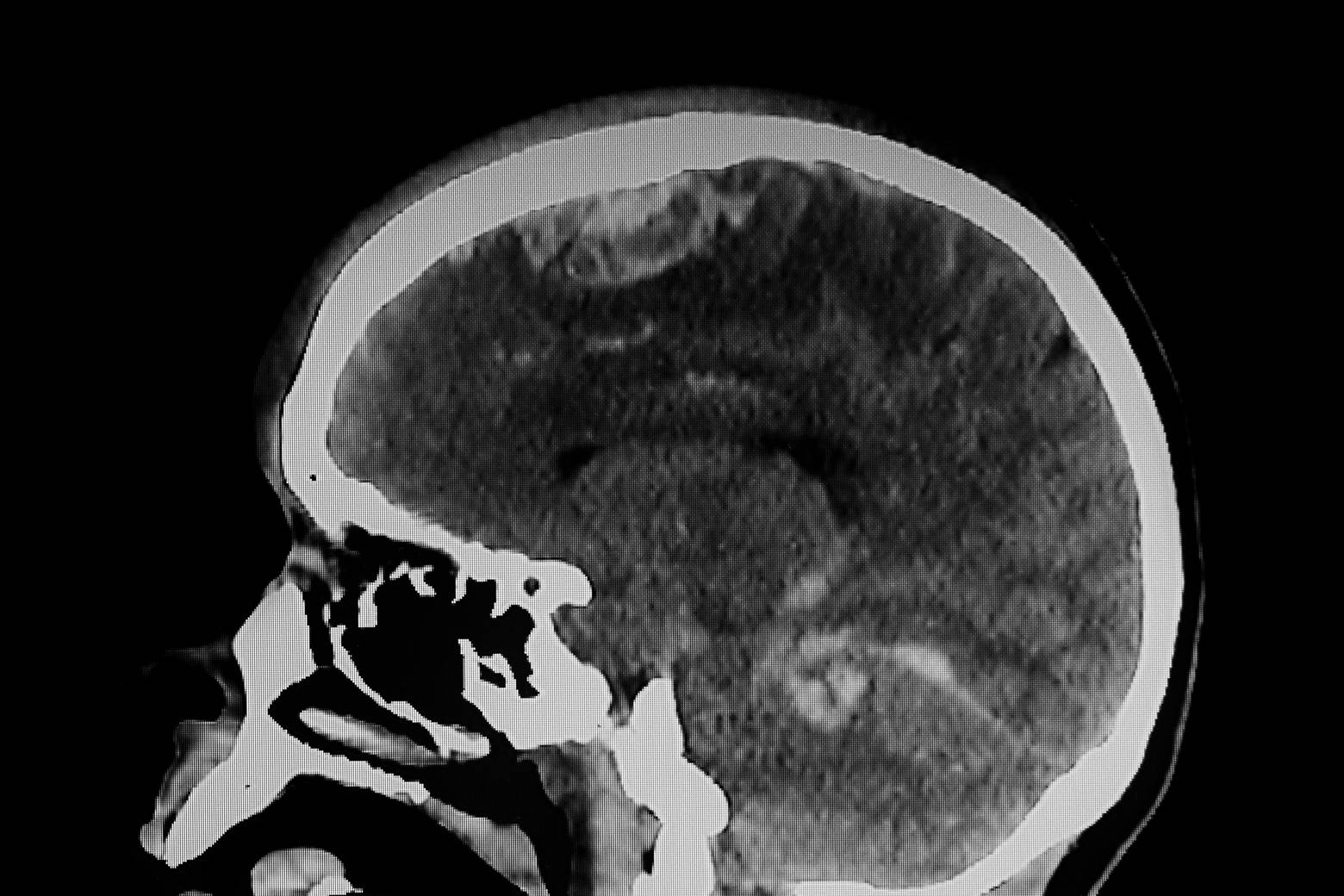



If you’ve suffered a concussion or traumatic brain injury (TBI) after a crash, you’ve probably felt this frustration: you might not look injured to a stranger, and you may not have a dramatic-looking MRI that “proves” the challenges you’re now living through. Insurance companies know this and may try to use it against you.
In an episode of Winning the TBI Case, Tom Crosley explains one of the most important things a serious brain injury lawyer does for clients: identify, expose, and defeat defense “junk science”—the kind of defense testimony that looks impressive in a courtroom but falls apart once you know what to look for.
Here’s what Tom means when he talks about “junk science,” why defense lawyers lean on it, and how a skilled trial lawyer can fight back.
“Cross-examining defense junk science witnesses is an art form.”
– Tom Crosley
Why insurance companies hate TBI cases
TBI cases make insurance carriers nervous for one simple reason: the value of the case often has little to do with medical bills. That’s very different from other injury claims.
“The value of a TBI case might bear no relation whatsoever to medical bills,” Tom says. There’s not a lot medical science can do to treat most TBIs. The damage is done and it can’t be reversed.
In other words, the biggest harm in a TBI case is often the long-term changes to your life, such as your thinking, memory, energy, mood, relationships, and ability to work. The costs of medical visits can be just a fraction of the total impact.
So what does the defense do when the stakes are high and the injury is hard for laypeople to “see”? They hire experts who minimize, deny, or flat out dismiss your client’s injury.
RELATED: Can old head injury symptoms persist years later?
The defense playbook: three common “junk science” experts
“Most of these people end up being career defense witnesses. They’ll testify 95% of the time for the insurance companies and jurors need to know that so they can judge whether the testimony they’re hearing is authentic and truly curated for this case based on the evidence or whether it’s part of a spiel that this defense witness gives in every case, no matter what the facts are.”
- Tom Crosley
Tom describes a familiar lineup of experts that show up again and again in brain injury litigation. If your case involves a concussion or mild TBI, you should expect the defense to try some version of these themes.
The defense neuropsychologist: “You tested normal.”
Tom calls this witness “usually the number one weapon of the defense.”
The defense neuropsychologist’s job is often to suggest your symptoms aren’t real or aren’t caused by the crash. They rely heavily on buzzwords like “normal limits” and “no objective evidence.”
“They’ll say things like, any cognitive issues they have are more likely due to their preexisting depression or anxiety,” Tom says.
To a jury, “normal limits” can sound like “nothing is wrong.” But Tom explains why that’s misleading: “normal” is a range, and that range can include people who are doing great and people who are barely hanging on.
This is where experience matters. Tom doesn’t just argue with the defense witness. He explains the concept so jurors understand what’s happening and why it matters.
“ ‘Normal limits.’ That doesn’t mean that they’re functioning at their pre-injury level, does it?” Tom may ask the defense witness. And often the witness will have to admit that no, it does not.
That’s a critical point for the jury to understand: a person can be worse than they used to be—even dramatically worse—and still fall inside a broad statistical range.
RELATED: When “normal” isn’t normal: Updated guidelines help lawyers win truamatic brain injury settlements
The defense radiologist: “The MRI looks normal.”
Tom describes how difficult it can be to battle radiology testimony, because imaging interpretation can become subjective unless you have the right counter-experts.
Tom compares MRIs to Rorschach ink blot tests. The defense radiologist may look at a scan and confidently claim that everything is normal. If you don’t have the right team, that testimony can stick even when it’s incomplete.
You can’t just say “no it doesn’t” to a radiologist’s opinion and expect a jury to side with you. A serious brain injury case requires the ability to counter with real science.
The biomechanical engineer: “The crash forces were too small.”
This is one of the most common “sounds smart” defenses in a concussion case: they try to turn your injury into a math problem.
According to Tom, common engineer claims follow along the lines of:
- “There wasn’t enough force in this crash to cause a TBI.”
- The force was equal to “sneezing or stepping off a curb.”
Tom’s response to these claims is direct: these witnesses are not doctors. They run calculations and try to convince a jury that those calculations decide whether you’re hurt.
“Remember, these guys are not medical doctors,” Tom says. “They sit at a desk, they plug numbers into a computer, they spit out a fancy looking force calculation that makes it sound like your client couldn’t possibly be hurt.”
The danger here is that jurors may think science has “answered” the case. But Tom explains the deeper truth: well-spun statistics don’t let the defense make absolute statements about what can or can’t injure a specific person.

How Crosley Law fights back: real evidence, real strategy
So how do good personal injury lawyers dismantle defense testimony in ways jurors can understand?
Here are the major themes Tom emphasizes:
The work starts early, well before trial
Tom makes a point many people don’t realize: the “trial” battle is often won or lost long before trial.
“Cross-examination starts in discovery. We’ve got to set the trap early,” Tom says. “If you wait until trial to start dismantling the defense’s experts, you’re probably too late.”
Your personal injury lawyer should be aggressively gathering information, prior testimony, patterns of behavior, and financial incentives early in the case. “Seeing what happens” and playing a reactionary game to the defense will likely not get your case far.
Exposing the “repeat player” hired gun
Tom explains something most jurors would want to know: some experts give the same opinions over and over, regardless of the facts.
Tom gives examples from his experience of different defense doctors with similar patterns:
- “In 27 different cases, all 27 cases, he reaches the same conclusion that the plaintiff isn’t really hurt.”
- “Of the 50 NFL players that he had evaluated for playing related brain injury, he found exactly zero of them had a playing related brain injury.”
Providing evidence of these patterns helps jurors see the defense witness not as an objective scientist, but as a professional witness who always lands in the same place.
Using medical literature and “real science” against “junk science”
Tom talks about bringing peer-reviewed research to court and using it to expose the defense as out of step with modern science.
“By using these peer reviewed scientific articles […] you can either make the expert admit that they’re wrong or that they look completely uninformed,” Tom says.
Even when the expert won’t admit they’re wrong, Tom describes another effective move: proving that the medical research is on the side of his client and that the defense expert is in the minority.
You don’t need to get a dramatic confession from the witness or even get them to admit anything. You only need to help jurors see which side is better grounded in credible science.
Attacking flawed comparisons
A major theme in the biomechanical defense is that they rely on studies that aren’t comparable to the real-world crashes and impacts clients have experienced.
“The rebuttal is usually something like, ‘Hey, the test that he’s relying on to show that there’s not enough force was done on 200 helmeted high school football players. Your client was a 60-year-old woman who didn’t have a helmet on,’” Tom says, “It’s like a comparison of apples and oranges.”
The message is simple, but effective: unreasonable comparisons aren’t reliable science.
RELATED: Can a minor car accident cause a concussion?
Following the money
Finally, Tom emphasizes the most timeless credibility test there is: who’s paying the “expert” and how much?
Jurors deserve to know whether a witness is a treating doctor trying to help a patient or a professional witness hired to help an insurance company.
“Defense experts aren’t here for the truth. They’re here for the paycheck.”
- Tom Crosley
What this means for you if you’re looking for a brain injury lawyer
If you’re a potential client reading this, here’s the takeaway:
A brain injury case isn’t just about telling your story. It’s about proving your injury in a world where the defense will often claim your symptoms are “stress,” “depression,” “anxiety,” or something else entirely.
As Tom says about the defense strategy: “They’re going to look for something else in that person’s life and try to pin the tail on that donkey and not on the TBI.”
That’s why experience matters. You want a lawyer who understands the science, understands the tactics, and knows how to build a case around objective proof, even when the injury is invisible.
Call Crosley Law about your concussion or TBI case
If you’re dealing with headaches, brain fog, memory problems, mood changes, dizziness, or other symptoms after a crash, don’t assume the insurance company will “do the right thing.” Brain injury claims often require a real fight, especially when the defense brings in paid experts to deny what you’re living through.
Crosley Law focuses on serious injury cases, including TBIs. Our San Antonio brain injury lawyers know how to attack junk science and clearly present the truth.
If you want to understand your options, reach out to our team to request a free consultation.
The content provided here is for informational purposes only and should not be construed as legal advice on any subject.