


When a traumatic brain injury (TBI) disrupts your life or the life of a loved one, the path forward can feel confusing, emotional, and uncertain. One of the biggest hurdles in any TBI claim is proving that the injury is real and life-altering, especially when the injured person might look and sounds “normal” at first glance.
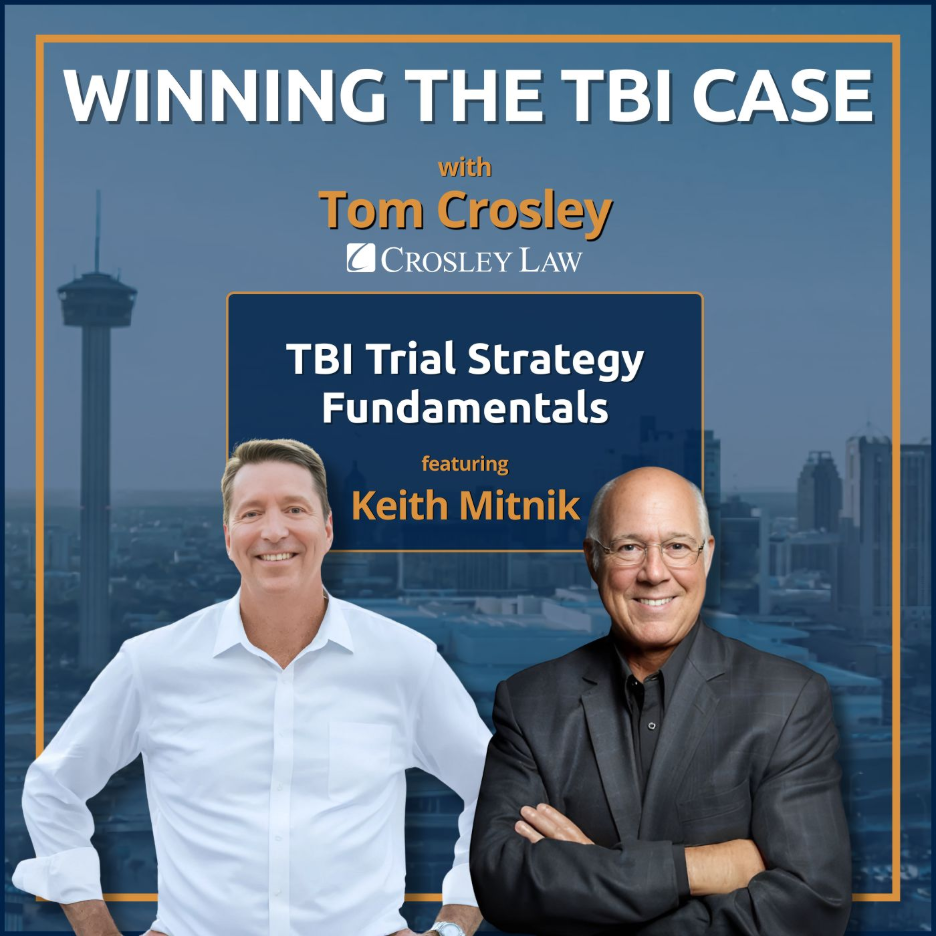
In an episode of the Winning the TBI Case podcast, San Antonio brain injury lawyer Tom Crosley sat down with nationally renowned trial attorney Keith Mitnik of Morgan & Morgan to talk about what it takes to win a TBI case at trial. The conversation offers valuable insights for brain injury survivors navigating the legal aftermath.
Why TBI cases are different and harder to win
“One person walks away [from a TBI] and never has another problem from it. Another person has it and they see consequences. Years later, another one sees consequences much more frequently. And it’s not necessarily about the severity of it. There is a lot of difference in it, and it just depends from individual to individual.”
- Keith Mitnik
Too often, lawyers approach a brain injury claim the same way they would a broken bone or whiplash. But the science behind TBIs is complex, especially when it comes to mild TBIs that don’t involve obvious bleeding or visible damage.
“It’s not like a car crash or herniated disc case there,” Mitnik explains. “It’s a totally different set of knowledge. People go in and they rely on their trial skills, but they don’t really know the data and they don’t really know the science. Or they know the science in their sleep, but they don’t know how to try a case with it.”
Crosley and Mitnik agree: It takes both deep scientific understanding and real courtroom skills to present a TBI case effectively.
“It’s such a subtle injury that it requires other people in their lives, plus the doctors and experts, to explain how this person looks normal but isn’t normal,” Crosley notes.
The importance of strategy and storytelling in mild TBI cases
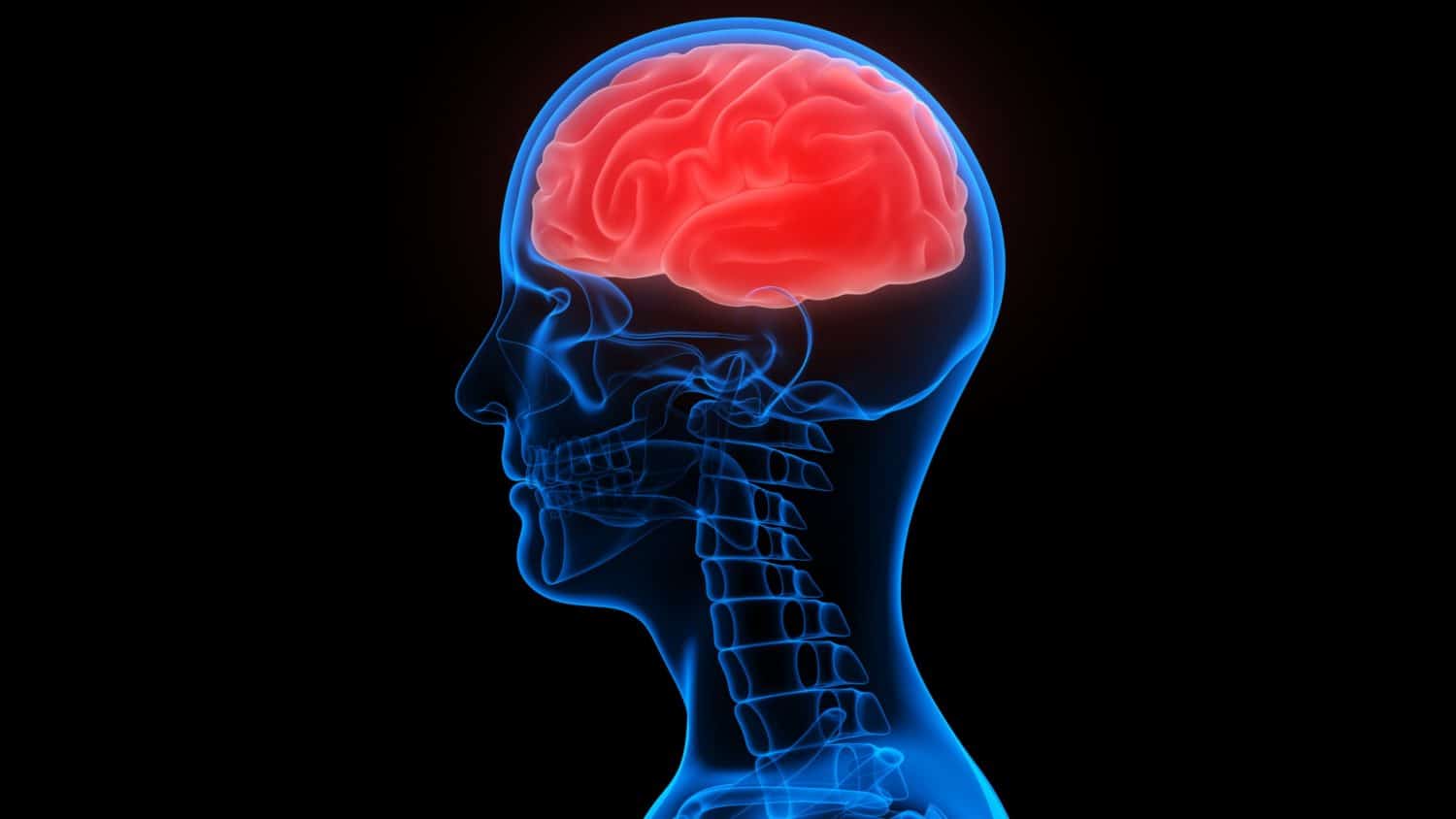
Mild TBI cases are uniquely challenging because the injury can be invisible. Many survivors can still talk, walk, and perform basic tasks, but may struggle with memory, fatigue, personality changes, or mental fog. Jurors often have trouble believing an injury they can’t see.
Crosley compared a mild TBI diagnosis to a “mild case of cancer.” The term can greatly downplay the potential life-changing effects to the victim in the future.
“‘Mild’ is the label,” Crosley says. “They give it in the first 24 hours; that’s all. And so it doesn’t tell you how they’re going to do two years later.”
Mitnik adds that jurors often have personal experiences with concussions or head bumps that resolved quickly, making it even harder to convince them that someone could have lasting effects from a seemingly minor crash.
Understanding these factors and how they can be interpreted by a jury should inform every decision in a case.
RELATED: Can old head injury symptoms persist years later?
Timing and witness order matters in TBI cases
One takeaway from the conversation was the importance of when to introduce your client during trial.
In other cases, Mitnik notes, an attorney may want to put a well-rehearsed client on the stand first. However, such preparations can backfire in TBI cases by making the jury perceive the victim as less affected by their injury than they truly are.
“You take a client, you work them up, get them ready to be the world’s greatest witness, and they get up and they do everything perfect,” Mitnik says. “And guess what? They don’t look brain damaged.”
Instead, both lawyers agree that it’s often best to have medical experts, family members, and co-workers testify first. These witnesses help explain the changes in the injured person’s behavior, focus, or mood. Only then should the client take the stand—briefly—to show the jury a genuine, unscripted version of themselves.
“No one preps us for every single day of our lives,” Crosley says, “and we don’t want to show up rehearsed.”
RELATED: Why ”before and after” witness testimony can make or break a personal injury case
Should the brain injury survivor even be in the courtroom?
Another critical question: Should the TBI survivor attend the trial at all?
“It is one of the most agonizing decisions I make,” Mitnik says.
Jurors tend to watch the client closely, including how they walk, how they interact, whether they look “normal.” That scrutiny can hurt a case if the client doesn’t appear visibly injured. However, a brain injury survivor not being in the courtroom might imply to the jury that they can live their life normally.
Establishing an authoritative reason why the client is not present can help, according to Crosley. This can take the form of a doctor or expert testifying that sitting through the full trial could be harmful to the client.
RELATED: How medical experts can make or break your personal injury case
Jury selection is crucial
Winning a TBI case starts long before the opening statements. For both Crosley and Mitnik, jury selection is one of the most important parts of the trial.
Both attorneys agree that they want jurors who understand that just because someone looks fine doesn’t mean they are.
Mitnik shares a tip he uses in pre-trial jury selection: start with the most severe brain injuries first, then work backward. That way, when he gets to the subject of mild TBIs, jurors see it as part of a spectrum and not something that is immediately insignificant.
The key, they agree, is to find jurors who have either seen the long-term impact of a brain injury in someone close to them, or who can be open-minded about how differently people respond to trauma.
Don’t let your brain injury lawyer learn on your case
At the end of the podcast episode, Crosley asks Mitnik what advice he’d give to someone preparing to try their first TBI case.
“They would be smart to call you or someone like you that’s tried a bunch of them,” Mitnik says, “and has turned it into a true subspecialty and learned it. Because it’s a mistake to wade in and think it’s like any other case.”
TBI litigation isn’t a good place for on-the-job learning. It takes years of trial experience, extensive scientific knowledge, and a carefully honed strategy to successfully present a brain injury case to a jury.
RELATED: Revisiting my Trial Lawyer Nation interview: strategies for TBI lawyers
Crosley Law: Trusted advocates for brain injury survivors in San Antonio
If you or someone you love has suffered a traumatic brain injury, your choice of lawyer matters.
San Antonio brain injury lawyer Tom Crosley and the team at Crosley Law have extensive experience with brain injury litigation. They understand the science, they prepare cases for trial, and they know how to overcome insurance company tactics that downplay or dismiss TBI claims.
Contact Crosley Law today for a free consultation. We’ll listen to your story, explain your options, and fight to get the full compensation you and your family deserve.
Listen to more episodes of Winning the TBI Case on our webpage or subscribe wherever you get your podcasts.
The content provided here is for informational purposes only and should not be construed as legal advice on any subject.