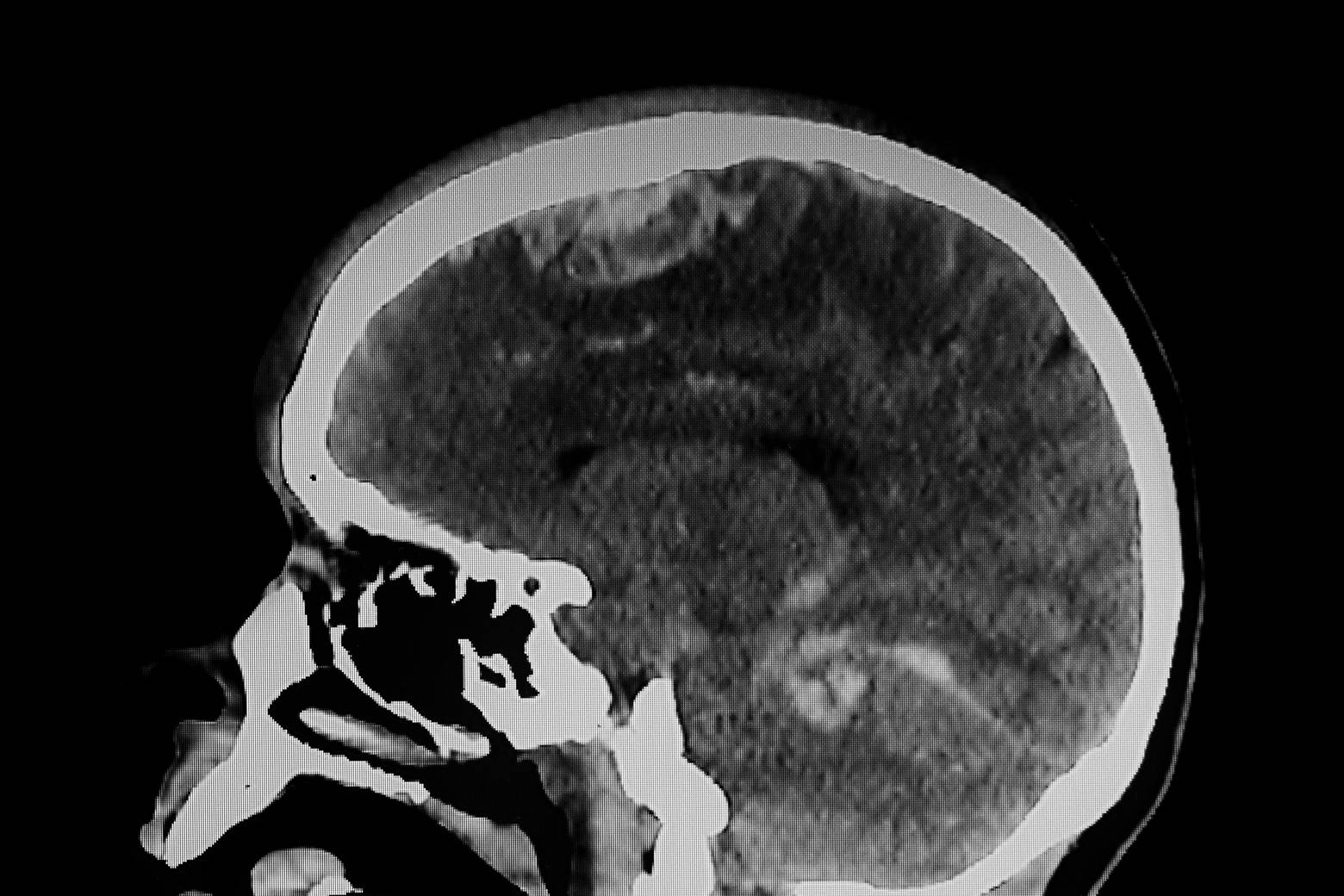



Traumatic brain injury (TBI) cases can be some of the most difficult and challenging to handle for personal injury attorneys.
TBIs have often been considered “invisible injuries.” They aren’t always easy to prove with objective medical tests.
The science behind brain injuries also can be difficult for lay people to understand. Symptoms can be life-changing, but also subtle. It’s not always easy for a neutral third party (like a juror) to understand just how much a TBI victim has lost without a lot of context.
Winning fair compensation in a TBI case requires far more than just presenting medical facts and figures. Your attorney must weave together scientific evidence, emotional testimony, and optimal witness sequencing to create a powerful, persuasive story.
At Crosley Law, we’ve developed an effective system for handling TBI cases. We’ve won millions for our clients, and attorney Tom Crosley is regularly asked to speak to other attorneys about our strategies and methods.
In this blog post, we’ll share an overview of some of the main strategies our Texas brain injury lawyers use to tell our clients’ stories in a compelling way—which ultimately leads to better financial outcomes and peace of mind for our clients and their families.

Building a scientific foundation
The science behind traumatic brain injuries has come a long way in the past decade or so. That’s great news for TBI victims.
In one of our first big brain injury cases, we won $16 million for a man who had severe cognitive and emotional issues after a TBI, but had his claim denied by the insurance company because his initial brain scans looked “normal.” We spoke with experts all over the country before eventually getting our client into an experimental research study, which was using a then-rare imaging technology called magnetoencephalography (MEG). These scans can measure brain activity from millisecond to millisecond. Our client’s MEG was able to detect significant brain trauma that the traditional MRI and CT scans missed. We were one of the first law firms in the entire country to use MEG evidence in a personal injury trial.
Fortunately, nowadays MEG is a much more mainstream technology, along with other techniques like high-resolution MRI and diffusion tensor imaging (DTI). These tools can clearly reveal microscopic structural damage to the brain that older scans don’t always pick up. However, not everyone with TBI symptoms gets these scans right away. The insurance company certainly isn’t going to tell you to go get one, especially if they already have a traditional MRI or CT scan they can use against you.
When we take a brain injury case, we always make sure that our clients get the best possible medical testing, so we have irrefutable scientific evidence supporting the injury.
If the case goes to trial, we also make sure we present the most irrefutable scientific evidence to the jury as early as possible, along with an expert who can explain the images in clear and understandable language.
Using before-and-after witnesses
Because brain injury symptoms can be subtle and specific to the individual, insurance companies and juries frequently underestimate them. To overcome this, it’s important to humanize the impact.
We’ll spend a lot of time talking with friends, family members, and co-workers who had close contact with our client both before and after the injury. It’s not unusual for us to talk with a dozen or more before-and-after witnesses while investigating a case.
Many times, these witnesses can provide powerful, memorable stories about how life has changed for their loved one or colleague—for example, becoming socially withdrawn, having unpredictable mood swings, forgetting important appointments, being unable to focus, or failing tasks they had previously mastered.
We talk to as many people as possible early in the investigation. If a case goes to trial, we may ask five or more of the strongest witnesses to speak to the jury. These witnesses should also represent many facets of our client’s life—their family, their friends, their work, and their community.
This strategy reinforces the case with authenticity, allowing jurors to see the real-life consequences of the injury beyond the clinical evidence. It also makes it much harder for jurors to dismiss the evidence as exaggerated. After all, why would so many people be willing to lie for the plaintiff despite having nothing to gain?

Leveraging expert witnesses and testimony
No matter how much the science might be on your side, it’s virtually guaranteed that the defense will bring its own slate of “expert witnesses.” These are typically handpicked professionals that insurance companies rely on to give opinions that are favorable to them.
To counter that narrative and ensure that the jury remains confident in the strength of the evidence, you will also need to have highly credible expert witnesses on your side.
An important, related trial tactic is for your attorney to select several highly regarded, peer-reviewed scientific and medical journal articles that reinforce your injury claim. Statements from these publications can be read into evidence while your attorney is questioning their own expert witness. Later, during cross-examination of the defense’s witnesses, your attorney can confront them with these same publication findings and force them to answer uncomfortable questions they might have preferred to avoid.
We also like to feature a neuropsychologist as part of our team of expert witnesses near the end of a trail. Neuropsychologists are especially well suited to connect the dots between the science, personal stories, and other evidence. They are also great at explaining, in an understandable and compelling way, things like:
- Why a TBI victim might appear normal during certain interactions or perform adequately on a controlled cognitive test while struggling significantly in other types of real-world scenarios.
- How seemingly minor cognitive changes can profoundly affect relationships, work, and personal well-being.
- How cognitive and emotional deficits are likely to persist or worsen with age.
RELATED POST: The role of expert witnesses in Texas personal injury cases: what they do (and why you need them) | Crosley Law
Introducing the TBI victim to the jury
At some point in a trial, the TBI victim will be asked to provide in-person testimony, so jurors can hear and see for themselves the impacts of the injury.
It’s important that this testimony is handled with care by your attorney. In our experience, the best strategy is usually to delay our client’s testimony until the later stages of a trial. In the run up to this testimony, while we are questioning our own expert witnesses, we may gradually introduce our client to the jury through short video clips. These will usually be clips of them answering questions from the defense attorney, which our own expert witnesses can then interpret and explain.
Why not start with the TBI victim? Remember that the signs of TBI can be subtle. Without context, a juror might expect obvious signs of impairment and start to feel skeptical about the injury if they don’t see them. First impressions like these can be very hard to overcome.
By starting with the foundational evidence and before-and-after witnesses, the jury is better equipped to respond with empathy and understanding, rather than skepticism and suspicion.

Constructing the story
Human beings aren’t usually convinced by facts alone, even when on a jury. We are wired to respond to stories.
A trial is a story, and like all good stories it needs a beginning, middle, and end. The sequence in which you tell the story matters just as much as the content itself. Imagine how less powerful your favorite novel would be if you read the chapters out of order!
At Crosley Law, we take witnesses sequencing extremely seriously. We think critically about how to present the story in the most engaging way that primes the jury to view our client as favorably as possible. We even use focus groups and mock juries to test how real lay people respond to our arguments, presentations, and trial sequencing.
RELATED POST: Modern Jurors: Why Your Lawyer Needs a Fresh Approach | Crosley Law
From the case files
Our team handles multiple TBI cases in a typical year, with an overall track record that includes six-, seven-, and even eight-figure settlements and jury verdicts. In total, Crosley Law Firm has secured more than $100 million in TBI-related verdicts and settlements for our clients.
Below, you’ll find a selection of some of our most notable and recent TBI cases. Please see our results page for an even larger list of settlement figures and links to detailed client success stories.
- $30 million. We represented the family of a young girl who suffered a[GU1] [GU2] TBI after falling approximately 25 feet from a faulty apartment window. Expert witnesses were crucial in helping us accurately forecast her prognosis and future needs. Read more.
- $16 million. Our client suffered a TBI from a head-on collision with an 18-wheeler. This was one of our first big TBI cases and a great example of the lengths we will go to ensure our clients get justice. Read more.
- $11.5 million. Our teenaged client sustained a TBI at an indoor trampoline park. The defense hired a neuropsychologist who argued at trial that our client had fully recovered and was unlikely to need future care. But we were able to thoroughly refute their testimony during cross-examination. Read more.
- $9 million. In just 18 months, we negotiated a $9 million settlement for a family whose son was hit from behind by a delivery truck while walking home. We successfully countered the delivery company’s claims and demonstrated our own case, helping secure compensation for an expected lifetime of TBI and leg trauma care. Read more.
- $4.9 million. Our client, a veteran, sustained a TBI and multiple other devastating injuries after her truck was hit by semi. We cut through the semi driver’s contradictions with evidence and showed the devastating impacts of the crash on our client, achieving a settlement. Read more.
- $3.4 million. Our client suffered life-changing injuries, including multiple skull fractures and a TBI, after being rear-ended by a distracted flatbed truck driver. The medical evidence in this case was very strong, and we secured a maximum policy limits settlement from the trucking company during mediation—plus an extra $400k from the vehicle manufacturer. Read more.

Car Crash? Call Crosley
This post only scratches the surface of what it takes to get the best outcomes for TBI victims after car crashes. Each case is unique and requires a carefully tailored legal approach.
If you or someone you love is dealing with the effects of a brain injury after a Texas car wreck, give us a call at (210) 529-3000 as soon as you can for a free consultation. We believe our experience and track record speak for themselves, and we would be glad to review your case with you and discuss your legal options.
The content provided here is for informational purposes only and should not be construed as legal advice on any subject.