


Parking lots are more hazardous than you might think. High pedestrian and vehicle traffic, poor visibility, and distracted drivers who don’t take parking lot safety seriously make a dangerous mix.
On top of that, many people mistakenly believe that Texas’ rules of the road don’t apply on private property like parking lots and garages. They might even assume that all parking lot crashes are “50-50” in terms of legal liability. These misunderstandings can discourage innocent crash victims from seeking the compensation and accountability they deserve.
Our injury lawyers have helped many crash victims get the answers and compensation they deserve. In this article, we explore Texas’ parking lot accident laws and suggest ways you can protect yourself after a wreck. It’s important to be aware of how liability is determined in these situations, as multiple drivers can be involved. Additionally, understanding fault in multicar accidents can be complex, and it often requires careful assessment of the circumstances leading to the collision. By knowing your rights and the laws that govern these scenarios, you can better advocate for yourself in the aftermath of an accident. Understanding the nuances of these laws can be crucial in navigating the aftermath of a parking lot incident. It’s essential to be aware of the most common auto collision causes, such as distracted driving and misjudged turns, to prevent future accidents. Taking proactive measures, like maintaining awareness and ensuring clear visibility, can significantly reduce the risk of being involved in a collision.

Breaking Down Texas Parking Lot Right of Way Rules
It’s true that the Texas Transportation Code doesn’t outline right of way rules for parking lots specifically. However, the rules of the road under Texas law still apply, and you will still be held responsible if you break them and injure someone.
Let’s outline some basic right-of-way rules in parking lots and garages.
The anatomy and hierarchy of parking lots
It’s helpful to establish the basic construction of a typical parking lot before getting into the main right of way rules. There are three basic components that make up nearly every parking lot:
- Thoroughfare lanes. These lanes are designed to carry traffic entering or leaving the property. You usually find them surrounding the parking lot and connecting it with the main road. Usually, individual parking spaces are not directly accessible from the thoroughfare.
- Feeder lanes. Feeder lanes have parking spaces on one or both sides. You must go down a feeder lane to find a parking spot.
- Parking spaces. Self-explanatory.
To use an analogy, it might be helpful to think of thoroughfare lanes as a highway, feeder lanes as a neighborhood street, and parking space as a driveway to a home or business. On the road, traffic on smaller streets must yield to traffic on busier, faster roads. That’s typically true of parking lots as well.
So, who has the right of way?
The hierarchy of parking lot lanes can explain a lot about who has the right of way. However, there are some other rules of the road you should be aware of.
- Always yield to any pedestrians walking through the parking lot, whether there is a marked crosswalk or not.
- Always follow posted signs and pavement markings. These take precedence over any other general rules below.
- Drivers backing or pulling out of parking spaces generally must yield to through traffic in the feeder lane if there is no sign or signal.
- Drivers exiting a feeder lane generally must yield to traffic in the thoroughfare lane.
- At an intersection where lanes of similar size meet and no signs are present, the driver on the right typically has the right of way.
- If you’re turning left at an unmarked intersection, you should typically yield to oncoming traffic.
- If two vehicles are both backing or pulling out of nearby spaces at the same time, the one that began moving first has the right of way.
Drivers in parking lots owe each other a duty of care
The above basic rules cover the vast majority of parking lot right of way situations. But there are always exceptions.
Ultimately, parking lot cases come down to the legal concept of negligence. What this means is that:
- Drivers owe a duty of care to other drivers and pedestrians in the parking lot. That means they are expected to exercise a level of caution, consideration, and care that most people would consider reasonable.
- If a driver fails to exercise reasonable caution and somebody else gets hurt and suffers damages, the driver can be held responsible.
Here’s an example. Let’s say you’re backing out of a parking spot. You check for traffic carefully, don’t see anyone coming, and start backing out slowly. Then, suddenly, you’re struck by a vehicle traveling 35 miles per hour down the feeder lane.
While it’s true that forward-driving vehicles in a feeder lane usually have the right of way over cars leaving traffic spots, the equation changes if the through traffic was driving at an unsafe speed and not paying attention. A jury might find both drivers responsible or just the speeding driver, depending on the circumstances.
Who is responsible for paying my claim?
Depending on the circumstances of the crash, you may make multiple valid personal injury claims. It depends on who was at fault in the crash and what kind of insurance coverage is available.
For example, let’s say the reckless driver who hit you is 100% at fault. This is the most basic scenario. You might need to file the following legal claims:
- Personal injury claim against the other driver’s liability insurance. Texas drivers are required to carry liability insurance to cover damages that they cause. However, they may not be carrying enough insurance to fully cover your medical bills, lost wages, and other damages.
- Uninsured and underinsured motorist coverage (UM/UIM): If the adverse driver doesn’t have enough insurance to cover your losses, you can file a claim under your own UM/UIM policy.
- Personal injury protection (PIP): Most Texans have a modest amount of PIP coverage, which can cover your medical bills and lost income after a wreck no matter who was at fault.
Other cases are more complex.
For example, parking lot owners and operators have a duty to make sure their property is reasonably safe to use. If poor design, poor maintenance, unclear or insufficient signage, insufficient lighting, or other dangerous conditions contributed to the crash, the parking lot owner might also be legally responsible. You could then file a premises liability claim against the owner.
It’s important to accurately identify all responsible parties as soon as possible after a parking lot crash. Doing so will increase the size of the insurance pool available to pay your claim and improve your chances of getting a fair settlement.
What should I do after a Texas parking lot crash?
You should follow the same steps that you would after any other type of motor vehicle collision:
- Call 911 if you or anyone else needs emergency medical treatment. If you do not need emergency care but are experiencing any pain or other symptoms, seek medical attention as soon as you can—ideally within 24 hours.
- Document the crash, vehicle damage, and your injuries as best you can with pictures and video.
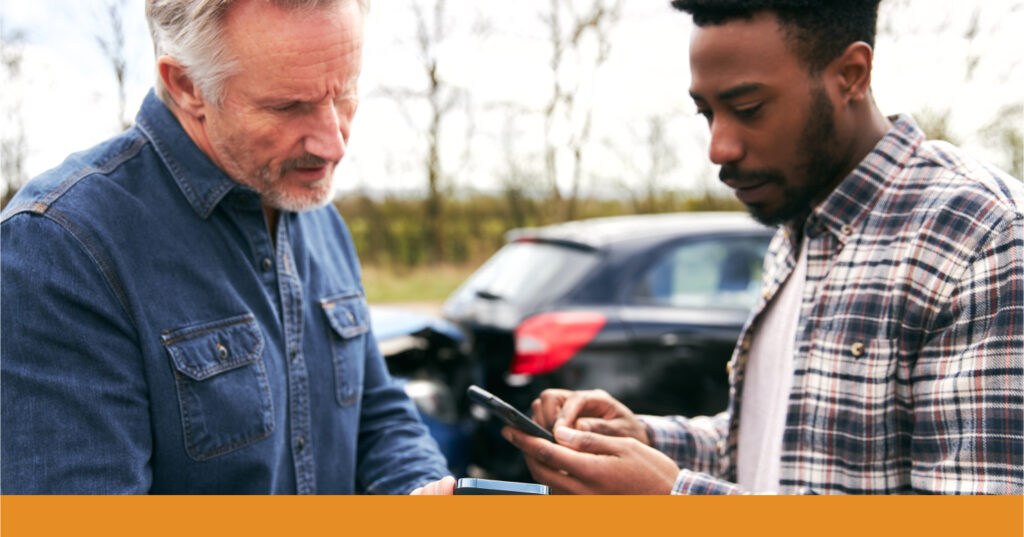
- Obtain contact and insurance information from the other driver. Stay calm and avoid admitting fault or accusing anyone else.
- Obtain contact information from any eyewitnesses present.
- Call the police. Depending on where the crash occurred and how serious it is, they may or may not send an officer to the scene.
- If the police decline to send a responding officer, you will need to complete and file a crash report (Texas Form CR-3) on your own. We urge you to have a car accident lawyer review your report before you file it, since simple errors or omissions on this form could weaken your car accident claim.
- Contact a car accident lawyer as soon as possible and schedule a free consultation to discuss your legal options.
RELATED: Insurance Settlement FAQs
How can a San Antonio car accident lawyer help me?
Parking lot accidents are often complicated from a legal perspective—especially if the local police department wasn’t willing to send an officer to the crash scene. If you don’t quickly act to obtain and preserve key evidence, you might not be able to prove that the other driver was at fault.
An experienced personal injury attorney will get to work right away building your case, so you can focus on getting better. Steps an attorney might take include:
- Obtaining any surveillance footage that might still exist, either from the parking lot owner or adjacent businesses.
- Obtaining cell phone records, dash cam footage, “black box” data, and other evidence that could prove a driver was distracted or speeding at the time of the crash.
- Following up with eyewitnesses.
- Helping you get the medical care you need.
- Collecting medical records, pay stubs, bills, doctor’s notes, life care planner projections, and other evidence to establish the extent of your injuries and calculate your damages.
- Identifying all potentially liable parties and insurance policies.
- Aggressively negotiating with insurance carriers to obtain the best possible settlement.
- Taking your case to trial, if that’s what’s necessary to get fair compensation.
- Always being available to answer your questions, talk to you about your case, and give you peace of mind as you recover.
Crosley Law’s track record in parking lot accident claims
Our personal injury lawyers have handled many cases involving drivers and pedestrians in parking lots. Here are a few examples of actual past Crosley Law cases:
- A distracted driver rapidly accelerated out of a parking space and ran over our client’s feet. Our investigation revealed that the driver was texting at the time of the collision and had not even bothered to turn on his lights or windshield wipers, even though it was raining at the time.
- A motorcycle rider was patiently waiting for a parking spot to become available when another driver backed into (and over) him as they raced out of their spot.
- A driver fiddling with his radio crashed into a pedestrian in a parking lot and caused a severe traumatic brain injury (TBI).
- The driver of an SUV turned left down a parking lot aisle and ran over our client.
In all these cases, the at-fault drivers claimed they simply never saw the other person or vehicle. However, a skilled personal injury lawyer can often prove that a driver was acting recklessly. Our team frequently consults with accident reconstruction experts, doctors, and other specialists to combat victim blaming and uncover the real causes of a crash.
RELATED: A Distracted Driver Runs Over an Innocent Pedestrian: Stuart’s Story

Car Crash? Call Crosley
If you’ve been hurt in a parking lot crash—either as a pedestrian or while you were in your vehicle—contact Crosley Law today for a free initial case review. We will discuss your unique situation and offer you candid legal advice.
You can get in touch with us by filling out our convenient online contact form or by calling us at 210-LAW-3000 | 210-529-3000.
The content provided here is for informational purposes only and should not be construed as legal advice on any subject.