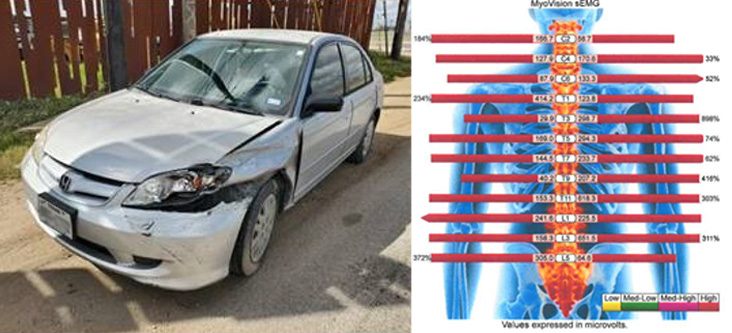



On the morning of Sept. 20, 2022, Jason* was behind the wheel of his Honda Civic, heading down Quintana Road in San Antonio. The 31-year-old had built exactly the kind of career that takes years of dedication to reach: a locomotive engineer and safety coordinator for a large railroad company.
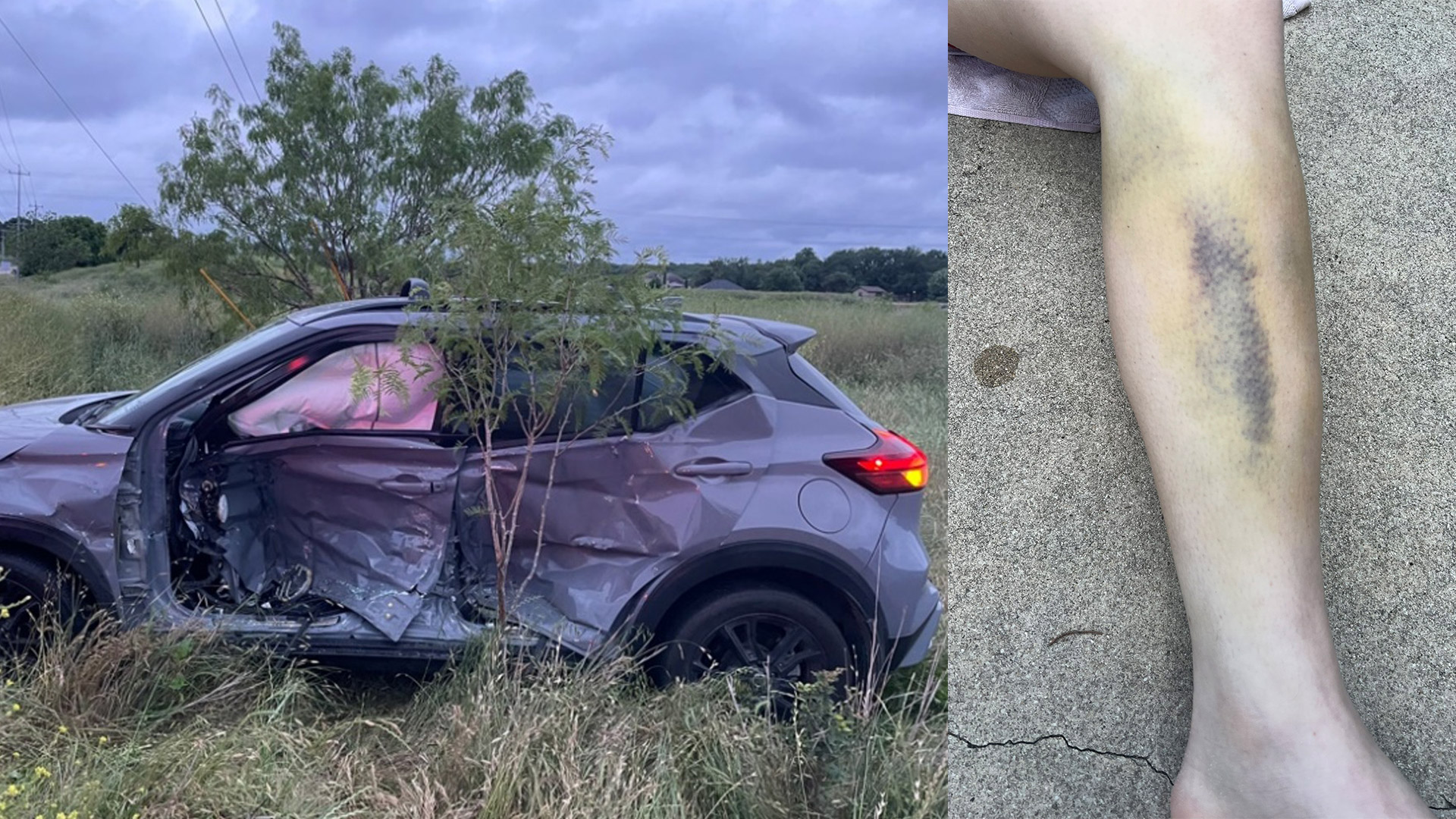
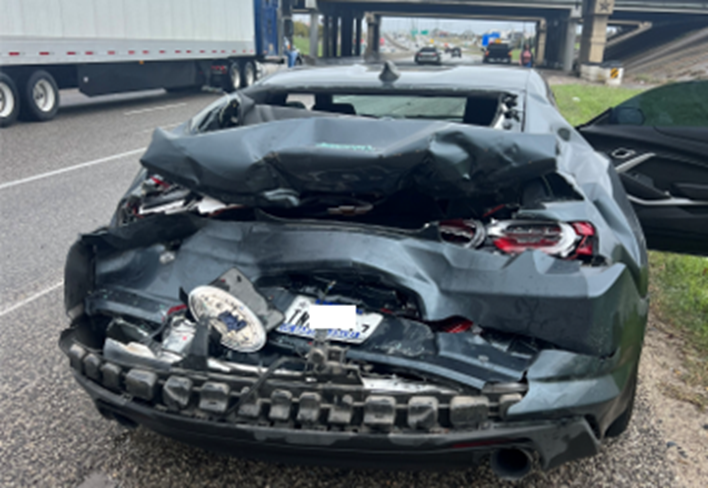
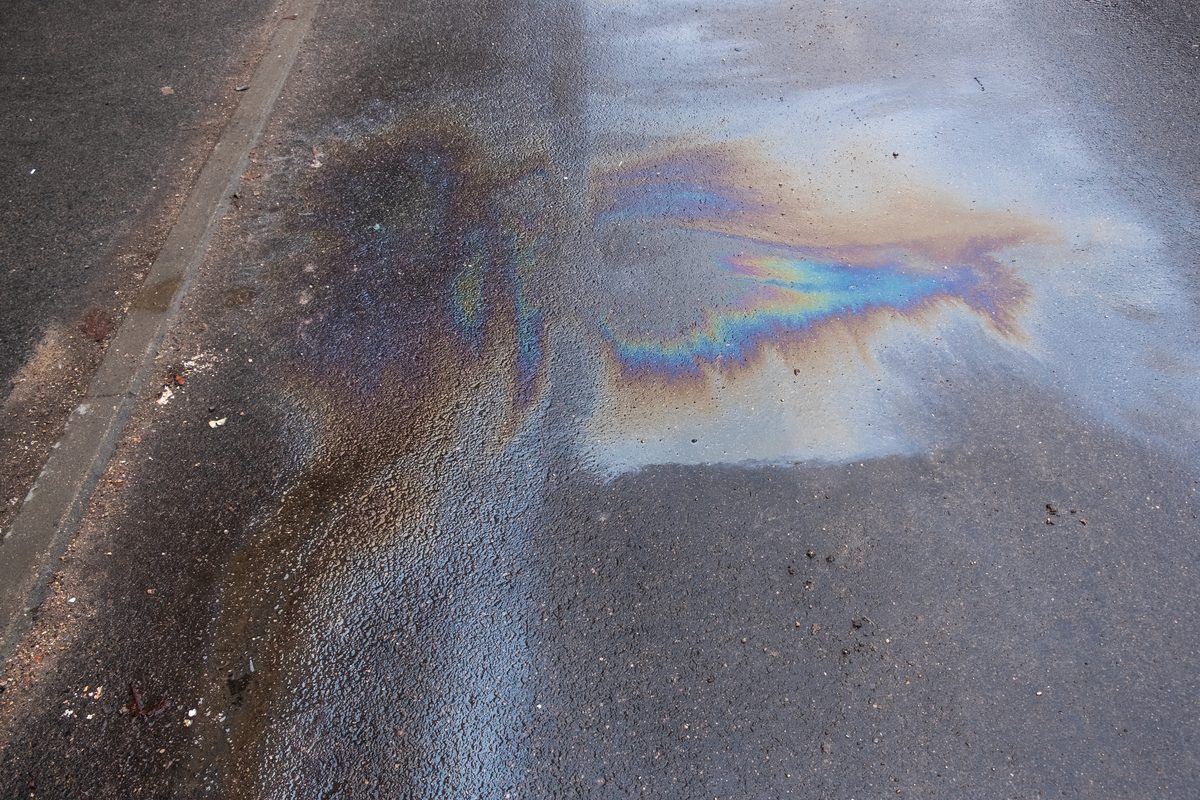
Suddenly, Jason’s car hit an oil slick on the road, sending his car spinning out of control and crashing into a nearby guardrail. He was sent to the hospital via ambulance shortly thereafter.
The crash took mere seconds, but the fight to establish accountability would take years.
*Client’s name has been anonymized to protect privacy
A company’s negligence lands on a public road
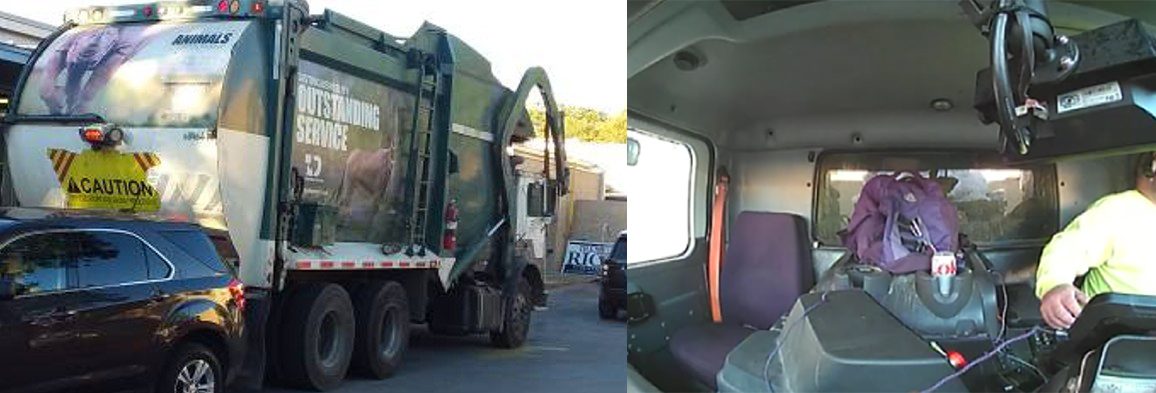
Surveillance cameras had recorded the source of the oil spill: a recycling company’s contracted hauling truck drove through, leaving a trail of motor oil.
The recycling company had contracted a hauler to transport salvaged metal, including at least one undrained motor engine, to a local scrap yard. The oil in the engine should have been drained before it ever left the facility. This is stated in the company’s written policy, as confirmed by their corporate representative in subsequent litigation.
However, the engine remained undrained that morning. Later, as the truck traveled down Quintana Road, oil spilled out of the trailer and spread across the lane.
Ample evidence contributed to this telling of events:
- Additional surveillance footage from the surrounding area captured the oil accumulating on private property and flowing downhill onto the roadway.
- The street was shown to be clear and dry prior to the truck’s appearance.
- A scale ticket from the scrap yard recorded the truck’s identity.
- Multiple witnesses, including a co-employee and a scrapyard employee, identified the driver from the surveillance footage, which matched his driver’s license photo.
- The scrapyard’s general manager testified in a written statement how the contracted truck was the cause and origination of the oil spill.
- The recycling company had been paid $12,339.60 for the load that caused the crash, and evidence showed that the company never attempted to return that money.
Despite the evidence continuing to pile on, the defendants continued to deny responsibility. They denied that it was their truck, their oil, and that any of their actions were related to Jason’s injuries.
Crosley lawyers would later characterize the case in their formal demand: “This case is about dishonesty and a business’s attempts to avoid being held accountable.”
The toll of the crash: lasting spinal injuries
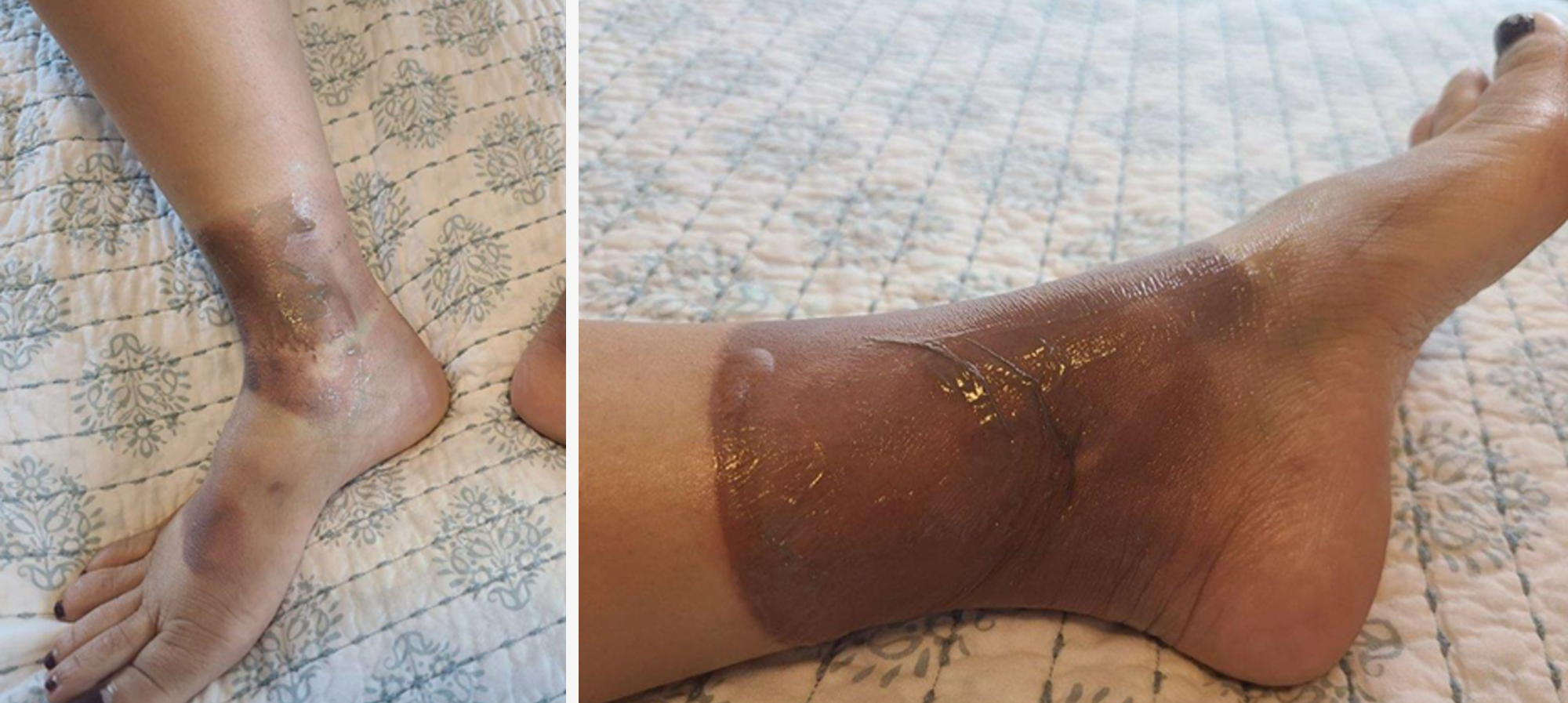
When Jason arrived in the emergency room following the accident, he was evaluated for neck and back pain. However, this would prove to only be the beginning of a medical journey that would span more than three years.
Imaging revealed disc herniations at multiple levels of his cervical spine—C4-5, C5-6, and C6-7—as well as lumbar herniations at L2-3, L3-4, and L4-5. The herniation at C6-7, measuring 4.5mm, was the most alarming: it was causing moderate central spinal stenosis with cord compression, meaning the spinal cord itself was being squeezed inside the vertebral canal. Unlike many soft-tissue injuries that gradually heal, this type of condition tends to worsen over time, carrying a risk of progressive neurological damage.
In the years following the crash, Jason’s treatment was aggressive and persistent. He underwent chiropractic care and pain management, multiple epidural steroid injections at both the cervical and lumbar levels, a cervical discogram, lumbar percutaneous disc decompression at L4-5, and trigger point and facet joint injections. Following evaluation by two spinal surgeons, surgery was confirmed to be necessary.
Surgery consisted of a cervical disc replacement at C6-7 and a lumbar laminectomy and discectomy at L4-5. These are estimated to cost over $257,000. Combined with past medical expenses exceeding $155,000, Jason’s total medical damage approached $410,000.
While Jason was given a significant financial burden to endure, the most devastating consequence was the broader damage to his life. He had spent many years working his way up to one of the most skilled and well-compensated positions available for a railroad worker. As a locomotive engineer and safety coordinator, he required precise physical function and sustained cognitive focus. His injuries rendered this level of work impossible.
Approximately two years after the crash, Jason left the railroad for a lower-compensating position.
RELATED:How to fight insurance company and defense claims in your spine injury case
When defendants deny everything, evidence must do the talking
We understood the defendant’s strategy would be deny, delay, and deflect. To combat this, we built an evidentiary record designed to leave the defense with no room to maneuver.
Our investigation assembled the surveillance footage, scale ticket records, corporate representative depositions, and eyewitness identifications into a cohesive account of exactly what happened on Quintana Road that morning.
On damages, Crosley Law retained the expert witnesses necessary to quantify what the crash had cost Jason. Medical experts documented the full progression of his injuries and the necessity of future surgery. A vocational expert analyzed how his injuries had forced a change in careers. An economic expert calculated his lost earning capacity over his remaining working years. We presented a documented, expert-supported account of what a company’s failure to follow its own safety procedures had taken from a 31-year-old at the height of his career.
After amassing sufficient evidence, Crosley Law filed a formal timed settlement demand, presenting the full scope of the evidence and Jason’s damages in detail.
Accountability can take patience and perseverance
Jason’s case eventually resolved with a $690,000 settlement. However, that figure does not capture the full extent of what the crash cost him: years of pain, the surgeries still ahead, the career he lost, and the life he had to rebuild. No settlement can fully compensate, but it gives Jason the resources to pursue the medical attention he needs and to move forward with the greater financial security defendants tried, for more than 3 years, to deny him.
The case also illustrates something that injury victims and their families often don’t anticipate: companies and insurers responsible for serious crashes frequently deny responsibility even when the evidence against them is overwhelming.
Winning a case in such circumstances requires an experienced team of legal professionals dedicated to building a case with comprehensive, irrefutable evidence such as surveillance footage, corporate representative depositions, and expert testimony that makes continued denial untenable.
Patience is also needed. Jason’s road to resolution took longer than it should have due to the dishonest delay tactics exhibited by the defendants. Throughout that time, Crosley Law’s team of attorneys persevered: gathering evidence, retaining experts, building the record, and refusing to accept less than what the case was worth.

¿Accidente automovilístico? Llame a Crosley.
At Crosley Law, we take the time to investigate what actually happened. We build the medical, vocational, and economic record that reflects what your injuries fully and truly cost you.
We represent clients in San Antonio and across Texas on a contingency basis, which means you pay nothing unless we recover for you. If a company’s negligence has turned your life upside down and they’re denying it, don’t accept less than you deserve. Contact Crosley Law to request a free consultation.