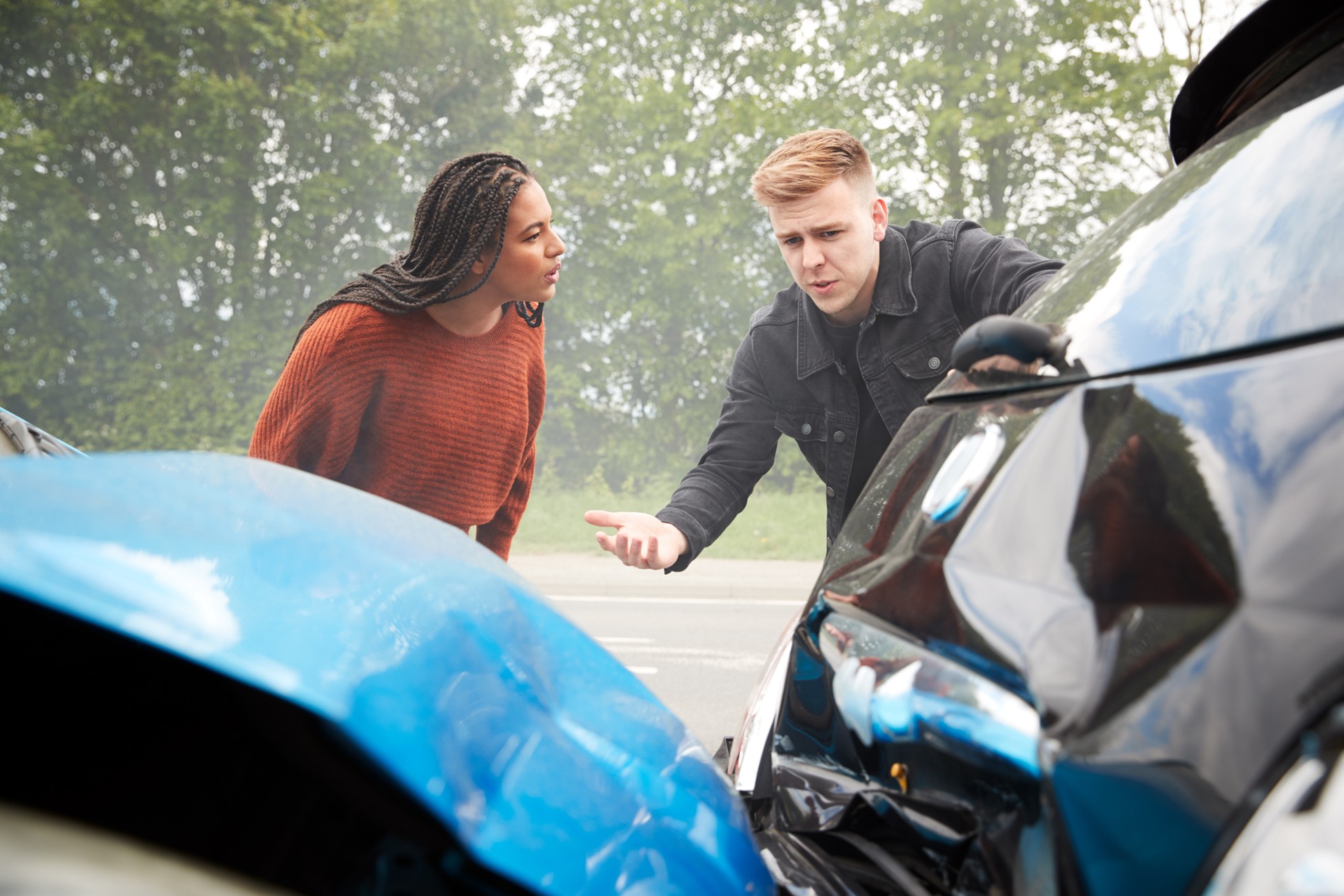



Car accidents are stressful, confusing, and often chaotic. In the moments after a crash, you might like to think that the facts will speak for themselves. But what happens when the other driver tells a different story—or worse, is lying about the car accident altogether?
We’ve seen it many times. Drivers may deny responsibility, shift blame, or misrepresent what occurred. Sometimes it’s intentional. Other times, it’s the result of shock, confusion, or faulty memory. Either way, a conflicting account can complicate your claim and put your ability to recover compensation at risk.
If you believe the other driver is lying about your car accident, it’s important to act quickly and strategically. Here are some suggestions on what you should do and how an experienced San Antonio car accident attorney can uncover the truth.
Why drivers lie or get it wrong after a crash
Not every inaccurate statement is a deliberate lie. Car crashes can be extremely sudden and shocking experiences. They can be disorienting, making it easy to misinterpret what you saw or experienced. Sometimes parties will fill in the gaps of their memory with assumptions, whether they know they are doing so or not.
However, some drivers do intentionally lie about a car accident to:
- Avoid blame or liability
- Prevent their insurance premiums from increasing
- Escape legal consequences for reckless or illegal behavior
Regardless of the reasons, inaccurate statements can have serious consequences. Insurance companies rely heavily on early reports. If the other driver’s version goes unchallenged, it may shape how your claim is evaluated.
Common scenarios where the truth is disputed
Disputes about what happened and whose story is correct in a car crash are more common than you might think. Some of the most frequent situations include:
- Intersection crashes: Each driver claims they had the green light
- Rear-end collisions: The front driver is accused of “brake checking”
- Lane change accidents: Both drivers say the other drifted into their lane
- Hit-and-run situations: The at-fault driver denies involvement later
- Multi-vehicle crashes: Confusion over who caused the chain reaction
In these cases, the facts are not always obvious. That’s why hard evidence is critical to many cases.
What should you do at the scene if you suspect someone is lying about a car accident?
The steps you take immediately after a car crash can make a significant difference if the other driver later changes their story.
Stay calm and avoid confrontation
If you believe the other driver is being dishonest, it’s natural to feel frustrated. However, arguing at the scene can escalate tensions and make the situation worse. Focus on gathering information instead.
If you are able and it is safe to do so, do the following:
Call the police
Always report the accident and request a police officer. An official accident report can:
- Document initial statements
- Record observations from a neutral third party
- Identify potential violations or contributing factors
Not all police reports will be perfect. However, having an official report provides an important foundation to start with.
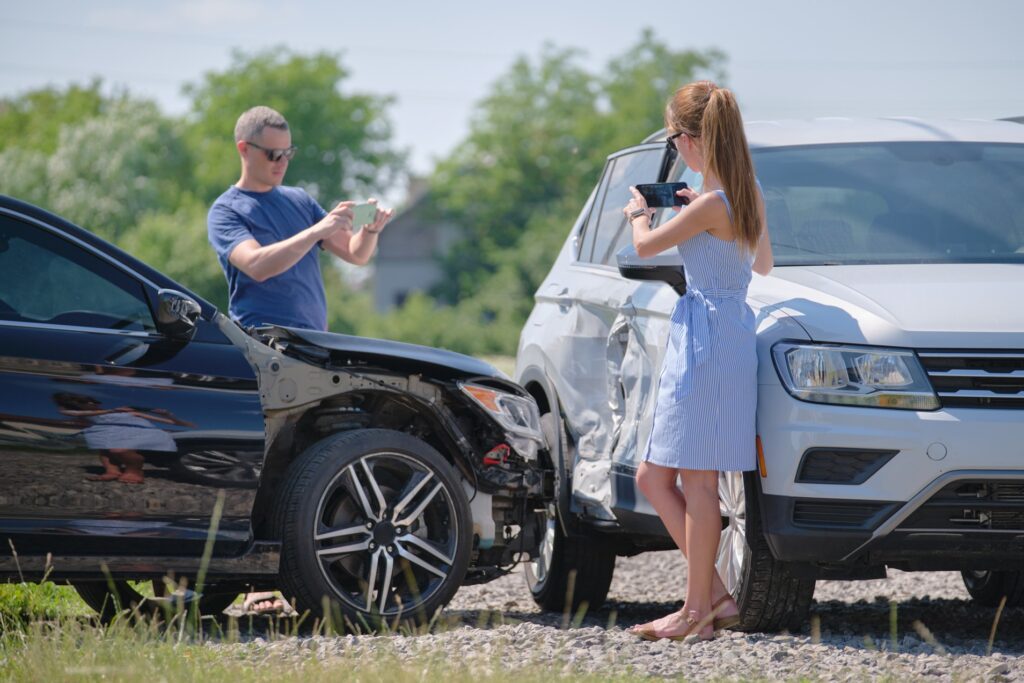
Gather evidence at the scene
If you’re physically able, collect as much information as possible, including:
- Photos of vehicle damage
- Pictures of the accident scene, road conditions, and traffic signs
- Skid marks, debris, and vehicle positions
- License plates and driver’s licenses
Visual evidence helps reconstruct what actually happened even if someone later changes their story.
Take down witness information
Independent witnesses can be incredibly valuable. Ask for:
- Names and contact information
- A brief description of what they saw
Witnesses often provide unbiased accounts that can support your version of events.
Why you should not rely solely on the accident report
Many people assume that the police report will settle everything. While it’s an important piece of evidence, it’s not the final word.
Police officers typically:
- Arrive after the crash has occurred
- Rely on statements from drivers and witnesses
- Make quick assessments based on limited information
If the other driver provides inaccurate information, it may be reflected in the report. That’s why additional investigation is often necessary. The good news is that police reports are not final documents and can be revised if new evidence comes to light.
How insurance companies handle conflicting stories
When two drivers give different accounts, insurance companies don’t automatically side with one over the other. Instead, they look for evidence to support each version.
That said, insurers are also motivated to protect their bottom line. If liability is unclear, they may:
- Deny the claim altogether
- Assign partial fault to both drivers
- Offer a lower settlement
Without strong evidence, your claim could be undervalued or rejected even if you were not at fault.
How a car accident lawyer uncovers the truth
At Crosley Law, we don’t rely on conflicting statements. We build cases based on evidence, science, and careful investigation. When the truth is disputed, our team works to uncover what really happened.
Our San Antonio car accident attorneys will:
Investigate the scene
We may revisit the accident location to examine factors including:
- Road design and traffic patterns
- Visibility issues
- Signage and signal timing
- Skid marks, damage, and other items left by the crash
Understanding the environment helps us evaluate whether the other driver’s story makes sense.
Secure video evidence
In many cases, video footage provides the clearest picture of what occurred. We look for:
- Traffic camera recordings
- Surveillance footage from nearby businesses
- Dashcam video from involved vehicles
This evidence can be time sensitive, so acting quickly is critical to prevent it from becoming overwritten or erased.
Analyze vehicle damage
The location and severity of vehicle damage can reveal how a crash occurred. For example:
- Rear-end damage may contradict claims of a sudden stop
- Side-impact damage may support a lane change violation
- Crush patterns can indicate speed and angle of impact
We often work with crash reconstruction and engineering experts to interpret this physical evidence.
Check event data recorders
Many modern vehicles contain event data recorders (EDRs), or “black boxes,” which capture information such as the speed before impact, braking activity, and acceleration patterns.
This data can confirm or contradict a driver’s account of the crash.
Review cell phone records
If distracted driving is suspected, phone records may show whether a driver was texting, making calls, or using apps. This can be powerful evidence when a driver denies distraction.
Working with accident reconstruction experts
In complex cases, we collaborate with specialists who use engineering principles to reconstruct the crash. These experts analyze:
- Vehicle dynamics
- Impact forces
- Physical evidence from the scene
Their findings explain what happened in a clear, objective way that can help juries understand the crash, if needed.
Evaluate witness credibility
Not all witness statements carry the same weight. Our San Antonio car accident attorneys assess whether the witness had a clear view of the crash, their account is consistent, and they have any potential biases that might damage their credibility.
In some cases, what seems like a reliable statement may not hold up under closer scrutiny.
RELATED:How lawyers prove fault in car and truck accidents
What if the other driver accuses you of causing the accident?
It’s not uncommon for the other driver to shift blame, even when the evidence says otherwise. If this happens, it’s important to:
- Avoid giving recorded statements without legal advice
- Be cautious about what you say to insurance adjusters
- Document your injuries and treatment carefully
Texas follows a comparative negligence system, which means your compensation can be reduced if you are found partially at fault. Strong evidence is essential to protect your claim.
RELATED:The car accident was not my fault but I’m being blamed for it. What do I do?
Why timing matters in disputed cases
When the facts are in dispute, early action can make a major difference. Evidence can disappear quickly in the form of cleared scenes, overwritten video footage, and fading witness memories.
Involving a San Antonio car accident lawyer early can improve your chances of preserving critical evidence and building a stronger case.
The importance of consistency in your own account
While it’s important to challenge false statements, it’s equally important to maintain consistency in your own version of events. Be honest and accurate when:
- Speaking with police
- Reporting the accident to your insurer
- Seeking medical treatment
Even small inconsistencies can be used by insurance companies to question your credibility.

Car Crash? Call Crosley
Dealing with a disputed claim can be overwhelming. When the other driver is lying about a car accident, it can feel like your word against theirs.
But it doesn’t have to stay that way.
With the right investigation and evidence, the truth can come to light. At Crosley Law, we focus on building cases that stand up to scrutiny and are grounded in facts, not assumptions.
CASE STUDY:$175,000 settlement obtained in “he said, she said” intersection dispute
Crosley Law has extensive experience investigating complex accident cases in San Antonio and throughout Texas. We know how to identify inconsistencies, gather critical evidence, and hold negligent drivers accountable.
Contact our San Antonio car accident attorneys today for a free consultation. We’ll listen to your story, evaluate your case, and help you take the next steps toward securing the compensation you deserve.
The content provided here is for informational purposes only and should not be construed as legal advice on any subject.