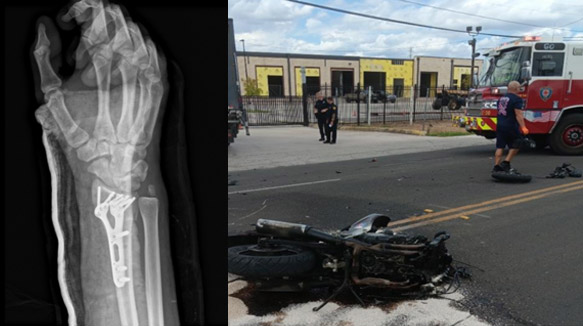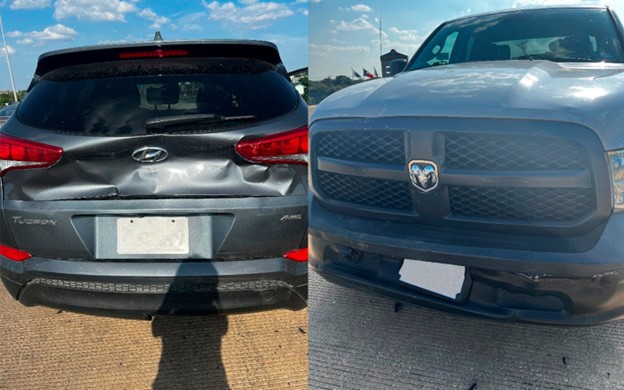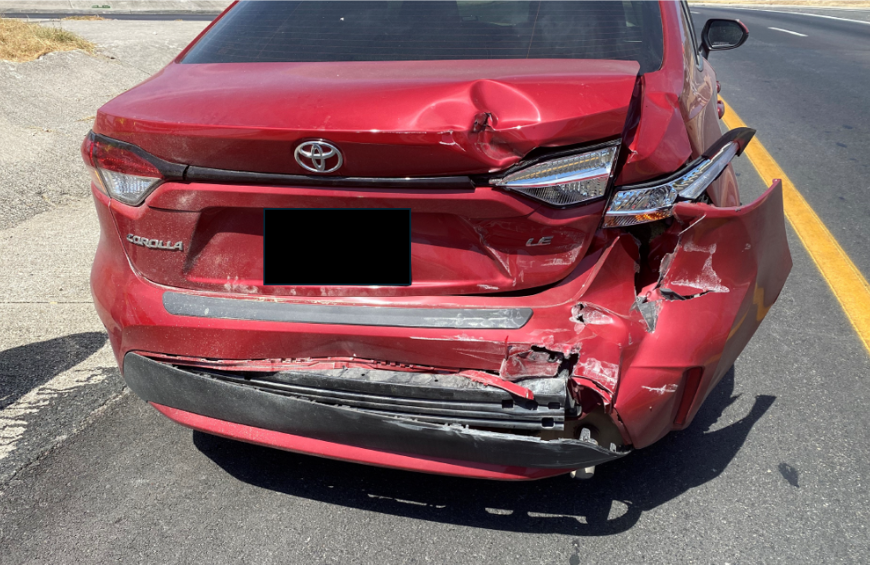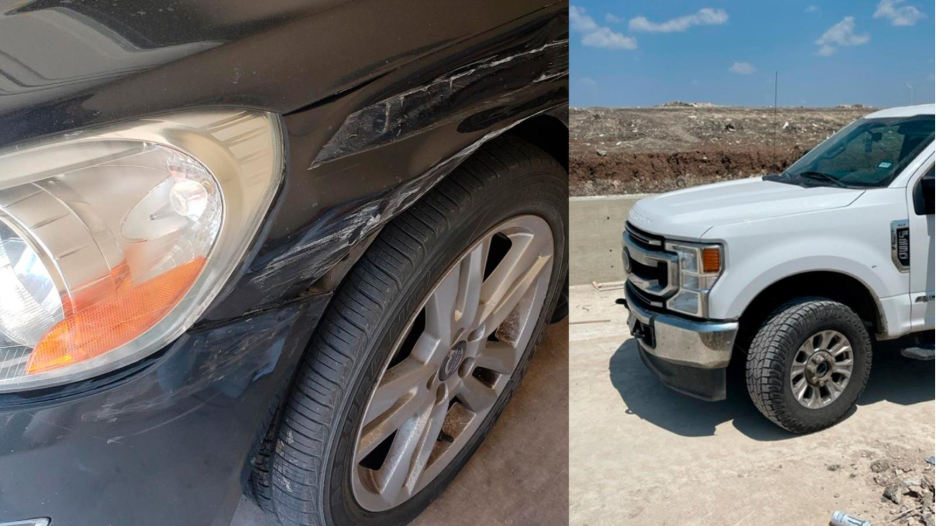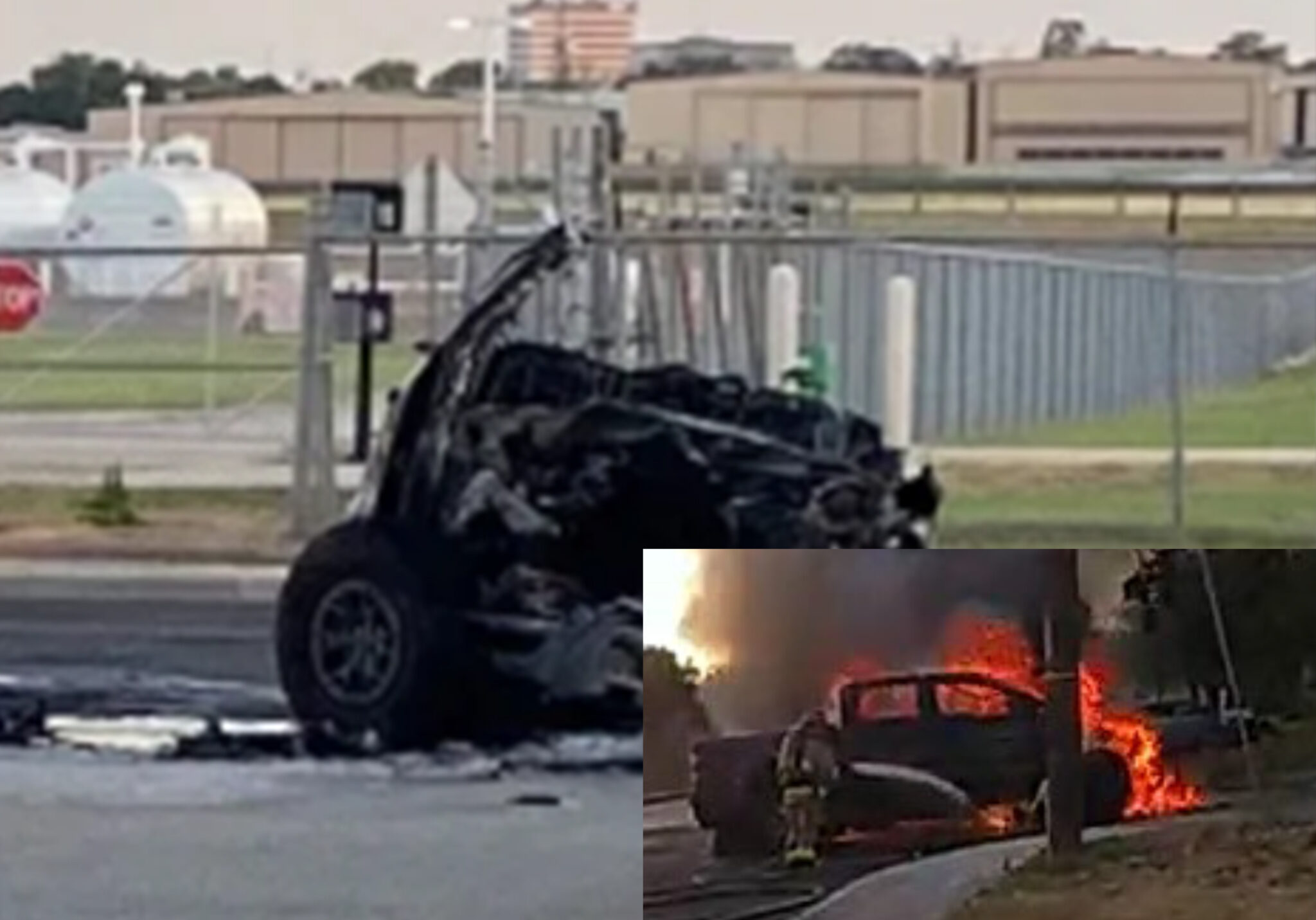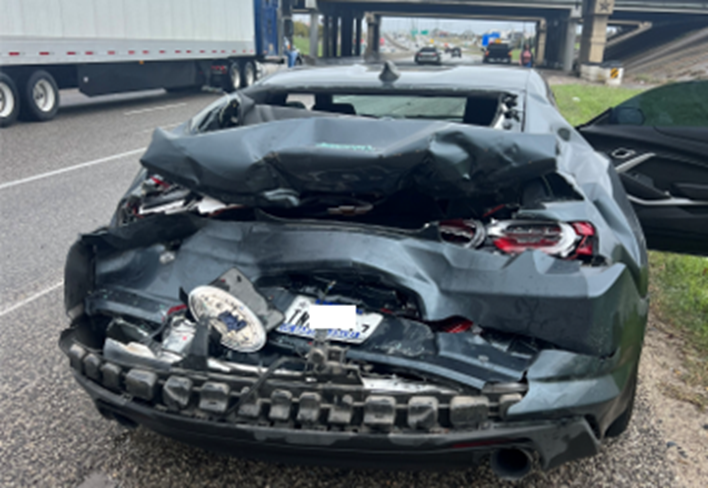



In November 2023, Ivy* was driving home on Interstate 35 near Schertz, Texas. It had been lightly raining, and traffic was slowing as vehicles merged onto the busy highway.
Behind Ivy was a 33,000-pound commercial truck hauling heavy equipment. The truck driver was traveling at highway speed and failed to slow down his vehicle.
Seconds later, Ivy’s Camaro was violently rear-ended, changing the course of her life in an instant. When defendants try to avoid responsibility and the victim’s injuries are complex, that’s exactly when having an experienced truck and commercial vehicle accident lawyer becomes critical.
RELATED: Why do so many I-35 accidents happen around San Antonio?
Litigation and discovery are needed when crash reports incorrectly assign blame
The initial crash report referenced an unidentified vehicle that was merging onto the highway as a potential factor contributing to the collision, a detail that could have been used to shift or dilute responsibility for the collision.
In serious injury cases, even subtle suggestions of third-party involvement can become powerful tools for insurance companies looking to minimize liability. That is exactly why early, aggressive investigation matters.
Through formal discovery, Crosley Law secured and analyzed the commercial truck’s dash camera footage. The video told a very different story from “an unidentified merger.”
In the seconds before impact, the truck driver was traveling approximately 55 mph and could be seen eating pizza with one hand on the wheel, failing to meaningfully decelerate as traffic slowed ahead. The evidence made clear that this crash was not caused by a merging vehicle, but by a distracted commercial driver who failed to maintain a safe following distance.
During depositions, the truck driver and a representative for the truck company both eventually admitted that the truck driver negligently crashed into Ivy’s vehicle. So their next tactic was to try and minimize Ivy’s injuries and damages.
RELATED: How lawyers prove fault in car and truck accidents
The injuries: What a high-speed rear-end collision can do
When a 33,000-pound vehicle strikes a passenger car at around 55 mph, enormous forces are transferred into the car and the occupant’s body. As a result of this collision, Ivy sustained a traumatic brain injury (TBI), cervical and lumbar disc herniations, and chronic radiculopathy.
Traumatic brain injuries and spine injuries are often called “invisible injuries” for a reason. There may be no cast, scar, or obvious outward sign that a person’s brain fibers have been damaged or that a spinal nerve is being compressed.
In Ivy’s case, the defendants argued that she did not suffer a traumatic brain injury at all and claimed her neck and back problems pre-dated the collision. That is a common defense strategy in complex injury cases: if an injury cannot be easily seen, it must not exist.
Proving these cases against defense claims requires understanding the science: neuroimaging, biomechanics, neuroradiology, neuropsychological testing, and spinal anatomy. That is why it is critical to hire attorneys who are experienced in litigating traumatic brain and spine injury cases.
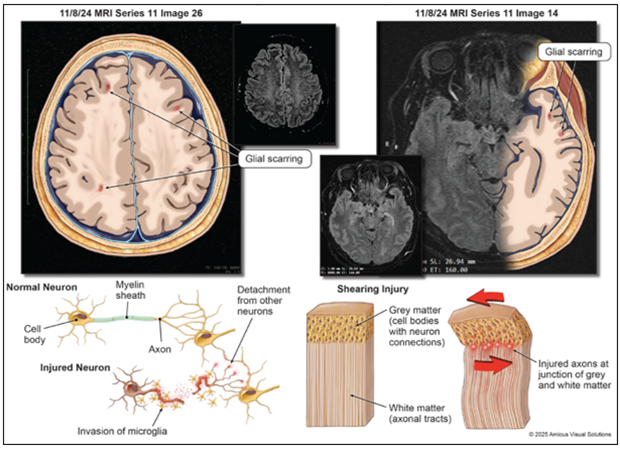
Making Ivy’s invisible injuries visible
At Crosley Law, we work with board-certified neurologists, neuroradiologists, neuropsychologists, and spine specialists. We also retain medical illustrators and use advanced demonstrative exhibits, like the illustrations here, to help juries see what cannot be seen with the naked eye: torn axons, disc herniations, nerve compression, and the forces involved in a high-speed rear-end collision.
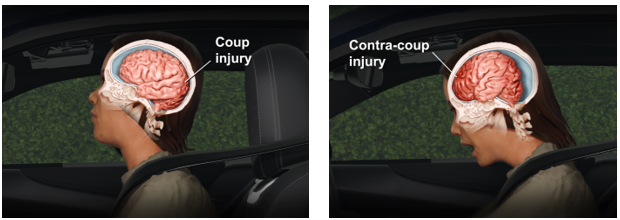
For example, the visuals demonstrate how the brain can be injured during a violent rear-end collision. In a sudden impact, the brain first strikes the inside of the skull at the point of contact (a coup injury), then rebounds and strikes the opposite side of the skull (a contra-coup injury), causing damage in multiple areas even without an obvious external head wound.
Ivy’s damage model: Demonstrating damages beyond medical bills
Understanding the full value of a serious injury case requires more than adding up past medical bills. While Ivy’s past medical expenses totaled approximately $200,000, that number only reflected what had already happened and not what she would need for the rest of her life.
After thoroughly investigating the true extent of her brain and spine injuries and consulting with rehabilitation specialists, spine surgeons, neurologists, and other experts, Crosley Law retained a certified life care planner to project Ivy’s future medical needs. That analysis revealed she would require extensive ongoing care, treatment, and support for both her traumatic brain injury and spinal damage.
Once the defense saw the science-backed life care plan outlining the long-term costs, they were forced to take Ivy’s injuries seriously. We ultimately resolved the case for more than $1 million shortly before trial.
RELATED: What is an average truck accident settlement in Texas?
Achieving accountability for life-changing injuries
In this case, the truck driver and truck company initially tried to avoid liability and responsibility for the crash but eventually were forced to admit responsibility for rear-ending Ivy.
Then we went a step further to assert accountability for the consequences of that crash on Ivy’s life.
When commercial drivers choose distraction over safety and companies fail to enforce safety standards, injured Texans deserve full justice that will help them now and through the future.
If you or someone you care about has been injured in a commercial vehicle collision:
- Do not rely solely on the crash report
- Do not assume the insurance company will be fair
- Do not wait to secure legal counsel
Car Crash? Call Crosley
The earlier experienced trial lawyers become involved, the stronger a case can become. Contact Crosley Law for a free consultation and let’s discuss how we can find accountability for you.