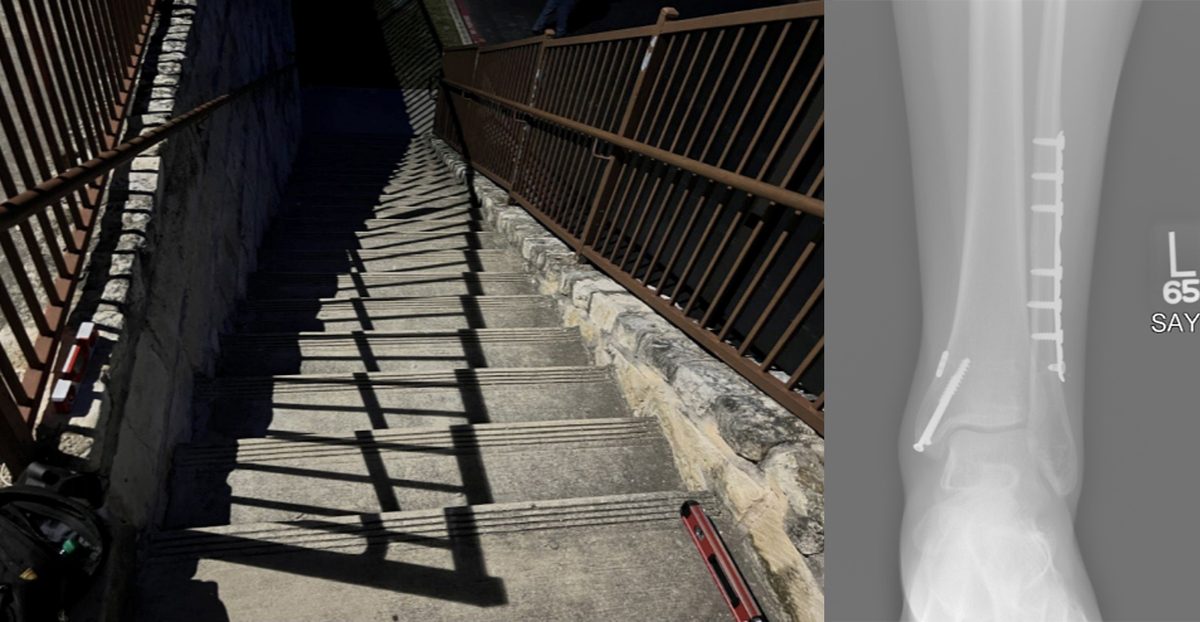



On a cold February evening in 2022, Grace*, a 25-year-old physical therapist living in a San Antonio apartment complex, stepped outside to bring dinner to her boyfriend in a neighboring building. It was a short walk she had taken before. To get there, she needed to use an exterior staircase.
The wall-mounted light that was supposed to illuminate the stairs wasn’t working. As Grace carefully made her way down the staircase, she couldn’t see the ice that had accumulated during the winter storm. In an instant she slipped, tumbled down the stairs, and shattered her left ankle.
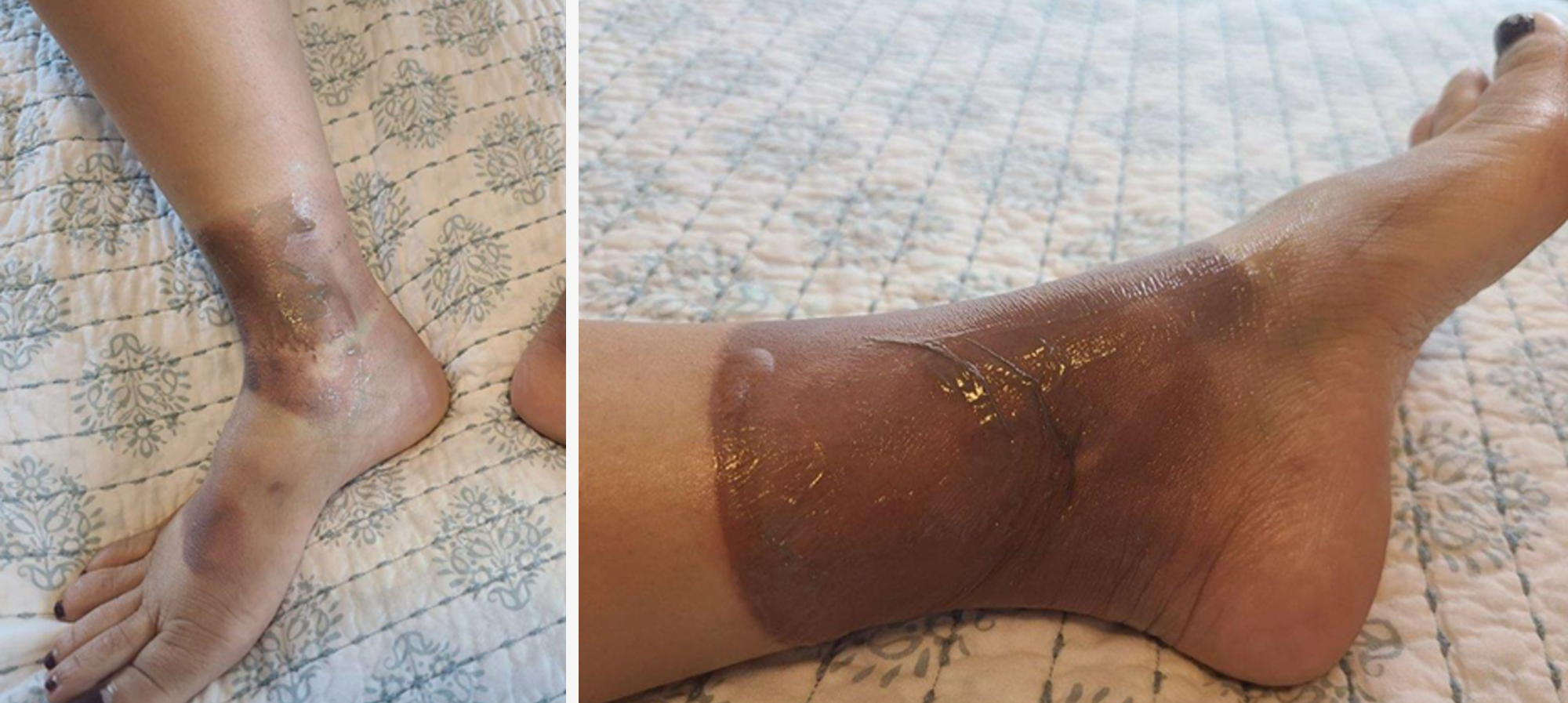
Grace immediately understood the severity of her injury. As a healthcare professional, she knew the pain meant something was seriously wrong. Her boyfriend later testified that it was so dark he couldn’t even see her lying at the bottom of the stairs until he was only a few feet away. Emergency responders transported her to the hospital, where doctors confirmed multiple fractures that would require surgery.
*Client’s name has been changed to protect her privacy.
RELATED:Injured on someone else’s property? Here’s what you need to know about premises liability in Texas
A long recovery
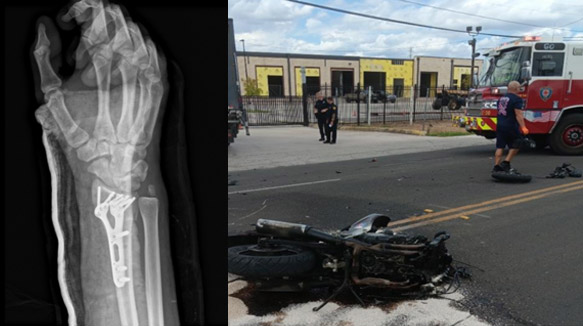
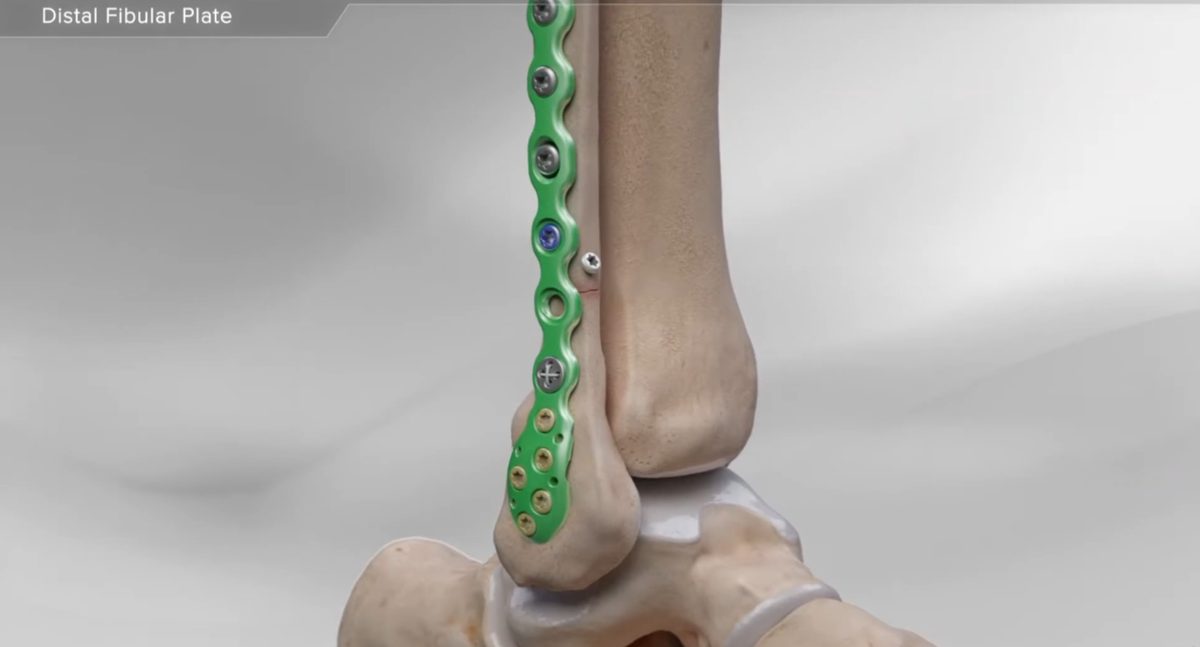
Grace underwent surgery to repair three fractures with plates, screws, and other hardware. She spent weeks unable to bear weight on her leg and relied on family and her boyfriend for even the simplest daily activities. She couldn’t drive, work, or exercise.
Before the fall, Grace loved running, biking, and spending time outdoors. Those activities had been an important outlet for managing stress, but they suddenly disappeared.
Returning to work was difficult. As a physical therapist, Grace’s job required her to be on her feet all day helping patients. Even after she was medically cleared, she continued experiencing pain, swelling, and limited mobility. She later sought treatment for depression related to the dramatic loss of independence and the impact the injury had on her daily life.
Although she worked hard to recover, her ankle never completely returned to the way it had been before the fall.
The investigation uncovered the truth
At first glance, Grace’s injuries appeared to be the result of a winter storm. But Crosley Law’s investigation revealed a very different story.
The evidence showed the apartment complex had been dealing with problems involving the staircase lighting long before Grace was injured. Internal maintenance records, emails, invoices, and testimony painted a picture of a recurring safety issue that management knew about but failed to permanently correct.
The most significant discovery was that Grace was not the first person to be hurt.
Another resident had already fallen
Just six weeks before Grace’s accident, another resident fell down the very same staircase while the light was out. Like Grace, she suffered a fractured leg.
Property employees documented the broken light that very night and urgently requested repairs. Yet evidence showed the lighting problems continued even after an electrician was called.
Former employees testified that residents continued complaining about the light after it had supposedly been repaired and that maintenance requests often went unresolved because of frequent staff turnover.
The investigation also uncovered evidence that the staircase lighting remained inadequate and that inspections were not performed as consistently as they should have been.
Building a strong case
Crosley Law gathered evidence from maintenance personnel, property managers, former employees, electricians, and engineering experts. Together, the evidence demonstrated that the dangerous condition was neither isolated nor unexpected.
Rather than a one-time malfunction, the broken lighting was part of an ongoing problem that management had opportunities to address before Grace was injured.
Crosley Law discovered that the light’s photocell sensor had been installed next to the parking lot, where passing vehicles would shine their headlights directly on it. When that happened, the sensor mistakenly thought it was daytime and would shut the staircase light off, leaving residents to walk the stairs in the dark.
By carefully piecing together internal records and sworn testimony, Crosley Law was able to demonstrate that the light in question apartment complex had notice of the hazard and failed to protect residents from a foreseeable danger.
A settlement for our client
Faced with the evidence developed during the case, the defendants agreed to resolve Grace’s claims.
Crosley Law obtained a $750,000 settlement on Grace’s behalf a few weeks before trial. The recovery compensated her for medical expenses, lost income, pain and suffering, and the lasting impact the injury had on her quality of life.
While no settlement could erase what happened, it provided Grace with financial security as she continued moving forward after a life-changing injury.
RELATED:Future medical expenses in Texas personal injury cases: What you must prove
Have you been injured because of unsafe property conditions?
Apartment complexes, shopping centers, hotels, and other property owners have a legal responsibility to keep common areas reasonably safe. When they ignore known hazards or fail to make necessary repairs, serious injuries can occur.
If you or someone you love has been injured because a property owner failed to correct a dangerous condition, Crosley Law may be able to help. Our team investigates thoroughly, uncovers the facts, and works to hold negligent property owners accountable.
Contact Crosley Law today to request a free consultation.