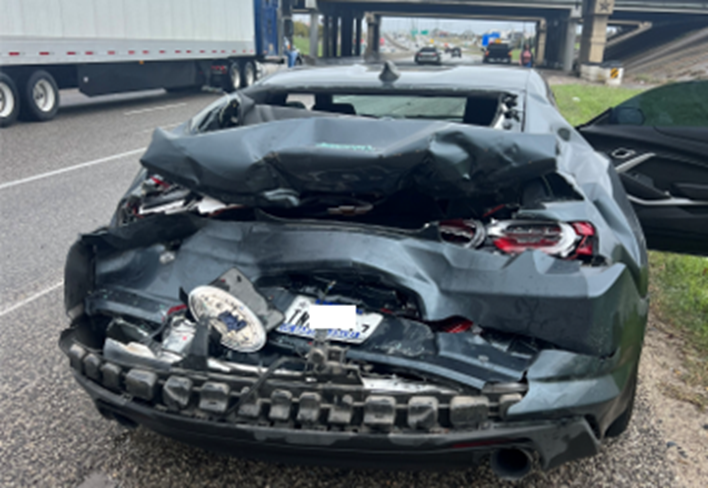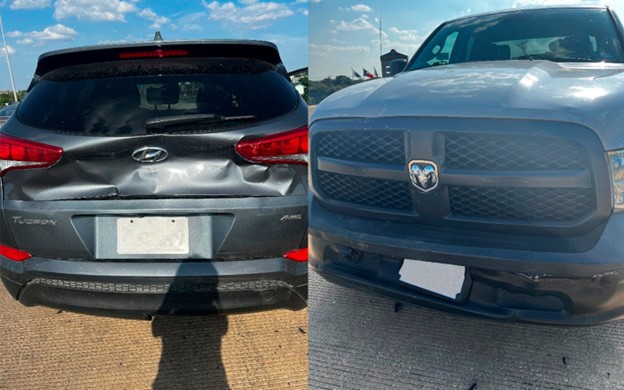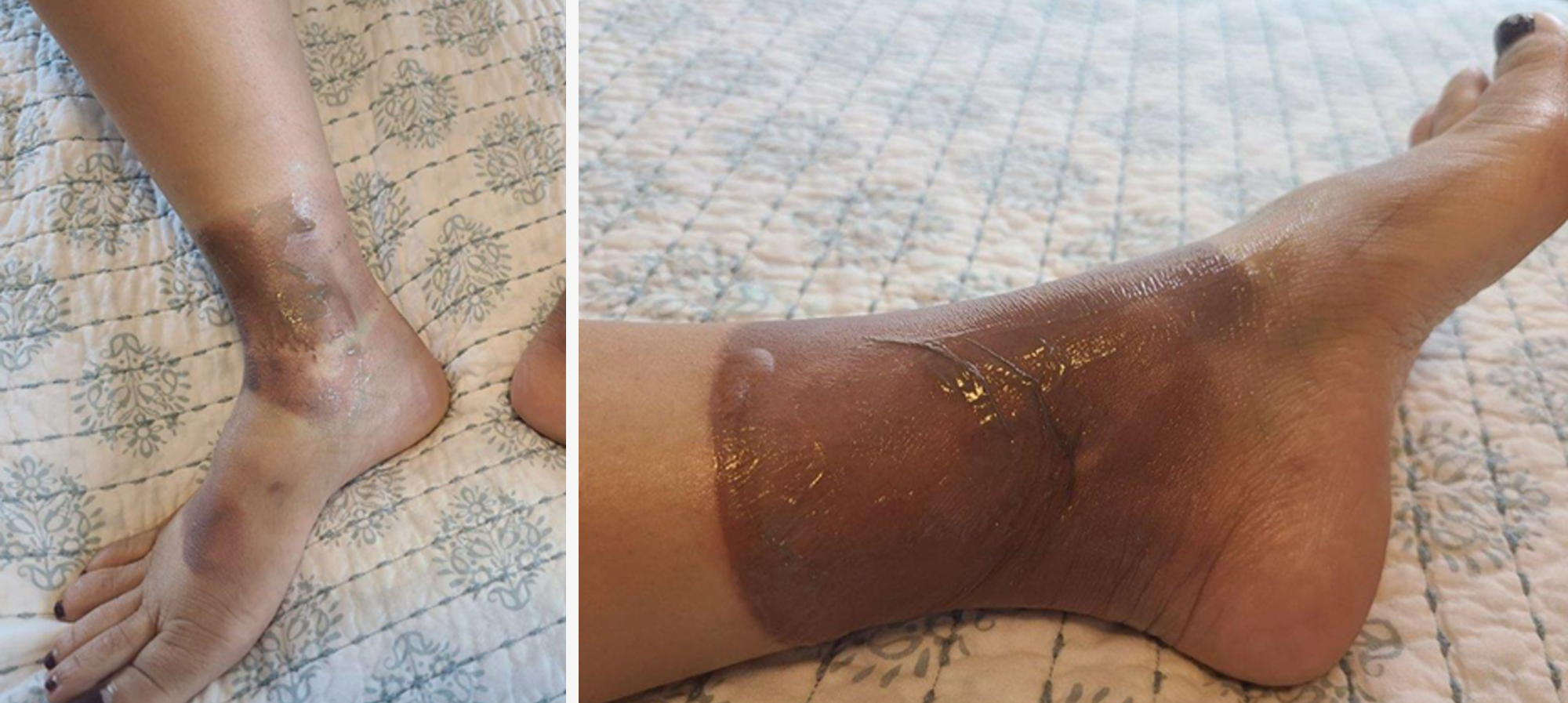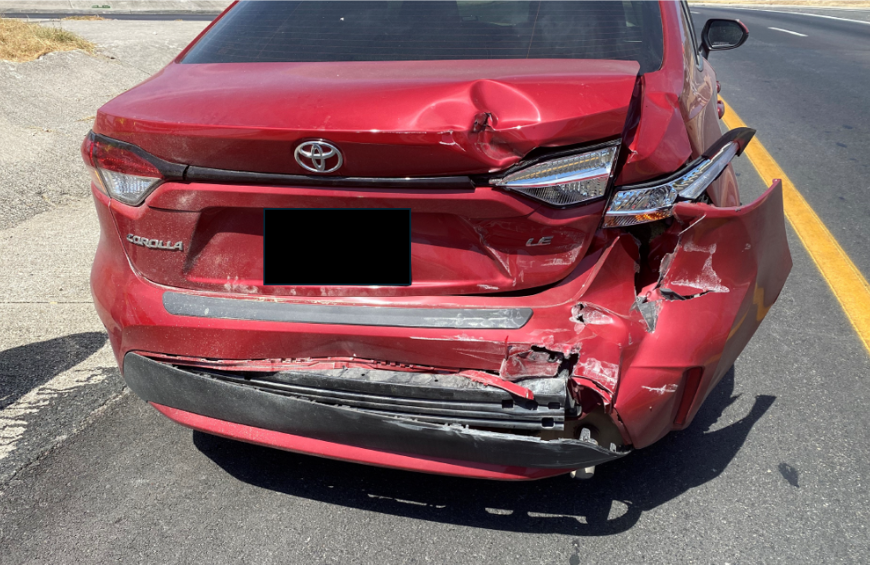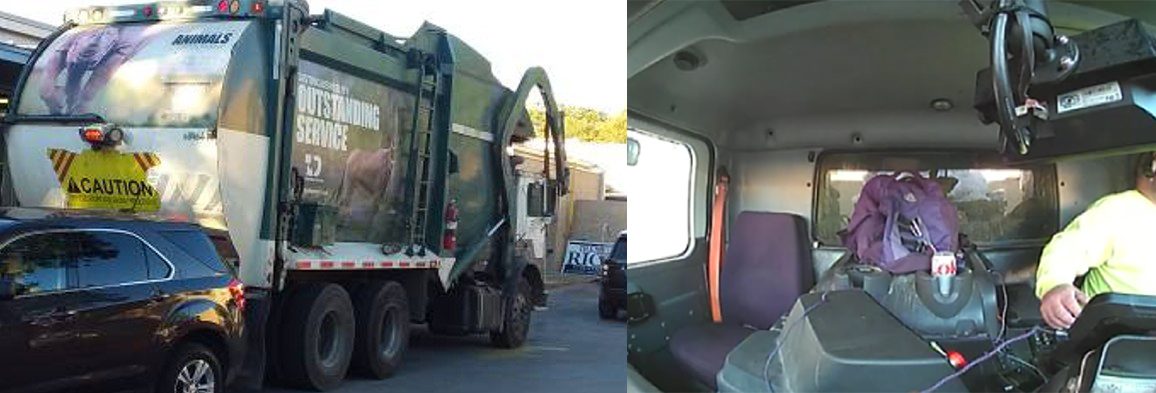



Ellen had done this routine many mornings before. She pulled into the circular drive at her son’s junior high in Alamo Heights, stopped near the cafeteria, and turned in her seat to say goodbye as he gathered his things. She never saw the truck that backed into her.
Behind her, a Texas Disposal Systems front-load garbage truck weighing roughly 50,000 pounds was backing through the drop-off lane during the busiest 15 minutes of the school day. The driver was looking at his side mirrors but never checked the trucks’ large backing monitor that would have shown Ellen’s vehicle.
Twelve seconds into the backing maneuver, the truck struck the rear of Ellen’s SUV. On the truck’s own camera footage, you can hear her scream immediately after impact.
Nearly four years later, a Bexar County jury decided what that morning cost Ellen. This is a story about a company that put a truck where it didn’t belong, a driver who would not admit he was wrong, a defense built on the word “minor,” and a jury who saw through it.
A Garbage Truck Backs Through a School Drop-Off Line
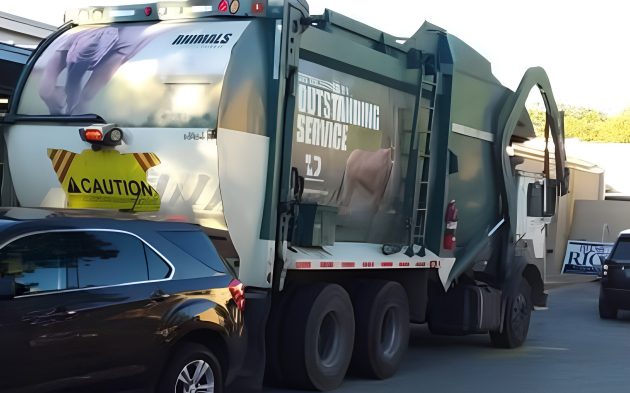
The collision happened on Oct. 25, 2022, at 8:19 a.m. TDS’s driver had been assigned to empty a dumpster tucked behind the school’s cafeteria. After servicing the dumpster, the driver would have to back the truck roughly 250 feet through an area where children and parents were expected to be.
The evidence at trial showed how little stood between that maneuver and a potential tragedy. The driver had never been briefed on the site. He did not know the acronym “GOAL” (Get Out And Look), a backing rule printed in TDS’s own safety handbook. He knew only two of the five keys of the Smith System defensive-driving program TDS trains on.
Because the driver was unfamiliar with the area, he was on an active, hands-free phone call with his driver trainer to get advice on how to access the dumpster. Crosley retained experts in waste management and the psychology of cell phone distraction to help prove negligence in this case.
Three days after the crash, TDS issued the driver a written warning and ordered retraining in “Backing and Docking.” At trial, the company did not dispute that its driver was at fault. What it disputed was whether the crash had hurt anyone.
The Defense Claims “Low Speed,” “Minimal Damage,” and “Age-Related”
Ellen’s neck pain began that day, and within a few days it was radiating down her left arm. An MRI showed a herniated disc at C5-6 compressing her spinal cord. She tried physical therapy and epidural steroid injections. Three different spine surgeons independently recommended surgery. In April 2024, one of those surgeons removed the damaged disc and implanted an artificial disc in its place.
TDS’s answer was to hire a biomechanical engineer who had never examined Ellen, never visited the scene, and never inspected either vehicle. Working from Google Earth measurements and an exemplar car of a different model year, he calculated that the truck was moving about three miles per hour and that the forces on Ellen’s neck were “in the cough/sneeze range.” Her surgery, he said, was “an elective treatment for an unrelated degenerative condition.” Her disc problems were “age-related,” and the timing was “just the random course of our lives.”
TDS also argued that a second, unrelated crash in 2024 and a bump to the head in a swimming pool in 2025 were the real reasons Ellen still had symptoms.
BLOG:How do pre-existing injuries affect car accident settlements in Texas?
Crosley Law Hires Qualified Experts and Turns the Defense’s Own Witnesses
Our trial team, led by Shawn Mechler with Madison Schultz and Tom Crosley, built the case around a simple idea: a healthy 44-year-old woman with no history of neck problems does not need spine surgery by coincidence.
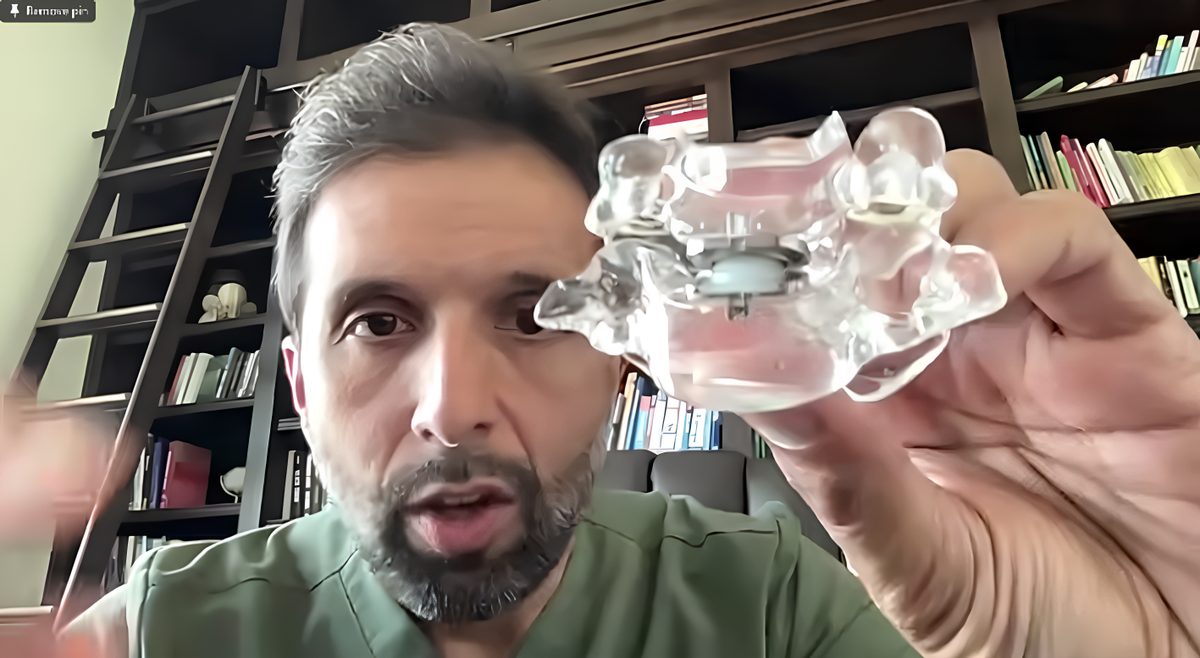
Ellen’s surgeon showed the jury her MRI and pointed to the compressed spinal cord. He also showed a spinal model that allowed the jury to understand the surgical implant he used to help stabilize Ellen’s spine. Our crash reconstruction expert explained why there is no scientifically established speed below which people don’t get hurt, why the steel reinforcement bar under a bumper cover can bend without any visible damage, and why turning toward her son at the moment of impact made Ellen’s neck more vulnerable, not less.
Then we let the defense’s own experts finish the job. TDS’s retained spine surgeon agreed under oath that the collision caused Ellen’s cervical symptoms, caused the condition that required surgery, and that he would have performed the same operation the operating surgeon performed. TDS’s life care planner testified that Ellen’s disc replacement “was the procedure done for the symptoms resulting from the crash” and that “the surgery took care of the pathology associated with the October 25th wreck.”
The Crosley team also believed the defense’s biomechanical engineer did more harm than good for the defense. His scientific methodology was shaky and seemingly ignored by the jury based on their favorable verdict.
On the two later incidents, Ellen’s surgeon shed light on subsequent imaging that settled the question: there was no new nerve root compression and the implanted hardware remained stable and in position after both. Even TDS’s own witnesses agreed there was nothing new on the imaging.
BLOG:How lawyers prove fault in car and truck accidents
A Bexar County Jury Awards $1.87 Million
After a week of testimony in the 166th District Court, before Judge Laura Salinas, the jury returned a verdict of $1,867,932.62 for Ellen: $98,717.87 in past medical expenses, $236,214.75 for the future care her surgeon says she will need, and $1.53 million for her past and future physical pain, mental anguish, and physical impairment. Prejudgment interest will be added when the judgment is entered.
For Ellen, the number matters less than what it represents: 12 people who had never met her listened to a company tell them her injuries were imaginary, looked at the evidence, and said otherwise.
A Pattern of Unsafe Backing
This is the second jury verdict Crosley Law has obtained against Texas Disposal Systems. In May 2025, a Bexar County jury returned a favorable verdict for a separate client in another case involving a TDS vehicle that backed into them. A third case, also involving a TDS driver backing into our client, a pedestrian, is set for trial in 2027.
All three share the same pattern: a heavy commercial vehicle reversing while unsafe to do so, a driver who did not get out and look, and a company that treats the resulting injuries as minor.
Backing collisions are among the most preventable crashes in commercial trucking. The industry’s own safety materials, including TDS’s, spell out how to avoid them. When a company trains on those rules and its drivers still don’t know them, it looks less like an accident and more like a problem.
Crosley Law: Holding Commercial Trucking Companies Accountable in Texas
If you or a loved one has been hurt by a commercial vehicle, whether an 18-wheeler on the interstate or a garbage truck in a parking lot, you deserve a legal team that knows how these companies defend themselves and how to take them to a jury. Crosley Law has been trying truck and commercial-vehicle cases in San Antonio and across Texas since 2005. We specialize in wrongful death, catastrophic and spinal injuries, and traumatic brain injury (TBI) cases. There is never a fee unless we win.
Call us at 210-LAW-3000 or complete our online form to speak to an attorney about getting the help you need.
The content provided here is for informational purposes only and should not be construed as legal advice on any subject. Past results do not guarantee a similar outcome in any other case.