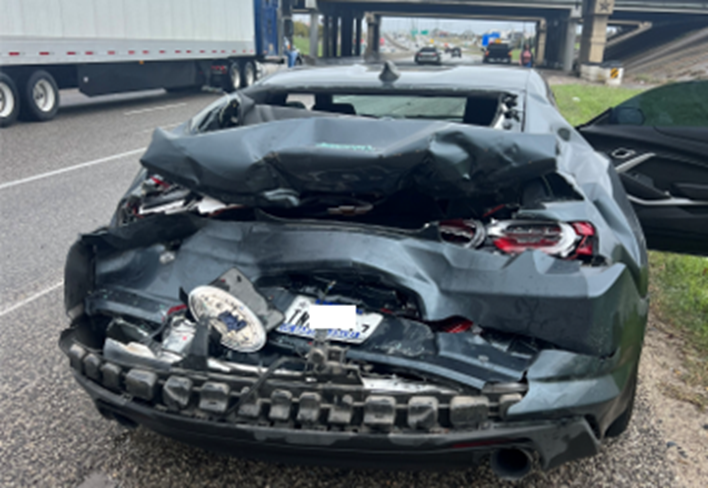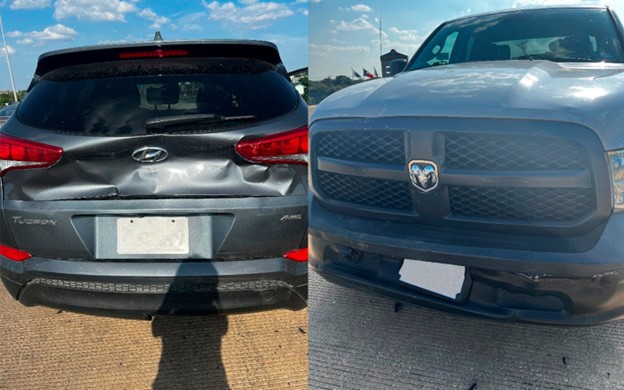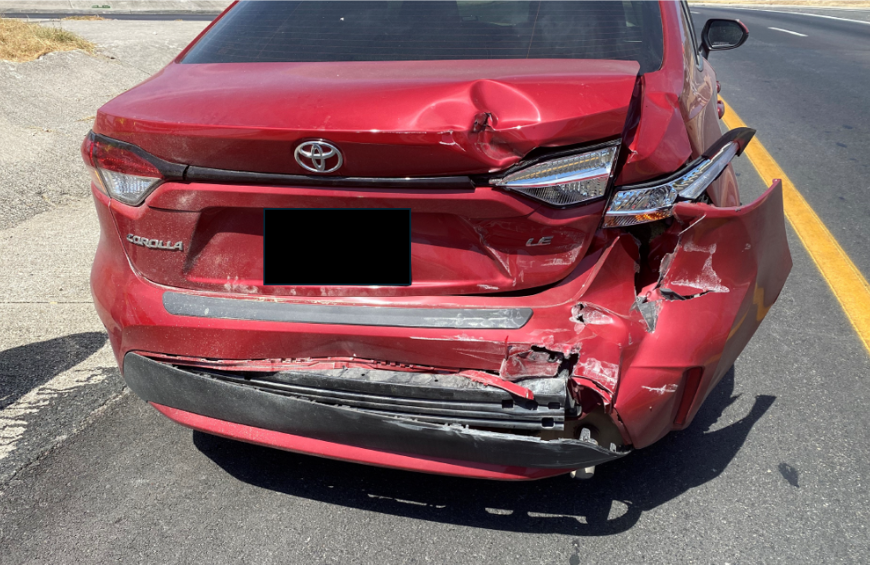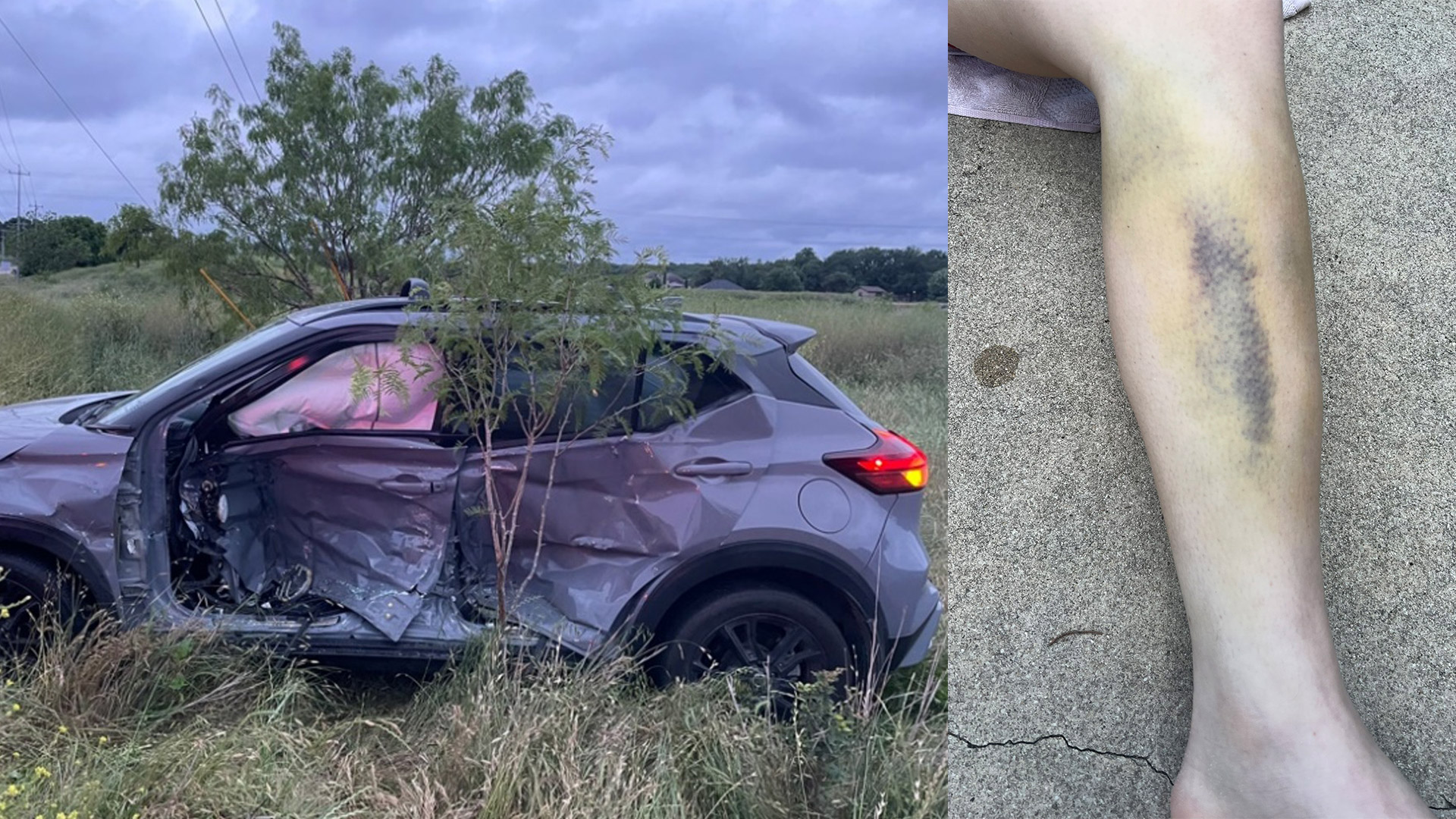



On April 20, 2024, an 18-year-old high school student we will call Taylor* was driving through an intersection in Comal County, Texas, when another driver ran a red light and violently struck the driver’s side of her vehicle.
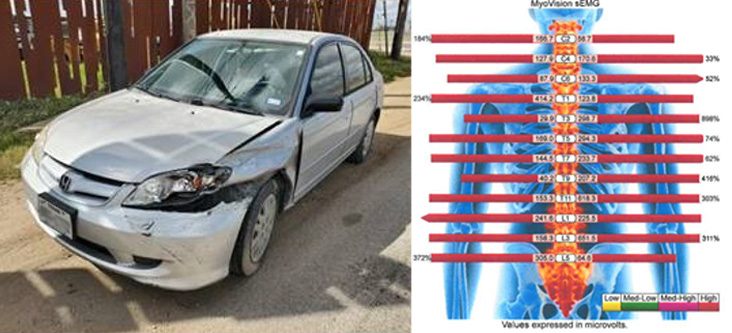
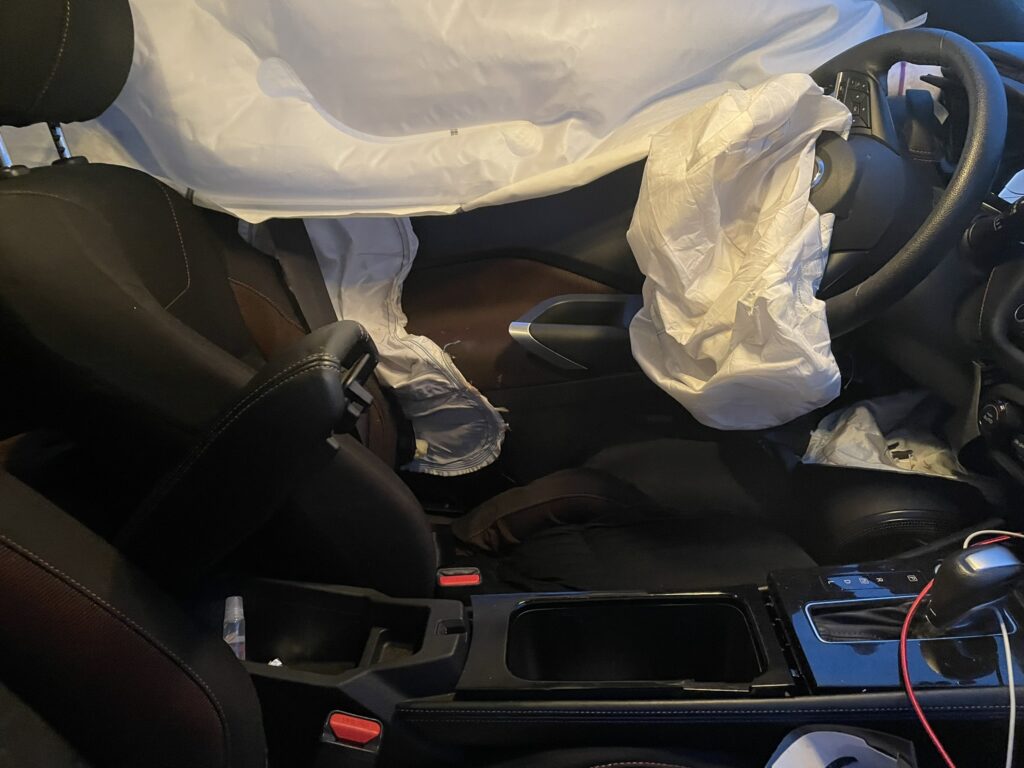
The impact was severe. Taylor’s vehicle sustained approximately two feet of intrusion on the driver’s side. The airbags, including the driver-side door and window airbags, likely helped save her life.
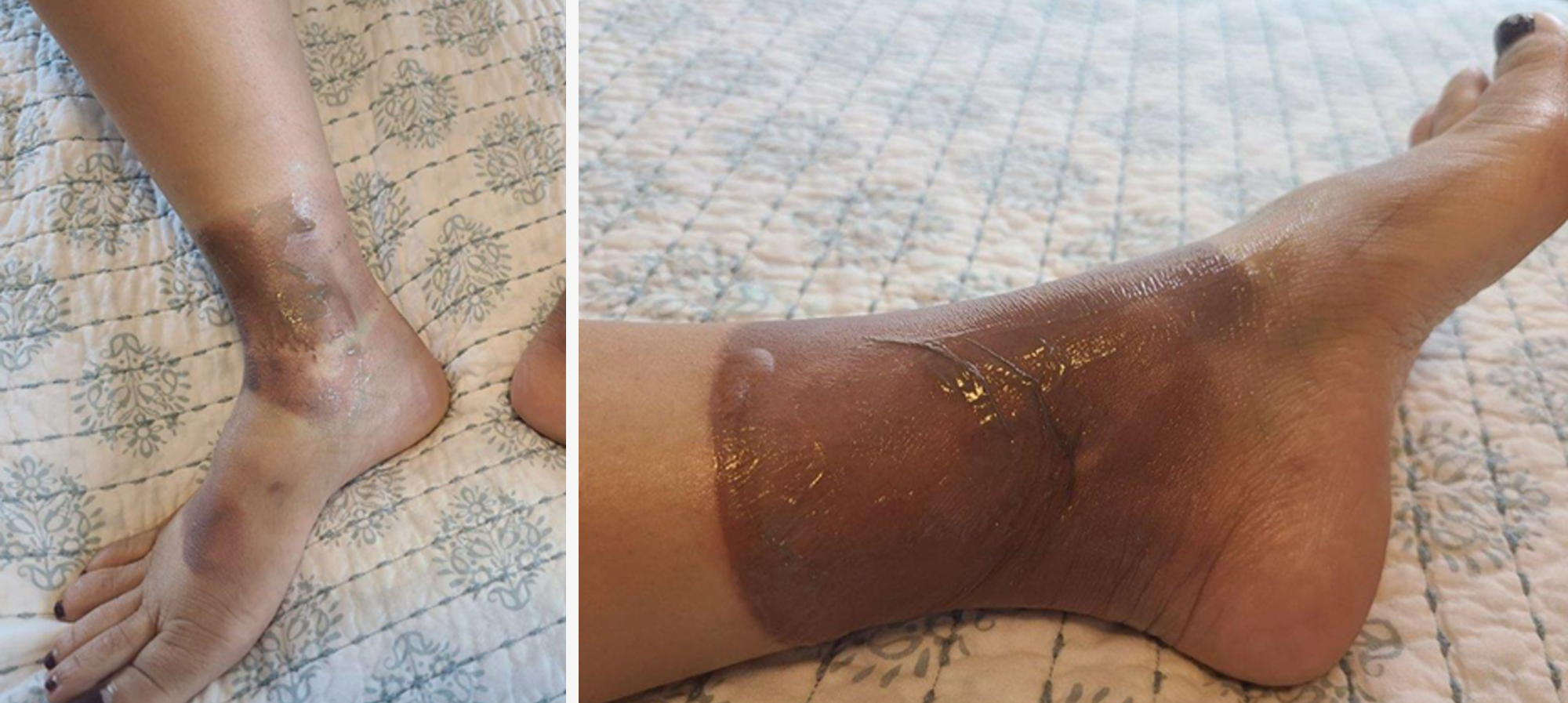
Taylor was knocked unconscious at the scene and transported by ambulance to the hospital. She suffered a mild traumatic brain injury and a fracture of her left proximal fibula.
Although the fracture did not initially require surgery, it marked the beginning of a long and difficult recovery.
Her medical expenses totaled only $23,600, which is very low compared with many serious injury cases. The insurance company focused heavily on that number and initially offered only $40,000 to settle the claim.
Based largely on the medical bills, the case could easily have been treated as a claim worth no more than approximately $75,000.
But when Tom Crosley reviewed the file, he recognized that Taylor’s injuries had affected far more than her medical expenses. Working closely with Crosley Law attorney Madison Schultz, Tom took over the case, filed suit, and developed a strategy to uncover the full story.
The case ultimately settled for $1.25 million.
*Names changed to protect privacy.
A Deeper Investigation Revealed the Truth
At first glance, the case appeared to involve a disputed intersection collision. The defendant claimed he was a safe driver who followed traffic laws.
The evidence told a different story.
Crosley Law pursued multiple sources of proof, including eyewitness testimony, traffic-signal sequencing records, crash reconstruction, social media evidence, forensic cellphone analysis, and written discovery.
The investigation uncovered social media posts that raised serious questions about the defendant’s driving habits and credibility. In one video, the defendant appeared to record himself operating a motorcycle at more than 130 mph at night while filming the speedometer. In another post, he described himself as an “adrenaline junkie” and joked that he could not “keep [his] foot off the gas” or “find the brakes.”
Those posts contradicted the image the defendant presented during his deposition.
RELATED: Posting on social media after a car accident: how it can hurt (or help) your case
Cellphone Evidence Showed the Defendant Was in a Hurry
Crosley Law retained a forensic cellphone expert to extract data from the defendant’s phone.
The download revealed text messages exchanged shortly before the collision about the need to hurry to reach a camping destination on time. In one message, a passenger wrote that their arrival time would “depend on whether he keeps speeding or not.”
This evidence helped establish what was happening in the minutes leading to the crash.
Eyewitnesses and Crash Reconstruction Strengthened the Case
Two independent eyewitnesses were stopped directly behind Taylor at the intersection. Both testified that Taylor waited several seconds after her light turned green before entering the intersection. Both confirmed that the defendant’s light had already been red for several seconds before the collision.
The witnesses also testified that the defendant did not brake and appeared inattentive immediately before impact.
Crash-reconstruction evidence supported their testimony. The analysis indicated that the defendant was traveling approximately 60-70 mph at impact and had likely entered the intersection more than 12 seconds after his light turned red.
The case was no longer a routine dispute over who had the right of way. The evidence pointed to excessive speed, distraction, inattentiveness, and a serious disregard for roadway safety.
RELATED: Texas car accident laws: did something illegal happen?
Not Every Brain Injury Case Involves Permanent Impairment
Crosley Law is known for handling traumatic brain injury cases. Because these claims can involve complex medical and legal issues, other attorneys frequently refer TBI cases to the firm.
Taylor sustained a mild TBI in the crash. She lost consciousness briefly at the scene and required evaluation at the hospital.
Fortunately, she recovered adequately from her head-injury symptoms within approximately 3 months.
Not every person who sustains a concussion or mild TBI develops permanent cognitive impairment. Each case must be evaluated based on the medical evidence and the client’s actual symptoms.
Crosley Law did not try to turn Taylor’s case into a claim for a nonexistent permanent brain injury. Instead, the firm focused on the injuries and losses that continued to affect her life.
RELATED: Not everyone recovers from a mild TBI
The Injury Did Not End When the Fracture Healed
Taylor’s initial treatment was non-operative. She used crutches and a walking boot while the fracture healed. However, the effects of the injury continued.
Taylor experienced pain while standing, walking, and using stairs. Physical therapy records documented limitations with activities she enjoyed such as running, jumping, wrestling, kickboxing, martial arts, and workouts. She walked with a limp and experienced pain and pressure after walking. At times, prolonged standing and walking caused severe pain.
She also developed calf and quadriceps atrophy. Although physical therapy helped, her symptoms did not fully resolve.
More than a year after the crash, Taylor sought a second orthopedic opinion because she continued to experience leg pain. Additional imaging documented a healed but malaligned and overlapped proximal fibula fracture with callus formation, muscle inflammation, and other findings.
Her orthopedic surgeon also identified two large and painful fascial herniations in her leg. Taylor ultimately underwent a four-compartment fasciotomy to address the painful herniations and exercise-induced compartment syndrome.
The recovery was longer and more complicated than the insurance company’s initial offer suggested.
The Crash Disrupted Taylor’s Senior Year
Before the collision, Taylor was a committed athlete.
She wrestled competitively and was projected to compete at the state level during her senior year of high school. She was also active in martial arts, including kickboxing.
After the crash, she could no longer meet the physical demands of those activities. She missed her senior year of high school athletics and lost the opportunity to pursue goals she had worked toward for years.
The injury also affected her ability to work. After the crash, she lost her job at Schlitterbahn because of the limitations caused by her leg injury.
The Injury Threatened a Family Tradition of Military Service
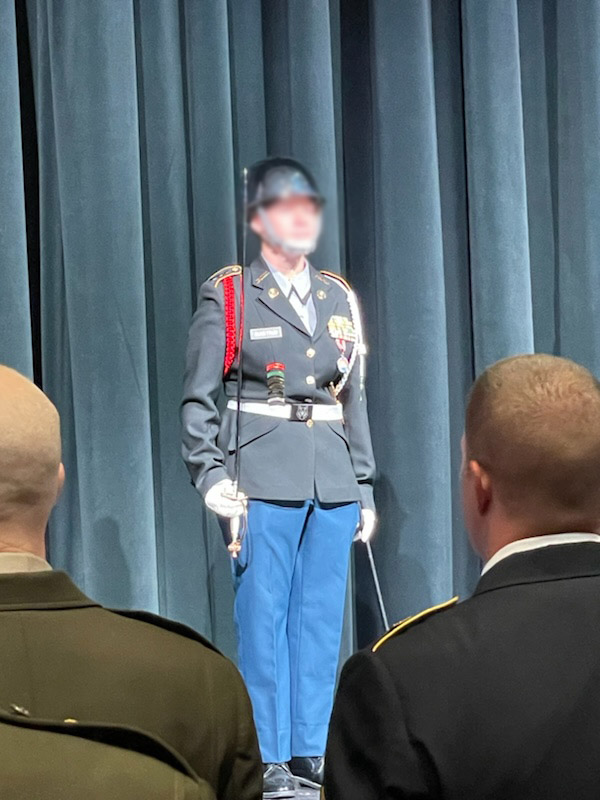
Taylor came from a military family. Her grandparents, parents, and siblings had served on active duty. She intended to continue that tradition.
Taylor planned to pursue ROTC in college and hoped to obtain a scholarship. But ROTC requires participants to satisfy demanding physical standards. Her leg injury affected her ability to meet those requirements.
The crash did more than interfere with extracurricular activities. It threatened an educational opportunity and a career path Taylor had spent years preparing to pursue.
Building a Damages Model Around Taylor’s Future
The Crosley Law team worked to show the full effect of the collision on Taylor’s life by developing evidence concerning:
- Taylor’s prolonged pain and physical limitations
- The fracture and later need for a four-compartment fasciotomy
- Her difficulty with prolonged standing, walking, and stairs
- Her inability to wrestle competitively during her senior year
- Her inability to continue martial arts and other demanding physical activities
- The loss of an opportunity to pursue an ROTC scholarship
- The effect of her injury on her intended military career path
- The projected loss of earnings over the course of her working life
- The emotional effect of losing opportunities that had shaped her future plans
This work was critical because Taylor’s most significant losses could not be summed up by a stack of medical bills.
Her case required a careful examination of the life she was building before the crash and the opportunities the injury had taken from her.
Medical Bills Don’t Tell the Whole Story
Insurance companies often try to value injury claims by focusing heavily on medical expenses. That approach can substantially undervalue a case involving lasting limitations, lost opportunities, emotional harm, and long-term effects on a young person’s future.
Taylor’s case illustrates why serious injury claims must be evaluated individually.
The insurance company initially offered only $40,000. But Taylor’s losses could not be measured by medical bills alone. Her injury affected her senior year of high school, her athletic goals, her ability to participate in martial arts, her opportunity to pursue an ROTC scholarship, and the military career path she intended to follow.
The Difference Thorough Case Preparation Can Make
Working with attorney Madison Schultz, Tom Crosley directed a litigation strategy that developed both the liability evidence and the full measure of Taylor’s damages.
Crosley Law filed suit, retained the right experts, obtained cellphone evidence, located eyewitnesses, analyzed traffic-signal records, developed crash-reconstruction evidence, investigated the defendant’s social media history, and built a damages model that accounted for Taylor’s lost opportunities and projected future losses.
That work changed the outcome.
The insurance company’s initial offer was only $40,000. The final settlement was $1.25 million.
The result provided meaningful compensation for Taylor’s injuries and recognized the lasting consequences of a crash that changed the direction of her life.
Car Crash? Call Crosley.
The value of a personal injury case is not always obvious at the beginning. Medical bills are only one part of the story. The right investigation can uncover evidence that changes how a case is understood and valued.
If you have been injured in a car accident, Crosley Law can investigate what happened, explain your options, and fight for the compensation you deserve.
Contact our San Antonio office at 210-529-3000 to request a free consultation.