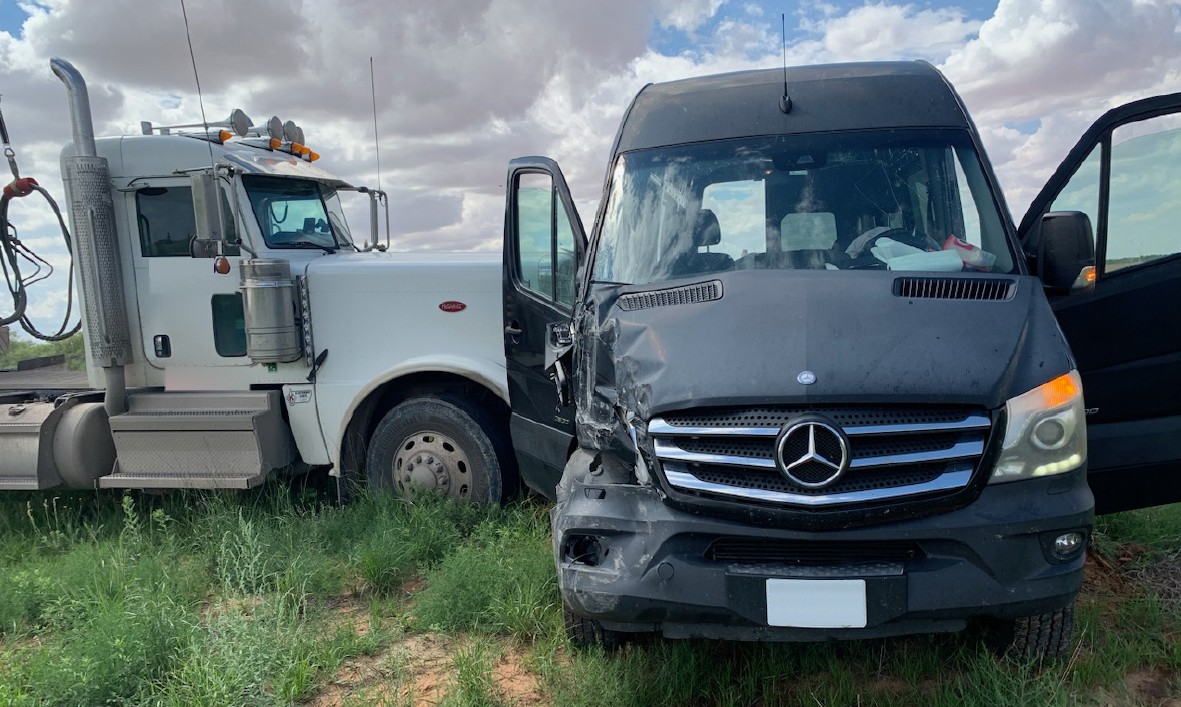
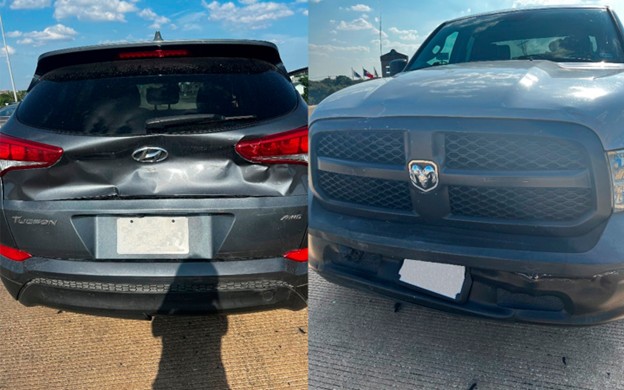
Alan* was riding as a passenger in a work van on a quiet stretch of rural Texas highway when he got caught up in a chain reaction crash with two 18-wheelers.
His brain injury from the crash wasn’t the kind that shows up on a routine scan. But in the months that followed, Alan was no longer the sharp, social man his family knew.
The defense lined up more than 18 experts to argue his brain injury wasn’t real. Crosley Law proved otherwise, then used a strategic move at mediation to secure a $1,150,000 total settlement.
*Names have been changed to protect our client’s privacy.
A left turn that set off a chain reaction
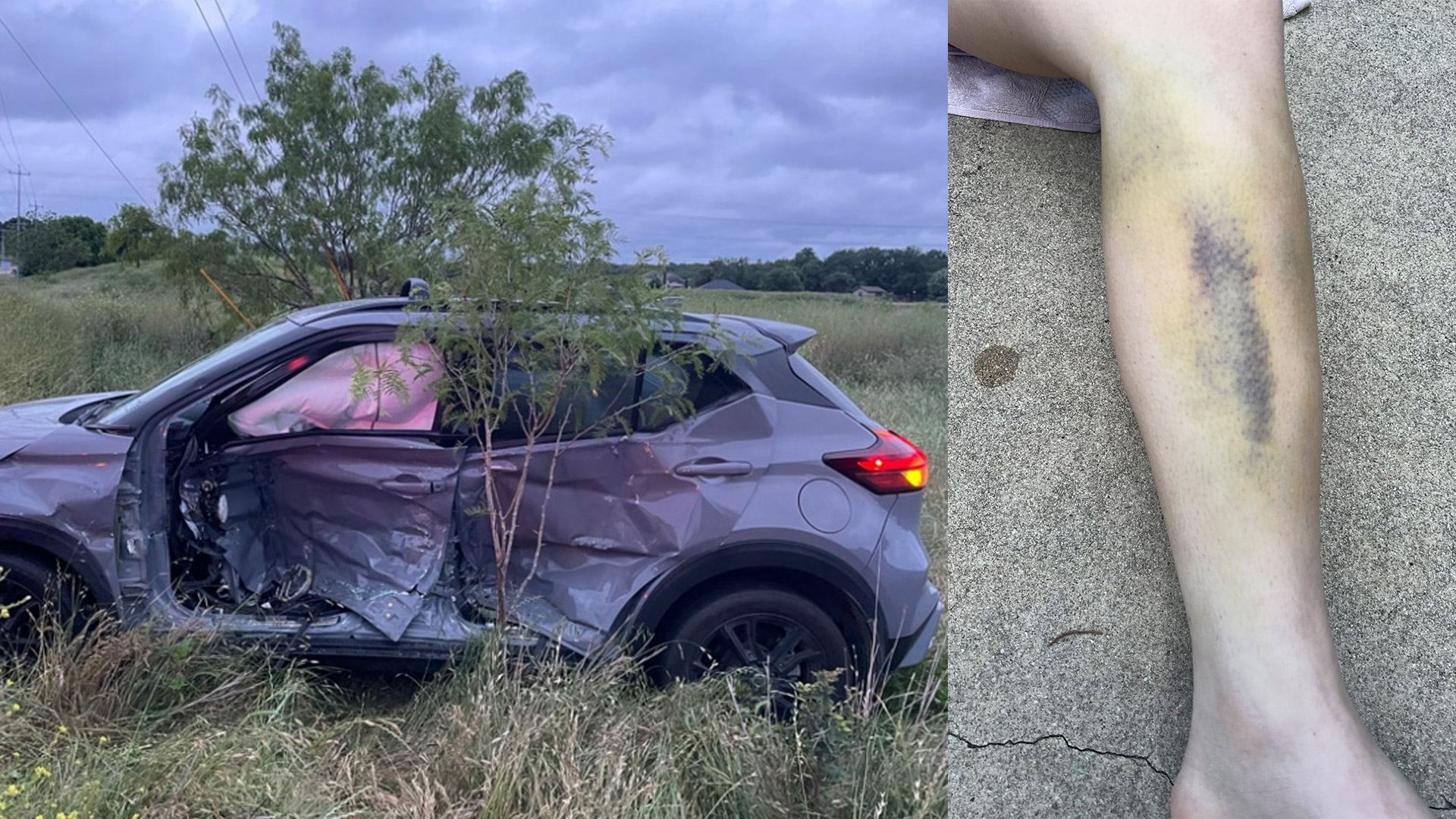
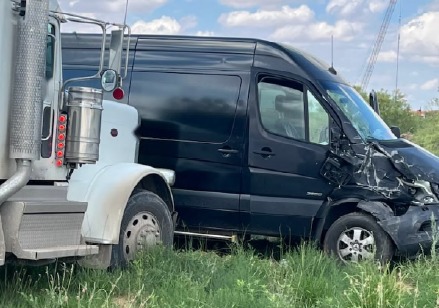
The van in which Alan was a passenger was traveling in its own lane with the right of way. Coming the other direction, the driver of an 18-wheeler for Carrier A slowed and turned left directly across the van’s path. The van driver swerved left across the lane of oncoming traffic, onto the shoulder and managed to avoid that truck.
But a second 18-wheeler, operated for Carrier B, was following close behind the turning truck. When the first truck slowed, Carrier B’s driver couldn’t stop in time. He swerved, left the roadway, and hit broadside the van that was slowing on the shoulder.
The road was flat and slightly curved, with clear visibility in every direction. The investigating state trooper placed responsibility on Carrier A’s driver and cited an unsafe turning movement.
Alan was taken by ambulance to the emergency room with injuries to his head, neck, back, shoulder, wrist, and knees.
A brain injury you can’t see
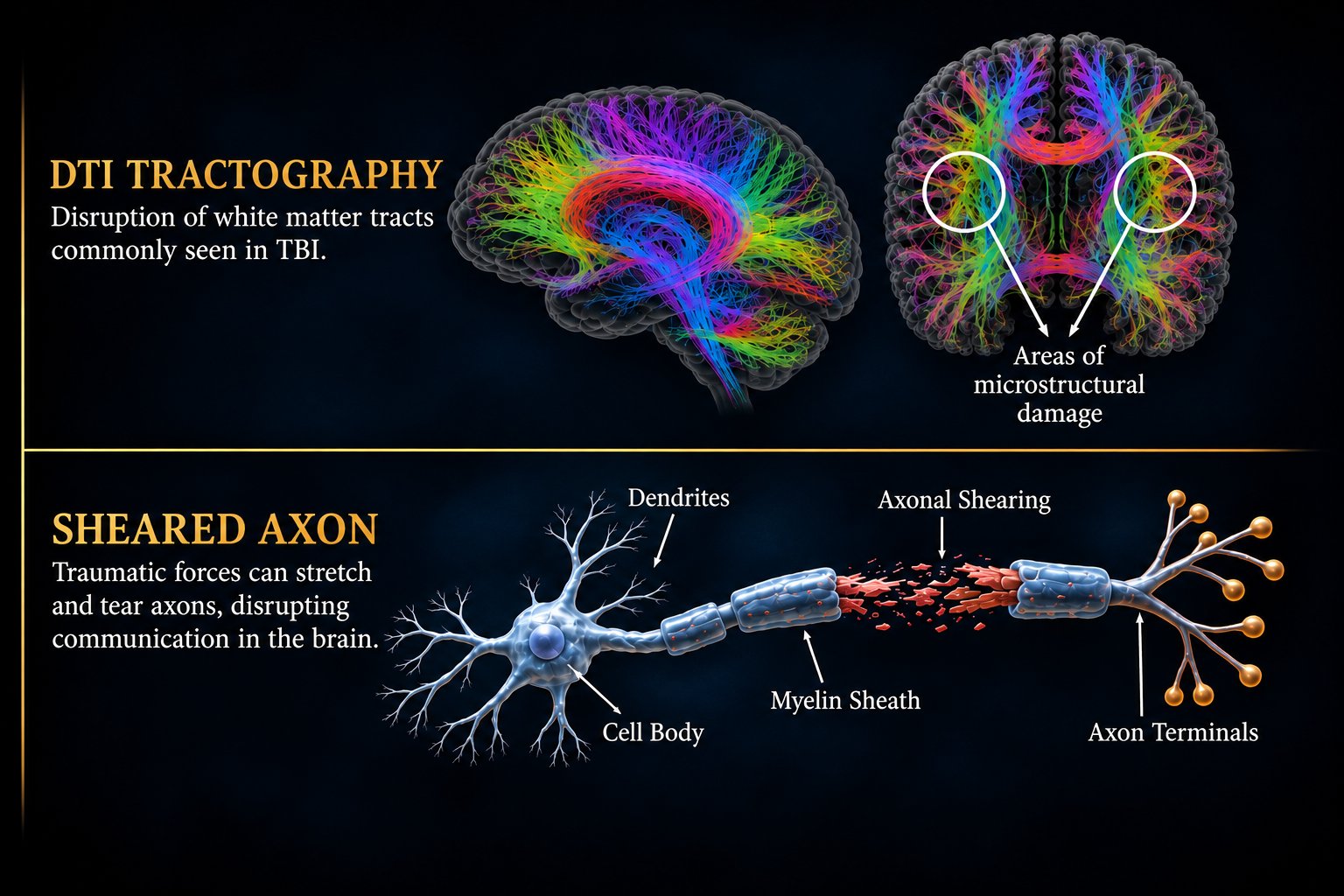
Many traumatic brain injuries never show up on a standard CT or MRI. There’s no fracture to point to and no bleed to circle. Instead, the injury shows itself in how a person functions: how they balance, speak, remember, and handle everyday life.
BLOG:Not everyone recovers from a mild TBI
That was Alan’s case. After the crash, he lived with headaches, ringing in his ears, dizziness, light sensitivity, and blurred vision. He lost words mid-sentence and forgot conversations. His mood swung without warning, and he began withdrawing from the people he loved.
Despite these issues, Alan was still remarkably bright. All the parties knew that a jury might dismiss the plaintiff’s complaints based on his seemingly normal cognitive abilities even after the crash.
Insurance companies know these injuries are hard to prove, and they count on it. The defendants here took on a familiar position: if a routine scan looks normal, the brain injury must be exaggerated.
BLOG:When “normal” isn’t normal: Updated guidelines help lawyers win traumatic brain injury cases
Proving an invisible injury with objective evidence
We built our case around evidence that doesn’t depend on a routine scan or on taking anyone’s word for it. Alan’s symptoms were measured, tested, and documented by multiple providers over more than two years:
- Advanced brain imaging. A specialized MRI technique called diffusion tensor imaging (DTI), which maps the brain’s white-matter pathways, showed abnormal findings consistent with traumatic brain injury.
- Balance and eye-movement testing. Videonystagmography (VNG) testing found evidence consistent with a closed-head shearing injury.
- Cognitive and speech-language testing. Repeated evaluations confirmed deficits in attention, memory, processing, and communication.
- Consistent treatment. A neurologist followed Alan from the first weeks after the crash, and he completed cognitive rehabilitation and speech therapy.
- Before-and-after witnesses. His parents described a son who had always been sharp and social, and who now struggled to focus, follow conversations, and leave his apartment.
We also retained a life care planner, an economist, a neuropsychologist, a trucking safety expert, and a crash reconstructionist. Together they showed exactly how the crash happened and what Alan’s future care would cost.
We were outnumbered on experts, so we changed the math
Three defendants meant three defense teams, and each one hired its own experts. In all, the defense designated more than 18 experts, roughly 5-7 per defendant. Much of that firepower was aimed at one goal: convincing a jury that Alan’s brain injury wasn’t real.
At mediation, Carrier A, the company whose driver started the chain reaction, refused to make a fair offer. Instead of walking away, attorney Shawn Mechler made a strategic decision. He settled with Carrier B and the van driver, the two defendants that were blameworthy but less so than Carrier A.
That move changed the landscape for Carrier A. Once the other two defendants were out of the case, their experts went with them. Carrier A would now face a jury on its own with its own experts, and without the backing of the additional experts the other defendants had hired. They would also be going in as the party the trooper had already blamed for the crash.
We made a firm, drop dead demand at mediation. With trial approaching and far less help in its corner, Carrier A came to the table.
A $1.15 million result
The three defendants paid a combined $1,150,000 to resolve Alan’s claims. The recovery gives Alan the resources to continue the neurological care, therapy, and pain management his doctors recommend without having to wait years for a trial and an appeal.
Just as important, Alan’s injury was taken seriously. A brain injury that didn’t show up on a routine scan was proven with real evidence, and the companies responsible paid for it.
Don’t let an insurer tell you your brain injury isn’t real
If you’ve been hurt in a crash and are living with headaches, dizziness, memory problems, or personality changes, a “normal” scan doesn’t mean you’re fine. The right testing and the right legal team can prove what you’re going through.
Crosley Law has represented Texans with brain injuries since 2005, including victims of 18-wheeler crashes involving multiple trucking companies. We handle every case on a contingency fee basis. You pay nothing unless we win or settle your case.
Call (210) 529-3000 or contact Crosley Law for a free consultation.
The content provided here is for informational purposes only and should not be construed as legal advice on any subject. Past results do not guarantee a similar outcome in any future case.