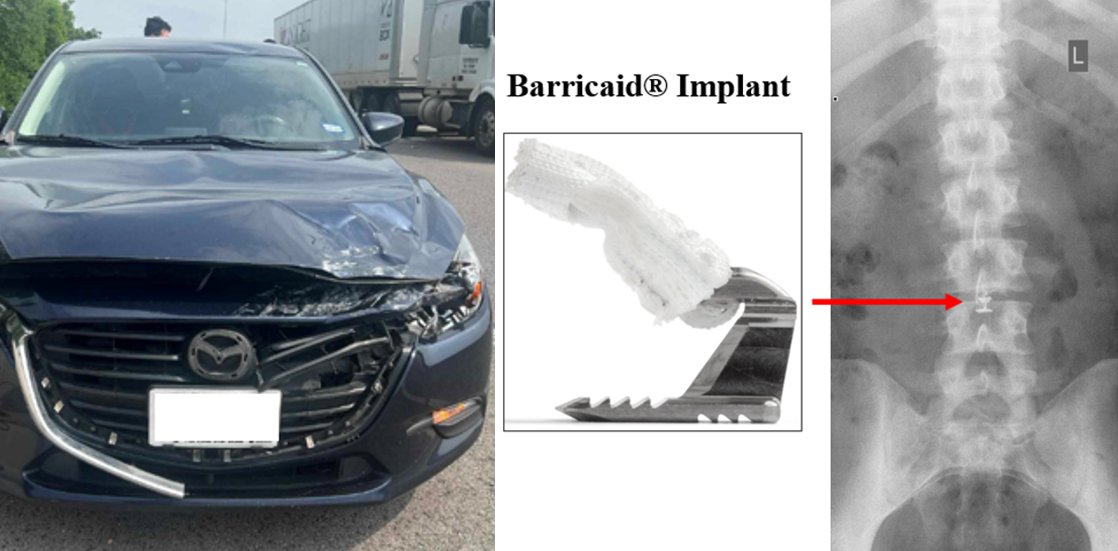



At 19 years old, Alex* was a college student pursuing a career in healthcare while working at a local hospital. He had never experienced serious back problems and was focused on finishing school.
That changed in seconds when another driver rolled through a stop sign and pulled directly into his path.
Alex slammed on his brakes, honked, and tried to avoid the crash. But with oncoming traffic preventing him from moving left, he had nowhere safe to go. His car collided violently with the much larger SUV.
What followed was more than a year of worsening pain, injections, medications, and ultimately back surgery—all at an age when most people have never even considered seeing a spine surgeon.
With trial approaching, the car accident lawyers at Crosley Law built a case focused not only on what the crash had already taken from Alex but also the consequences he could face for decades to come.
The case ultimately settled for $1.25 million the week before trial.
*Name changed to protect our client’s privacy.
Vehicle damage never tells the whole story
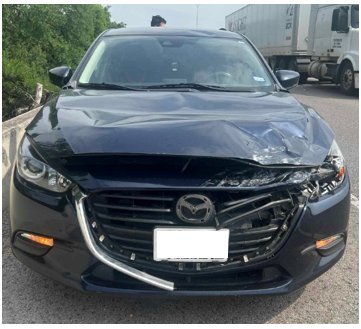
Alex was driving home from work with the right-of-way when another driver approached from a side street controlled by a stop sign.
Instead of coming to a complete stop and making sure the road was clear, the driver made a rolling stop and failed to look left before entering the intersection.
Alex honked and slammed on his brakes. Swerving left would have sent him into oncoming traffic, so he tried to move right. There simply was not enough room.
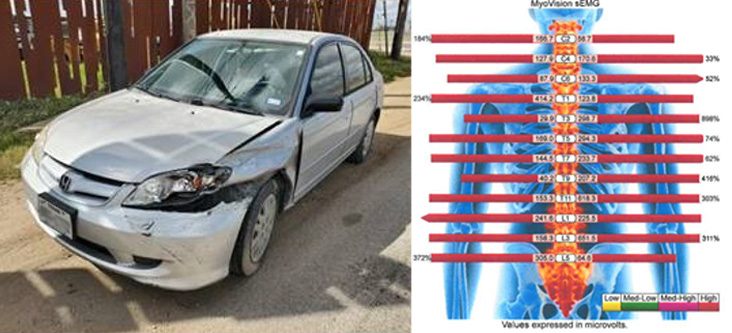
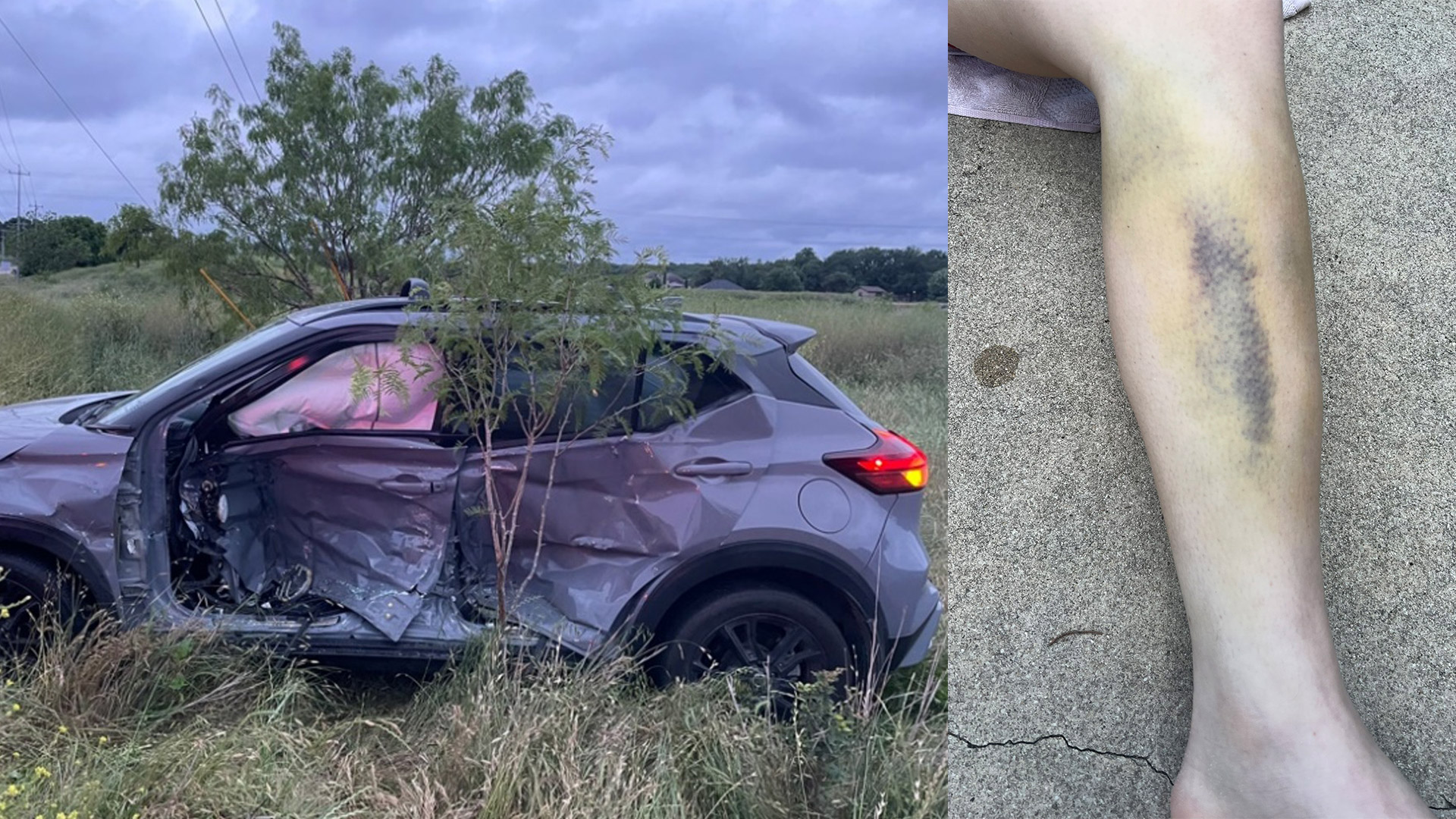
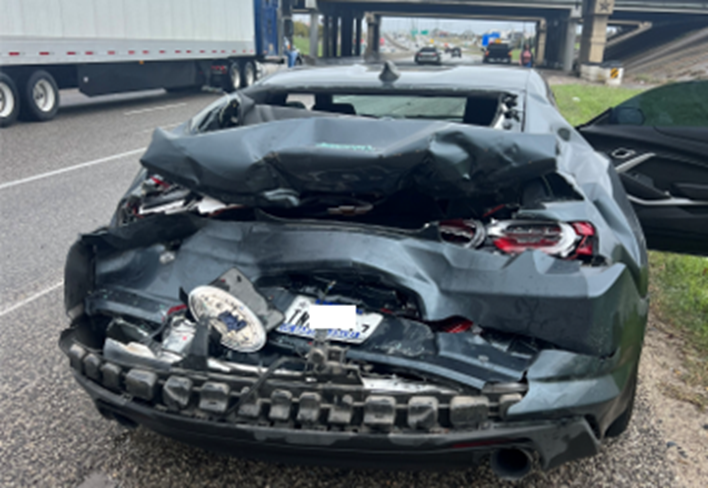
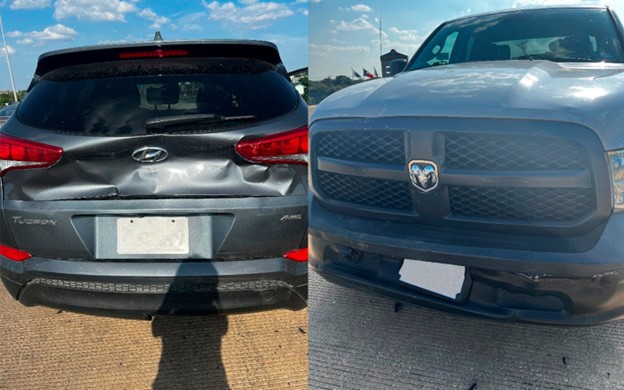
A vehicle does not have to look destroyed for someone inside it to suffer a serious injury. While the visible damage to Alex’s car may not appear catastrophic, property damage alone does not determine the forces experienced by an occupant or the severity of an injury. In Alex’s case, his injuries from the collision would ultimately require back surgery and the placement of a permanent spinal implant.
A serious back injury at 19 years old
Alex sought medical attention the next day for pain in his neck, lower back, and wrist. An MRI eventually revealed a 9-millimeter disc herniation at L3-4 that was impinging on a nerve root, along with another herniation at L4-5.
Before the crash, Alex had never received treatment for a serious back problem. Afterward, everyday activities became difficult. He struggled with prolonged sitting and standing, walking, household chores, and even taking his dog for a walk. Pain medication made him groggy and interfered with school, while his employer had to accommodate his physical restrictions.
Instead of focusing on college and beginning his career, Alex was learning how to live with chronic back pain.
Conservative treatment fails, leaving surgery as the next step
Alex did not immediately turn to surgery. He tried medications, chiropractic treatment, physical therapy, and two lumbar epidural steroid injections. But his pain continued.
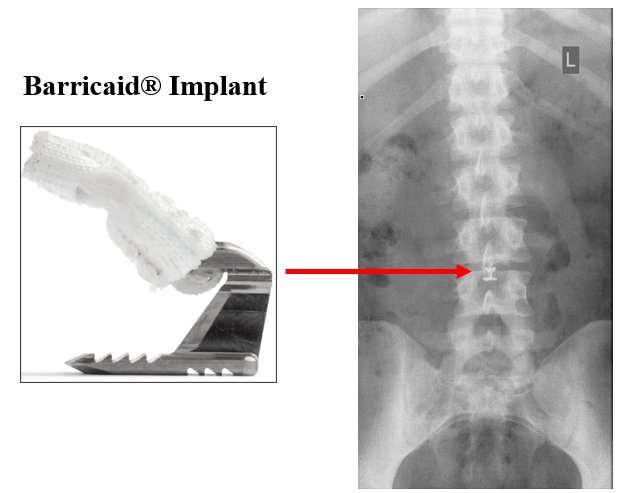
Eventually, Alex underwent lumbar spine surgery when he was only 20 years old. The procedure included decompressing the L3 and L4 levels and removing part of the damaged L3-4 disc. During his back surgery, doctors implanted a Barricaid® device into Alex’s lumbar spine, a permanent reminder of the serious spinal injury he had suffered that previous year.
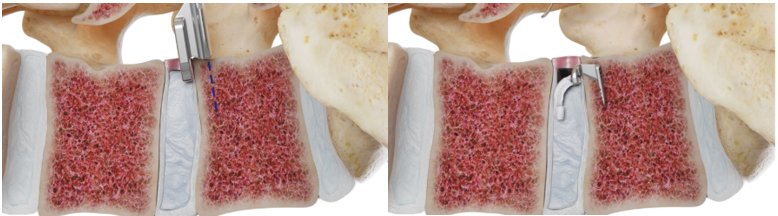
The Barricaid® implant is used after a lumbar discectomy, when a surgeon removes herniated disc material that is pressing on a nerve. The device anchors into the adjacent vertebral bone and places a small mesh barrier over the opening in the disc where the herniation occurred. The goal is to help keep the remaining disc material contained and reduce the risk of another disc herniation through that opening.
Surgery significantly improved his condition, but it did not erase the injury. He continued to experience symptoms, raising an important question: What would this spinal injury mean for Alex decades into the future?
Crosley Law looks beyond today’s medical bills
Crosley Law worked with medical, life-care-planning, and economic experts to evaluate not only Alex’s past treatment, but also the medical care he may need for decades to come. But medical expenses told only part of the story.
Alex was just 19 when the crash changed his life. He endured significant pain, invasive treatment, spinal surgery, limitations on everyday activities, and the prospect of living with the effects of his injury for decades. Those losses cannot be measured by medical bills alone.
Ultimately, Alex’s settlement would be significantly greater than his past and projected medical expenses. This reflects the importance of the non-economic damages he faces, including physical pain, mental anguish, impairment, and loss of normal life caused by the collision.
Crosley Law turned a disputed liability case into a court ruling
The other driver initially denied responsibility for causing the crash and attempted to blame Alex. Crosley Law used the physical evidence and facts surrounding the collision to challenge that position during her deposition.
Through careful questioning, the driver admitted that Alex had the right-of-way, that she had the stop sign, and that she never saw Alex’s vehicle before pulling into the intersection even though nothing obstructed her view.
Those admissions proved critical. By developing the evidence through discovery and securing the defendant’s own testimony about her failure to safely operate her vehicle, Crosley Law was able to establish that there was no legitimate factual dispute over who caused the crash.
Armed with that evidence, Crosley Law asked the judge to decide liability before trial. The court agreed and ruled that the defendant was negligent as a matter of law. As a result, the defense could no longer blame Alex at trial and the jury would instead focus on the injuries and damages caused by the collision.
BLOG:How to fight insurance company and defense claims in your spine injury case
Trial preparation leads to a $1.25 million settlement
As trial approached, Crosley Law was prepared to present the complete story: a healthy 19-year-old with no serious back history; a preventable stop-sign collision; a major lumbar disc injury; failed conservative treatment; surgery at age 20; and evidence of future medical needs stretching decades into his life.
But the presentation didn’t need to happen. One week before trial, and in light of substantial evidence, the case settled for $1.25 million.
The settlement provided Alex with substantial compensation for what he had already endured and resources to address the medical consequences he may face in the future.
Serious spine injuries require a long-term approach
When someone suffers a serious spinal injury, understanding the full value of the claim can require looking decades into the future.
At Crosley Law, we work with medical specialists and other experts when necessary to understand not only what an injury has already cost, but what it may mean for the rest of our client’s life. And when an insurance company will not offer fair compensation, we prepare our cases for trial.
If you or someone you love has suffered a serious back or spine injury because of another driver’s negligence, contact Crosley Law to request a free consultation.